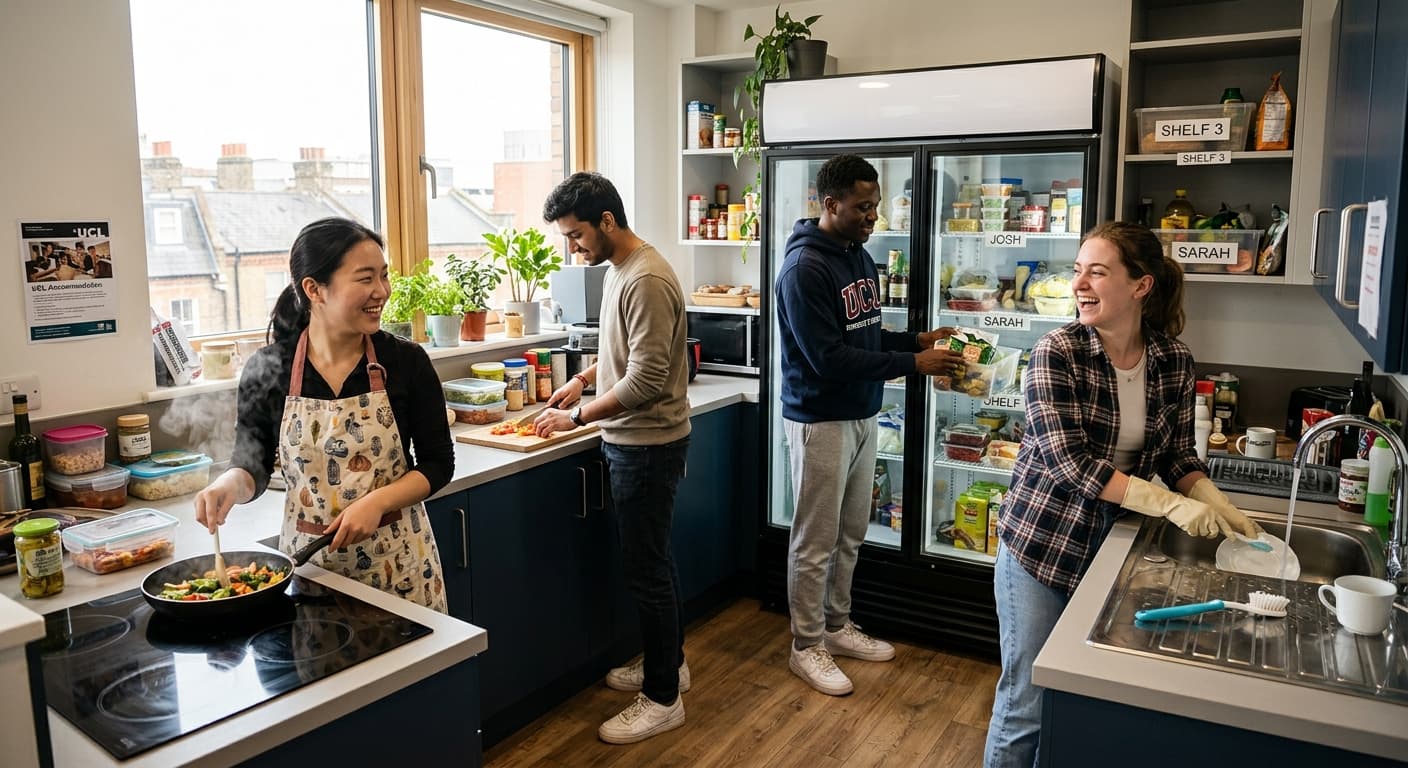
Moving abroad for university often comes with a long list of things to learn. You must know classroom info, public transport, rent, visas, and maybe even how to operate washing machines in an unfamiliar country. There's the communal kitchen, too.
The communal kitchen in student housing can sound very regular when it comes to cooking, eating, and storing food at first. However, over the course of a couple of weeks, one can find that this last has its own social rules. The accommodation provider usually notes some. However, most are not listed.
If you can understand these unwritten rules, living in a flat with your flatmates will become much easier. Mindless behaviors can influence the impression you make in communal kitchen areas when living independently in student housing abroad. It may not take too much to leave a pan in the sink for an hour, but it can be quite irritating for someone who wants the sink for an hour.
Here is what students often learn after moving into shared accommodation overseas.
Shared Kitchen Etiquette for Students Living Abroad
The one thing I find I'm most subject to forget: No one owns the whole kitchen.
You may have your own cupboard, shelf, or fridge compartment, but other common areas, such as counters, sink, and hob, are for everyone. That implies your cooking schedule is impacting others.
Shared kitchens are a common part of student accommodation. A Food Standards Agency survey found that 37% of student kitchens were shared by three to four people, while another 27% were shared by five to six people. That means small habits around cleaning, storage and personal space can affect several people every day.
Now picture returning after a long day at university to find the veg on the counter, the dishes by the sink, and the chopping board in the only available space! It doesn't matter if you don't know who has made the mess; you just have to deal with it.
Design communal areas to be usable. Do as much as possible when cleaning as you cook, putting ingredients away after use, and not leaving things to sit for hours before you clean.
Fridge and Food Storage Rules in Shared Student Housing
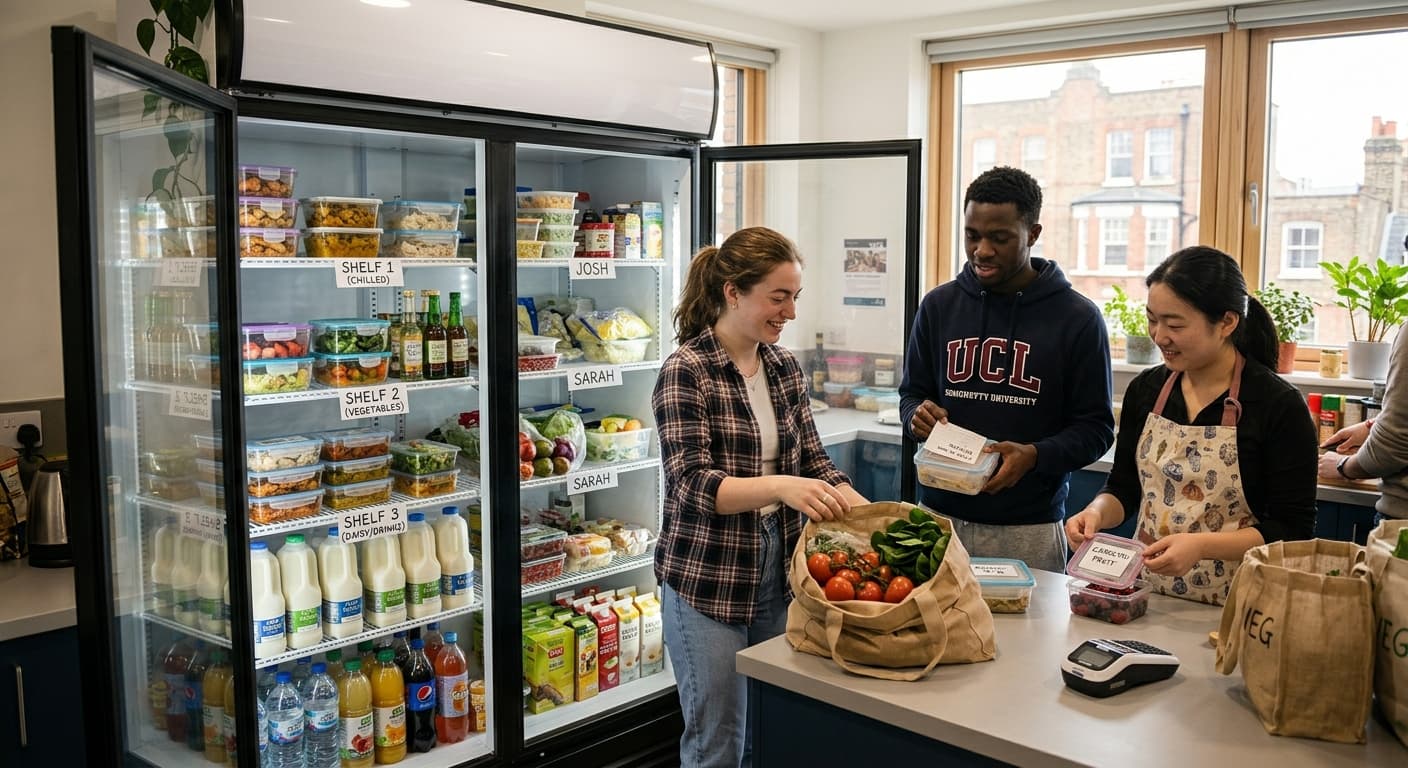
The fridge is at the heart of shared kitchen etiquette.
The fridge is actually one of the primary causes of stress in international student homes. Space is needed by everyone, but students have their own views of what is sufficient or not. One person can purchase fresh produce every couple of days, and another can cook the food for a whole week.
Store food where there is a designated area. If separate shelves aren't provided, come up with a plan early with your flatmates on how this will be sorted out. A good label can help, particularly if anyone purchases a similar product.
Cooking Times and Kitchen Sharing Etiquette for International Students
One of the hidden challenges of shared kitchens in student housing abroad is timing.
Students often have very different schedules. One flatmate may wake up early for an 8 a.m. lecture. Another may spend half the night studying. Someone else might work evening shifts and only cook late at night.
You do not need to plan your entire life around everyone else. Still, basic consideration helps. Playing loud music while cooking at midnight or spending an hour preparing a complicated meal when five people are waiting to use the stove can create unnecessary tension.
Pay attention to the rhythm of the household. Over time, you will learn when the kitchen is usually busy and when it is quieter.
Research suggests that the people students live with can influence how they experience life abroad. A study of international students in Australia found that 77% of participants shared accommodation with other people, while 31% said the people they lived with had a negative impact on their wellbeing. The researchers also reported that conflicts involving housemates could relate to differences in culture and schedules.
How to Share a Kitchen in Student Accommodation
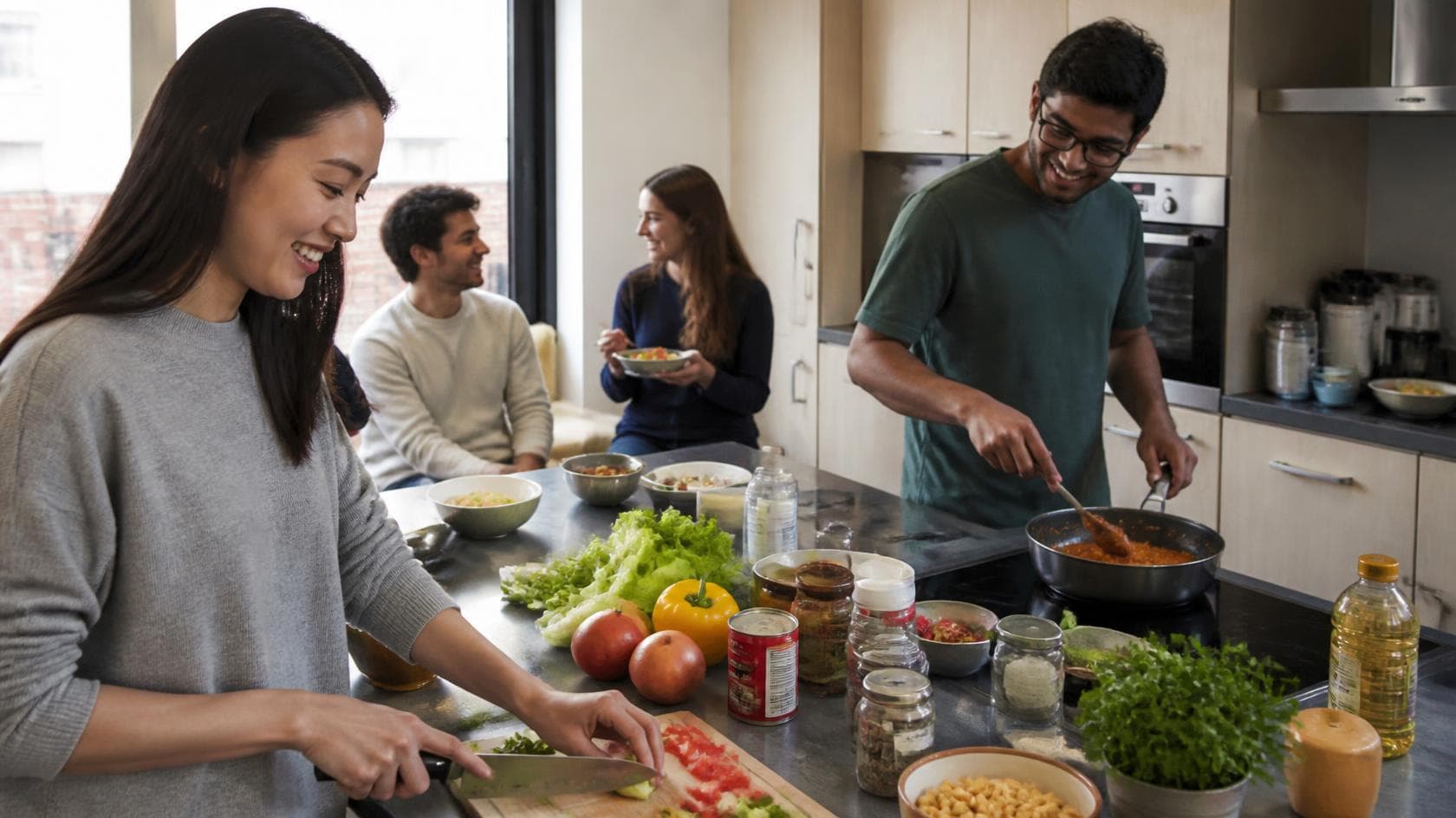
Moving abroad often means living with people from different countries, cultures and family backgrounds. Food can be one of the most noticeable differences.
A student may be used to cooking strong-smelling spices, while another may prefer very mild food. Some people cook meat regularly. Others may be vegetarian or vegan. Some students wash dishes immediately, while others prefer to soak them first.
None of these habits automatically makes someone rude.
The important thing is to understand what your flatmates are comfortable with. Strong cooking smells can travel through a small apartment, so opening a window or using the extractor fan can help. At the same time, you should not expect everyone to cook exactly the way you do.
Shared living works better when people make room for differences.
Why Cleaning Up After Yourself Matters in a Shared Student Kitchen
In a shared kitchen, people notice dishes more than you might expect.
A plate sitting in the sink for five minutes is unlikely to matter. Leaving it there until the next morning is another matter. The same applies to pots, pans, glasses and cooking utensils.
Some student accommodations have cleaning services for communal areas, but that does not usually mean you can leave your personal mess behind. Check your accommodation rules, then follow the household expectations you have agreed to with your flatmates.
One useful habit is to wash your dishes after eating rather than letting them build up. It takes less effort than facing a pile of plates later, and other students can use the sink.
Borrowing Kitchen Items in Shared Student Accommodation
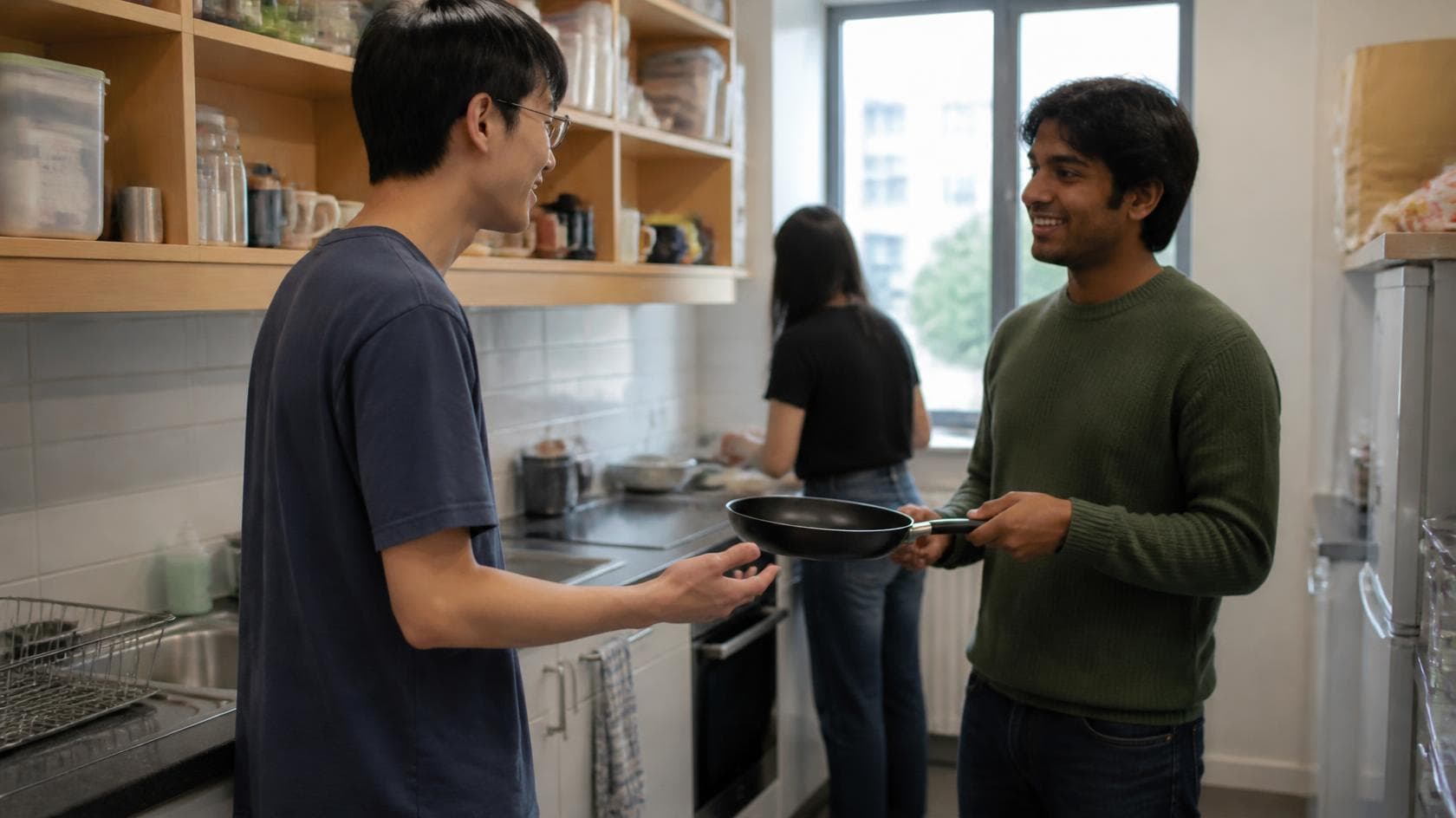
Borrowing kitchen items is another area where assumptions can cause problems.
A flatmate may have bought a good knife, coffee machine, or frying pan that everyone notices. That does not mean it is communal property.
Ask before using personal items, even when they seem harmless. The same applies to ingredients. Salt, oil, and spices may sometimes become shared household items, but it is better to agree on that rather than assume.
Replacing something after you use it is part of good shared kitchen etiquette too. If you finish the coffee, buy more. If you use the last of a shared cleaning product, mention it.
Conclusion
The hidden social rules of shared kitchens in student housing abroad are mostly about consideration. Clean up after yourself, respect personal food and belongings, pay attention to shared spaces and communicate when something goes wrong.
You may never find all of these expectations written on a noticeboard. You learn them by watching, listening and noticing how your flatmates use the kitchen.
Living abroad already involves plenty of adjustment. Learning a few shared kitchen habits can make student accommodation feel less stressful and more comfortable, especially when you are sharing your home with people from different backgrounds and routines.