The Idea
Some trips you plan carefully. This was not one of them. We had already been to Portofino the previous winter, stayed in Rapallo, walked the coastal trail, ate at a small restaurant in the old town. We had loved it enough to want to go back, but differently. The idea of renting a boat had come up then and quietly stayed there, filed away, until a weekend freed up in the calendar and we found ourselves on an early car ride from Turin heading south.
Santa Margherita Ligure is about two hours from Turin by car or train. By car you take the A26 then the A7 toward Genoa and follow the coast road down; by train you change at Genova Brignole and ride the regional line to Santa Margherita Ligure-Portofino station. We decided to drive. Parking near the port is metered and fills up quickly on weekends, so arriving before nine in the morning is worth the early alarm.
Santa Margherita Ligure: The Port
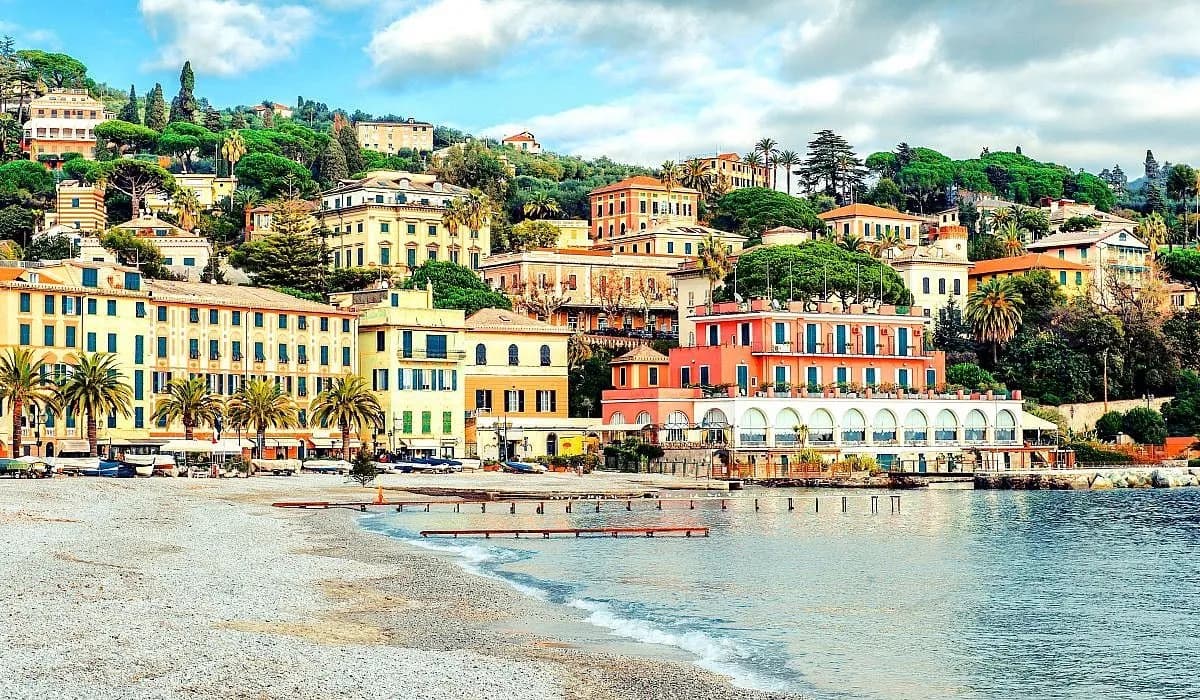
The harbour at Santa Margherita Ligure is smaller and calmer than it looks in photographs. It is the kind of port where the boats are actually used, not just moored for show — fishing boats sitting low in the water next to the rental outfits, the smell of diesel and salt, the sound of halyards in the morning wind. The waterfront promenade is beautiful in that very specific Ligurian way: pastel buildings, palm trees, cafés already open, the light off the water at that hour doing something unusual.
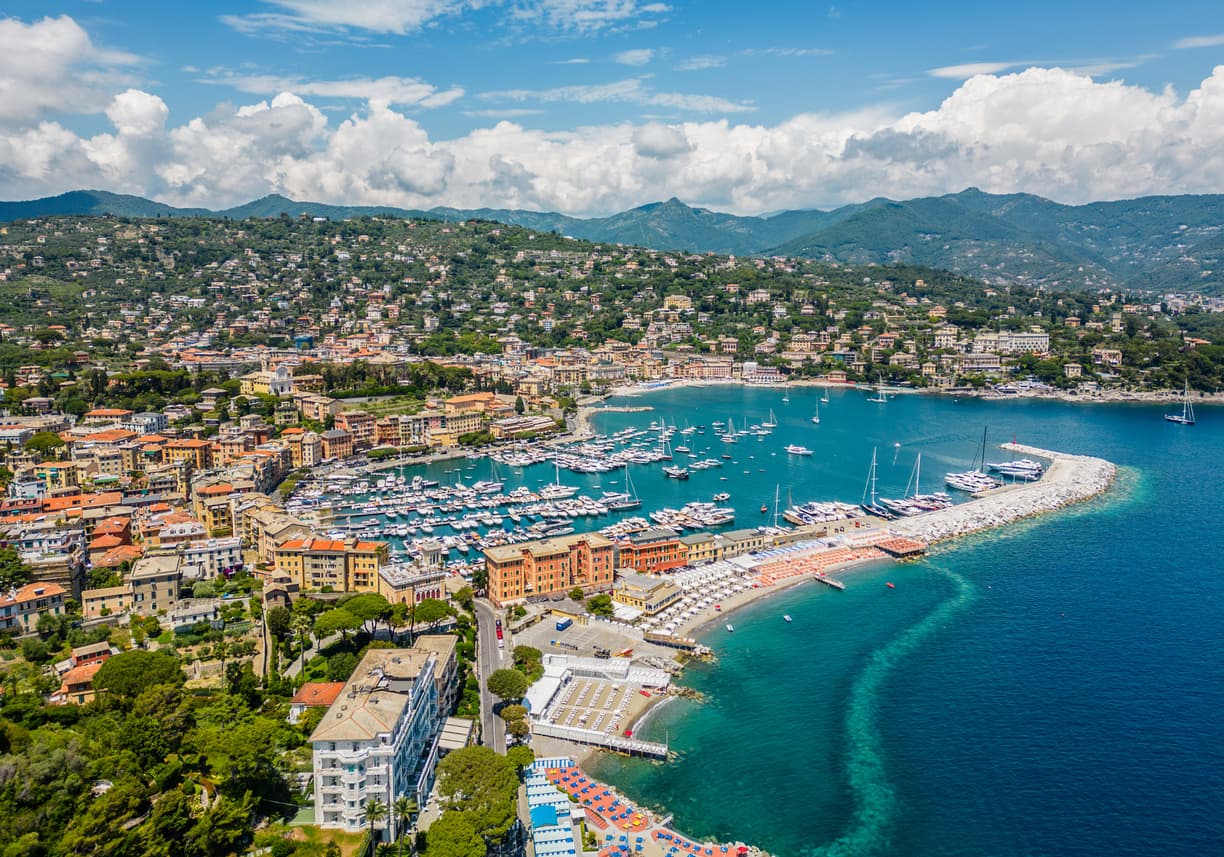
Boat rentals are available directly at the port from several operators. Most offer small motorboats, somewhere between four and six metres, that require no licence if the engine is under 40 horsepower, which covers the majority of what they rent out for day use. You will need to show identification and sign a damage deposit form. The rental companies explain the rules of the Portofino Marine Protected Area before you leave, and it is worth listening carefully: there are restricted zones where you cannot anchor, speed limits close to the coast, and buoy fields at certain bays where you must moor rather than drop your own anchor. Violating any of these gets expensive very quickly, if not jail directly.
We picked up our boat mid-morning. It was small and honest, fibreglass hull, a 40-horsepower outboard, a small bow section with enough room to lie in the sun, a cooler, a ladder off the stern for getting back in after swimming. We brought snorkeling masks, a few sandwiches, water, fruit, sunscreen and some light snacks. That was about all you need.
Where to bathe
The Portofino promontory is not large.
We went south first, along the shore towards Paraggi. The bay there is the one piece of sand on this stretch of coast, and the water sits in it in a green that does not look entirely real. You cannot anchor in it — the ban is marked by a line of buoys in summer — so we cut the engine a hundred metres out, drifted, and looked at it the way you look at something in a shop window. Then we carried on around Punta del Faro, past Portofino, and the coast changed character immediately. No more beaches. Cliffs coming straight down into deep water, holm oak and pine above them, the occasional villa built into rock in a way that no planning authority would allow today.
Cala degli Inglesi

This is the first place you reach where you can properly stop. It sits between the Portofino lighthouse and San Fruttuoso, a narrow inlet with no beach and no road to it, and there is a small field of white buoys reserved for boats under ten metres. We took one and swam. The water was cold in the way Ligurian water is cold in June, which is to say for about ninety seconds. With a mask you can see the bottom clearly at ten or twelve metres: rock, wrasse, the darker patches of seagrass further out. We ate the sandwiches on the bow with the engine off and nobody talking much. Mooring at Cala degli Inglesi was free of charge at the time of writing. However, this is definitely worth confirming with your rental operator, as the arrangement is managed seasonally.
Cala dell'Oro
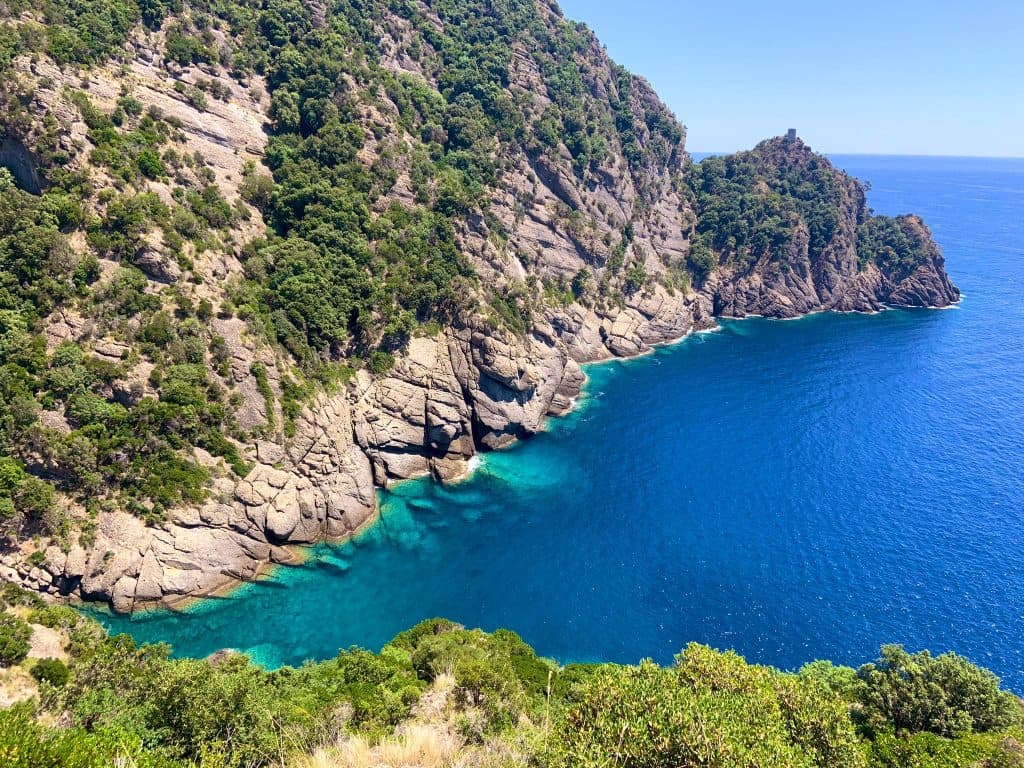
Cala dell’Oro comes next, and you cannot go in. It is the reserve's protected core, and from the water it looks like an ordinary steep-sided inlet with unusually clear water and nothing in it. That is the point. No boats, no swimmers, no anchors dragging across the bottom. Passing it slowly on the way to San Fruttuoso, with a dozen boats behind you and none ahead, is oddly one of the more memorable parts of the day.
San Fruttuoso
Then the abbey appears, and it is worth the trip on its own.
San Fruttuoso di Capodimonte sits at the head of a small bay with a pebble beach in front of it, a bell tower, arcades opening straight onto the water, and a wooded valley behind. There is no road. You arrive on foot over the promontory, or you arrive by boat, which is the reason it looks the way it does. The abbey dates to the tenth century in its earliest parts and is now looked after by FAI, the Italian environmental fund, and you can go inside, walk the cloister, and see the Doria family tombs cut into the rock.
Mooring here is organised and paid for. The east side of the bay takes small boats under 7.5 metres, the west side takes larger ones, and the buoys are managed by the local consortium — someone comes out to you in a tender, takes the fee, and points you at a free line. We paid around €20. You then swim ashore or take the tender in.
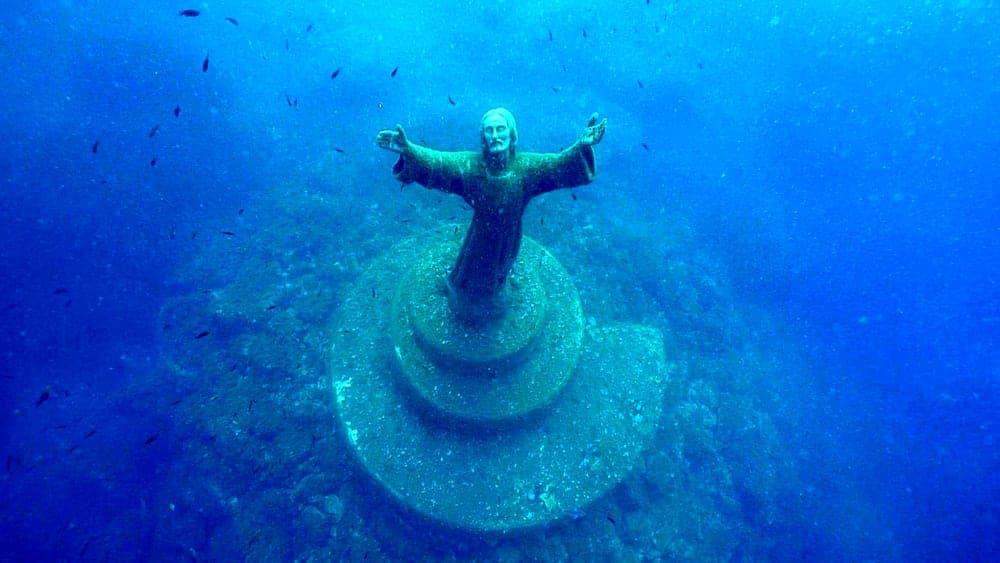
Somewhere below you in that bay, at about seventeen metres, is the Cristo degli Abissi, the bronze Christ placed on the seabed in 1954. Snorkelling will get you to it, but honestly, unless you have some light freediving experience, it will not really get you a proper look at it. From the surface you get a marker buoy and a rumour of a shape.
Lunch, if you want one, is at one of the two or three places on the beach. Prices are what you would expect of a restaurant reachable only by sea. We had our sandwiches.
Portofino from the Water
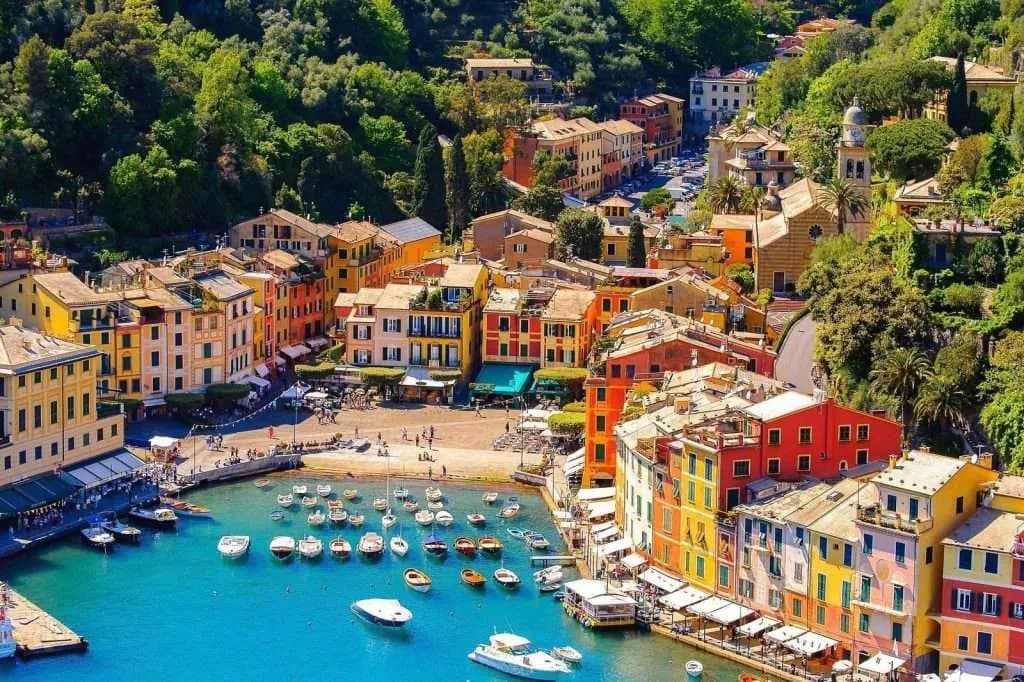
On the way back we went into Portofino harbour, which is the correct way to see Portofino and possibly the only bearable one. You do not need to dock; you can enter slowly, turn in the basin and come out again, and in five minutes you will have seen more of the village than an afternoon on land will give you in August. The houses stack up around the bay in ochre and terracotta and that particular Ligurian dark red, the church of San Giorgio sits above on the point, and from a small boat at water level the whole thing has a scale to it that photographs flatten.
If you do want to tie up, the harbour is a private marina and the rates in summer are memorable. Most day boats do what we did.
We came back into Santa Margherita around six. Fuel is settled on return — you pay for what you used, and a day of five-knot pottering around the promontory does not use much. We paid around €17 for the used fuel. Then the slow business of gathering wet towels and salt-stiff hair and walking up into town for an aperitivo, which after eight hours on the water tastes considerably better than it has any right to.
What It Costs and When to Go
A licence-free motorboat of four to six metres runs roughly €150–250 for a full day in high season, less in the shoulder months, plus fuel and the deposit hold. We paid €170 through a friend’s recomendation.
June and September are the two good months. July and August bring the crowds, the mooring fields fill by eleven, and the same day costs more. The sea on this coast is usually flat in the morning and picks up after two in the afternoon, particularly the libeccio from the southwest, which is another argument for the early start. If the forecast is bad, the operators will simply tell you they are not renting; take that as good news rather than an obstacle.
Bring more water than you think, a hat, a dry bag for phones, and shoes you can swim in if you plan to land anywhere with pebbles. Leave the drone at home — you are inside a protected area.
Was It Worth It
We had walked this coast the winter before and thought we knew it. We did not. The promontory only makes sense from the water: the way the cliffs run, why San Fruttuoso ended up where it did, why Portofino was a fishing village long before it was anything else. It is a small stretch of coast, forty minutes end to end, and it took us a whole day, and we still came back with a list of things to do next time.
Which, on balance, is the best outcome a weekend can produce.