The Marrakech Medina
Marrakech was both the beginning and the end of our trip to Morocco, and my very first time in the country. We spent one night in the medina before setting off for the desert, and then came back for two more nights once the dunes were behind us. So rather than a day-by-day account, this is more of an overall picture of the medina: where we stayed, what we saw, where we ate, and a few things worth knowing before you go.
The medina is the old walled city at the heart of Marrakech. It was founded by the Almoravids in the 11th century and has been a UNESCO World Heritage Site since 1985. Its walls and buildings share the same reddish earth colour, which is why Marrakech is often called the Red City. Inside, it is a maze of narrow alleys, souks, mosques, palaces and riads, and walking through it for the first time is, to say the least, an experience for all of the senses.
Getting There from Turin
We flew to Marrakech from Milan Malpensa. Coming from Turin, we decided to spend the night before the flight at the Moxy Milan Malpensa Airport, which we were able to book thanks to a Marriott Bonvoy perk. The hotel sits right across the road from Terminal 2, with a free shuttle to Terminal 1, and waking up a few minutes from the airport, instead of doing the whole journey from Turin on the day of the flight, made the start of the trip a lot less stressful.
Riad Djebel: Our First Night in the Medina
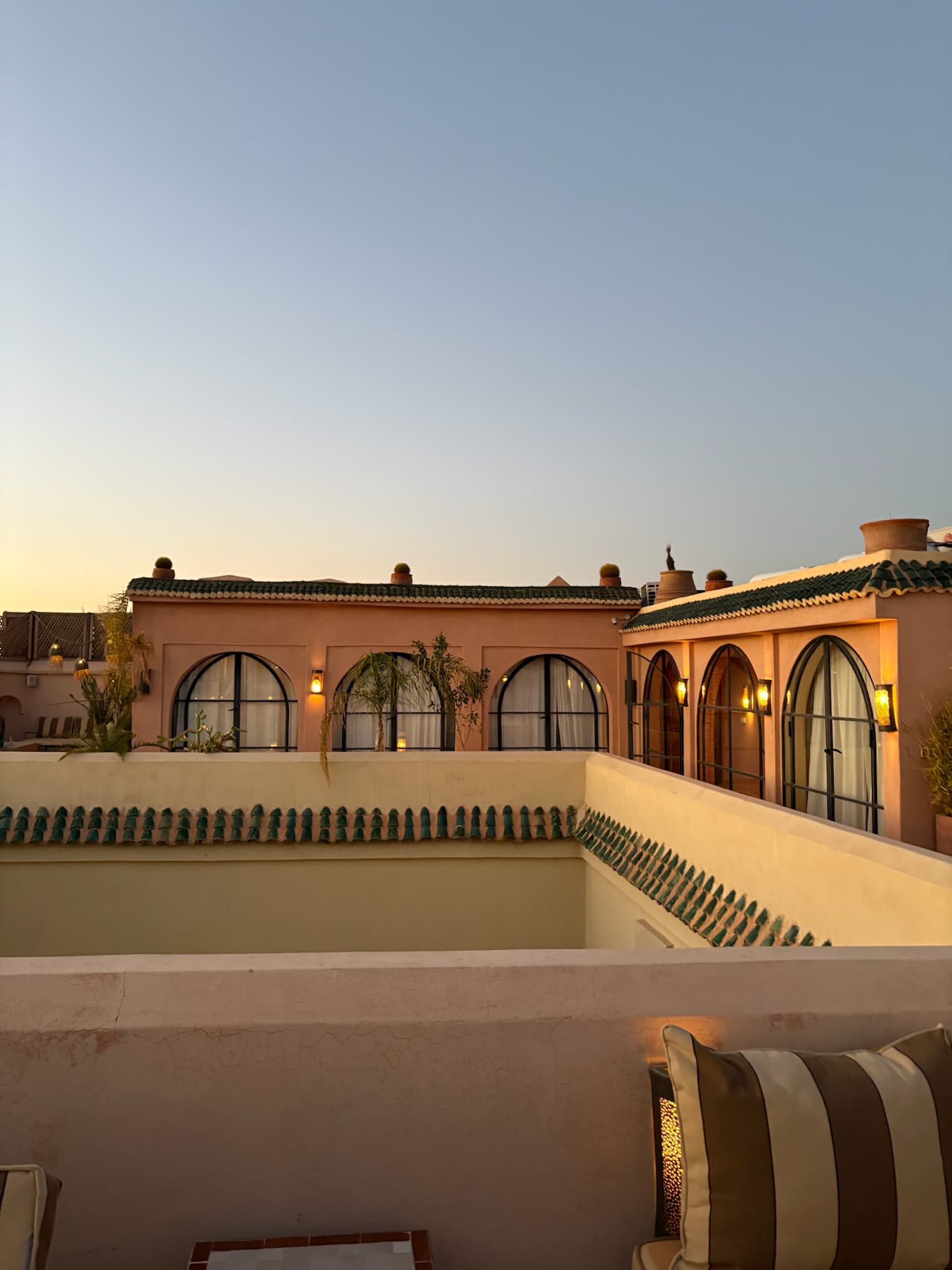
For our first night, we stayed at Riad Djebel. A riad is a traditional Moroccan house built around an inner courtyard or garden: from the alley outside, all you see is a plain wall and a door, but once you step through it, the noise of the medina seems to disappear. Many of them have now been turned into small guesthouses, and staying in one is, in my opinion, the best way to experience the medina.
Riad Djebel was a very pleasant place to stay, but what really made it was the staff, who were amazing from the moment we arrived to the moment we left.
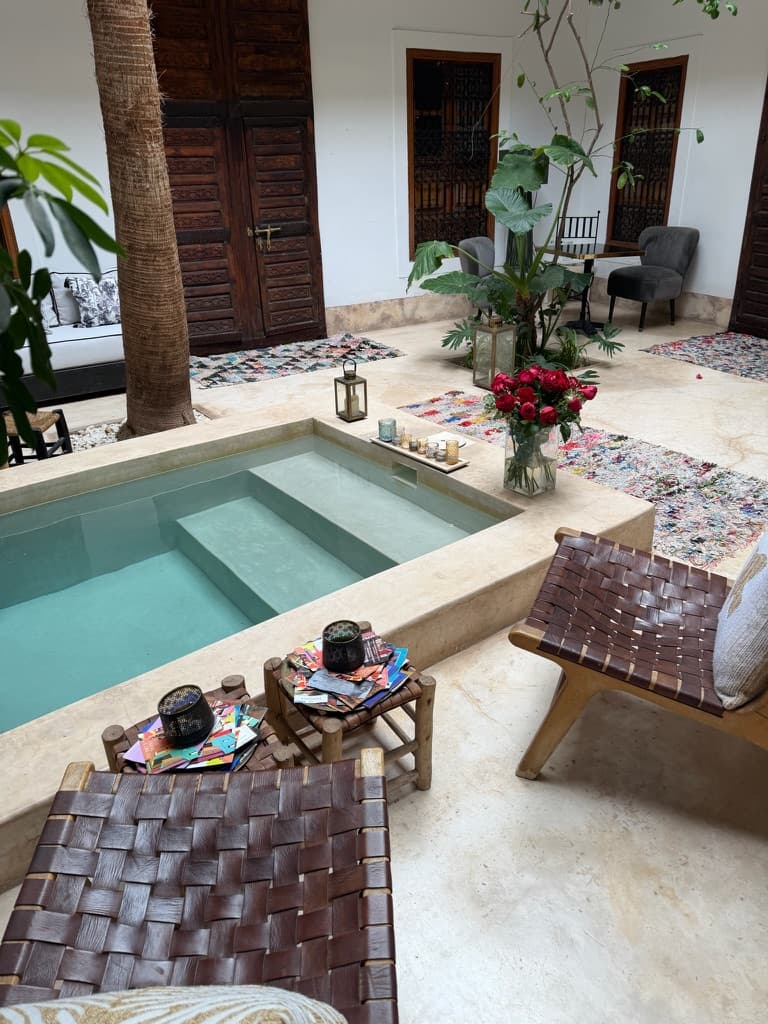
Then there was the breakfast, which was amazing every time, but especially the one they served us when we arrived. Having never been to Morocco before, that breakfast was my very first taste of the country, and it set the bar extremely high for everything that followed. Their yogurt, in particular, deserves a special mention.
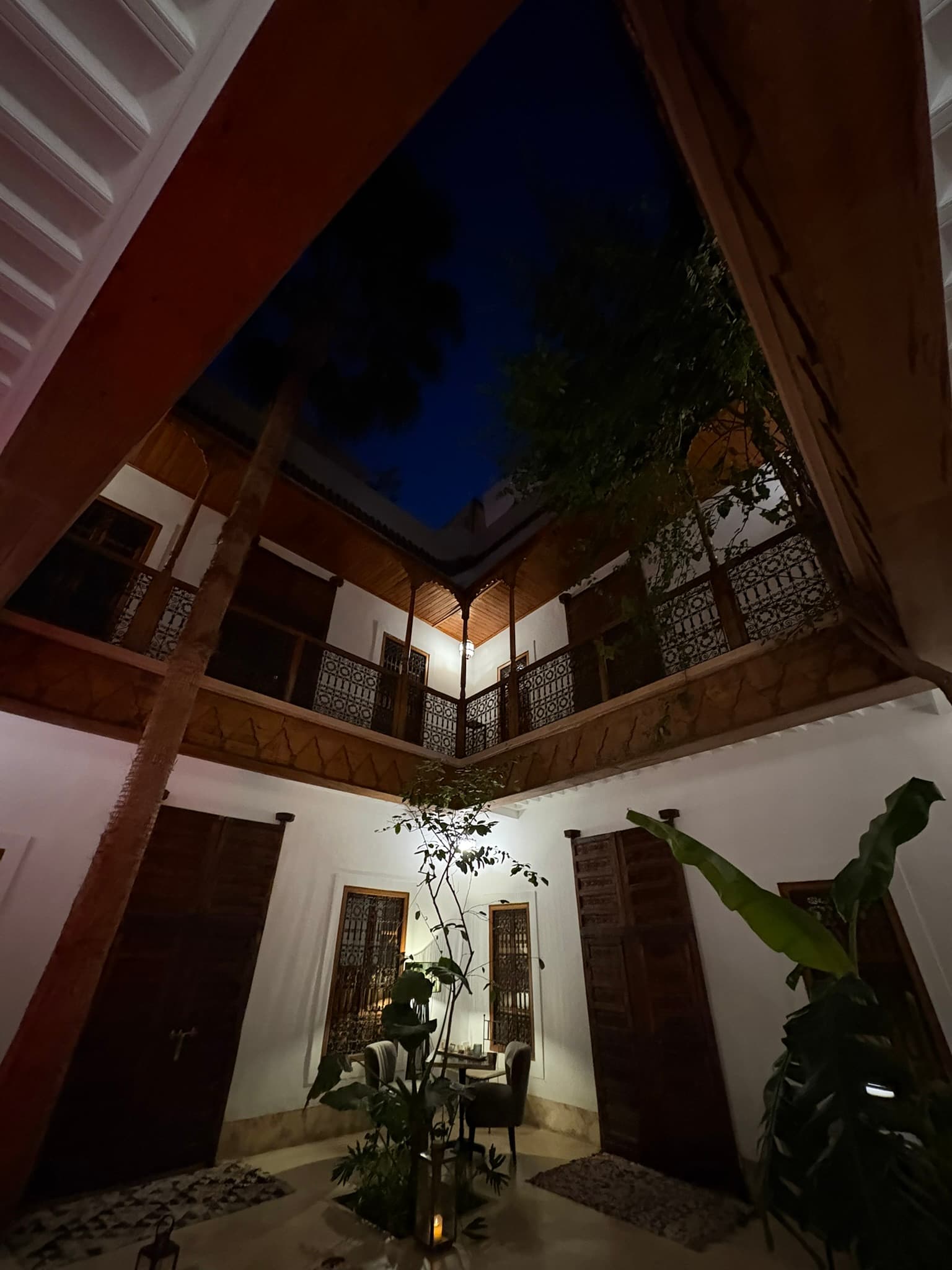
It is also worth mentioning where the riad is. Rather than right next to the main square, it sits in the area around the meat market, about a kilometre from Jemaa el-Fnaa, in a part of the medina that is not very touristy at all. Walking back to the riad meant seeing a side of the medina that many visitors probably never reach, and it made a nice contrast to the busier parts of the old city.
A Surprise Birthday Dinner at Jad Mahal
That first night in Marrakech was also the evening before my birthday, and my girlfriend had a surprise ready: dinner at Jad Mahal.
Jad Mahal is in the Hivernage district, just outside the medina walls, and calling it simply a restaurant does not really do it justice. The decor looks like something out of a palace, a live band plays through the evening, and as the night goes on, the shows begin: belly dancers, fire performers, acrobats and music of all sorts. It was loud, colourful and extremely fun, and once again, I have my girlfriend to thank for it.
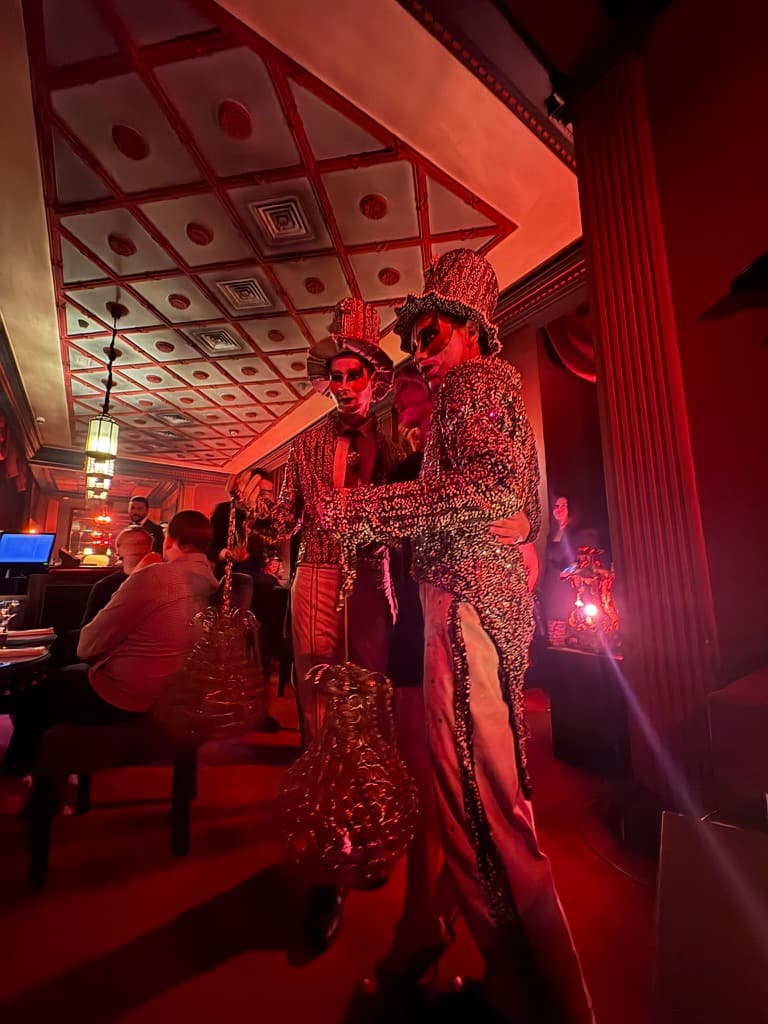
It turned out to be the first of two birthday dinners on this trip. The next morning, we set off for the desert, where the celebrations continued with a private dinner in the dunes, which I wrote about in The Golden Dunes of the Merzouga Desert.
Back from the Desert: Riad K
After our night in the desert, our driver brought us back to Marrakech, where we spent our last two nights at Riad K. It deserves an article of its own, so you can read all about our stay in our article on Riad K.
Between our first day and the two days after the desert, we managed to see a good part of the medina. Here is what we saw, and what I would recommend.
Jemaa el-Fnaa and the Souks
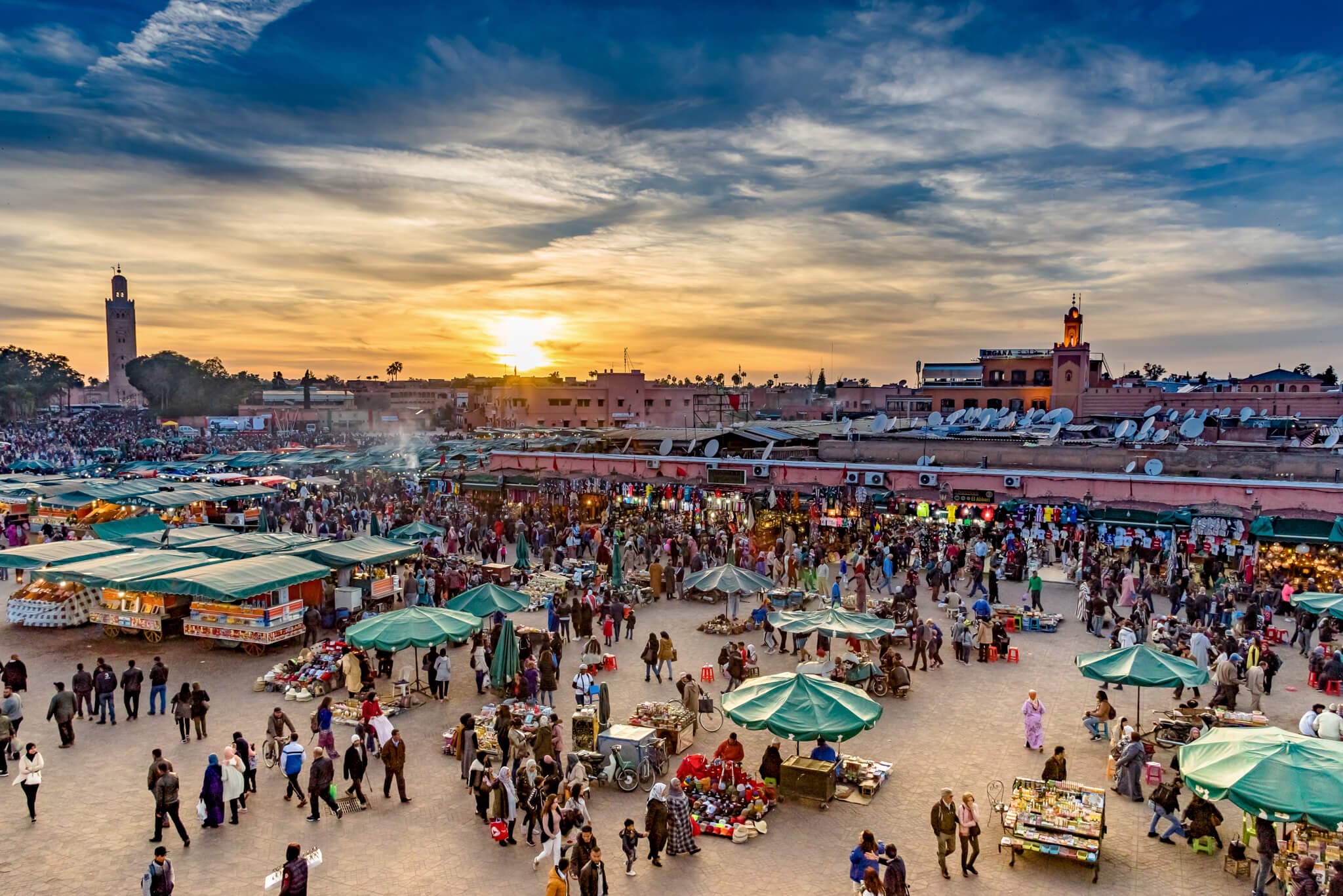
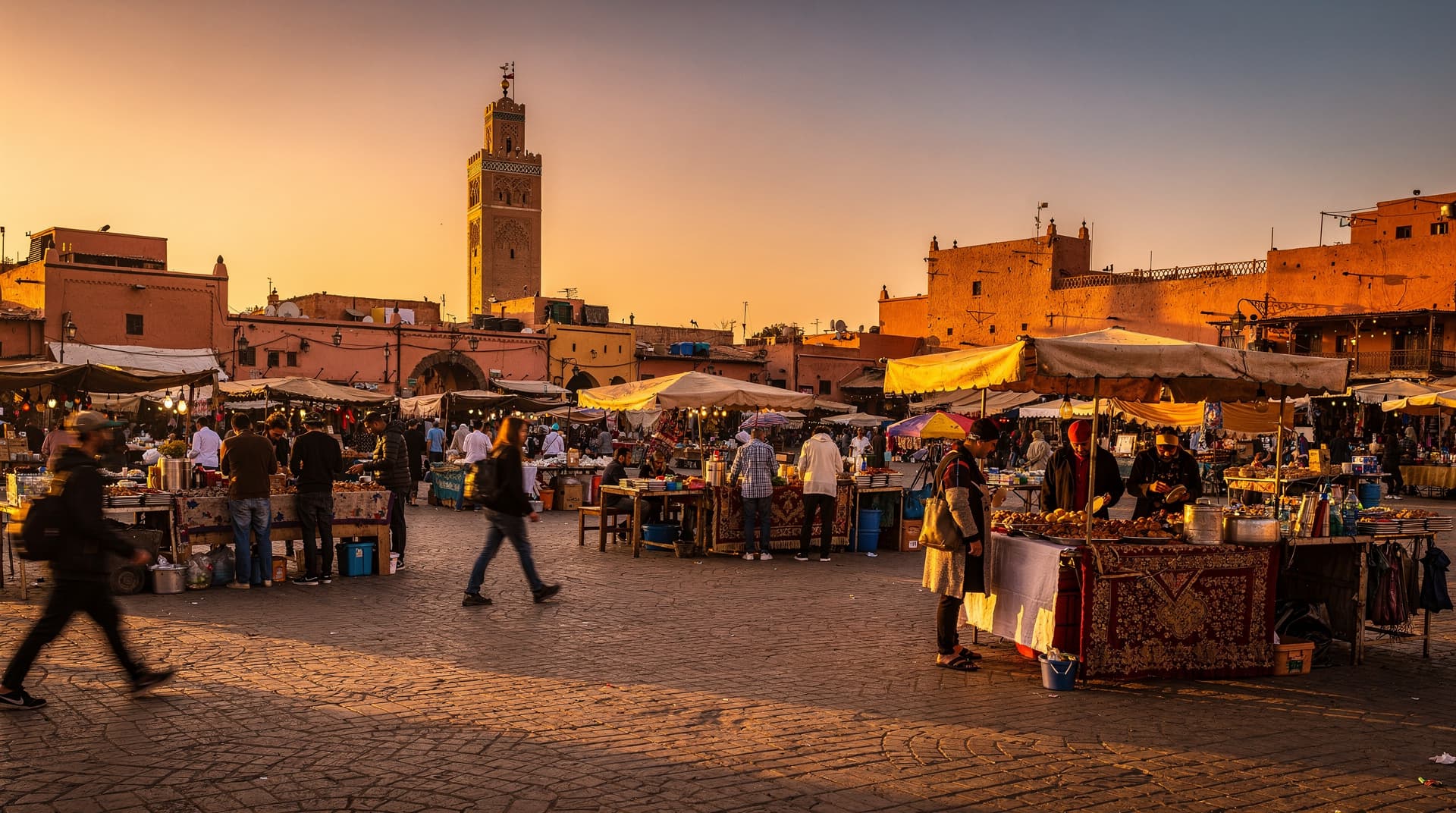
All roads in the medina seem to lead to Jemaa el-Fnaa, the huge main square at its centre. During the day, it is filled with orange juice stalls, snake charmers and henna artists. As the sun goes down, it transforms: food stalls are set up in long rows, smoke rises from the grills, and musicians and storytellers gather crowds around them. The square is so unique that UNESCO recognised it as a Masterpiece of the Oral and Intangible Heritage of Humanity in 2001, and standing in the middle of it, it is easy to understand why.
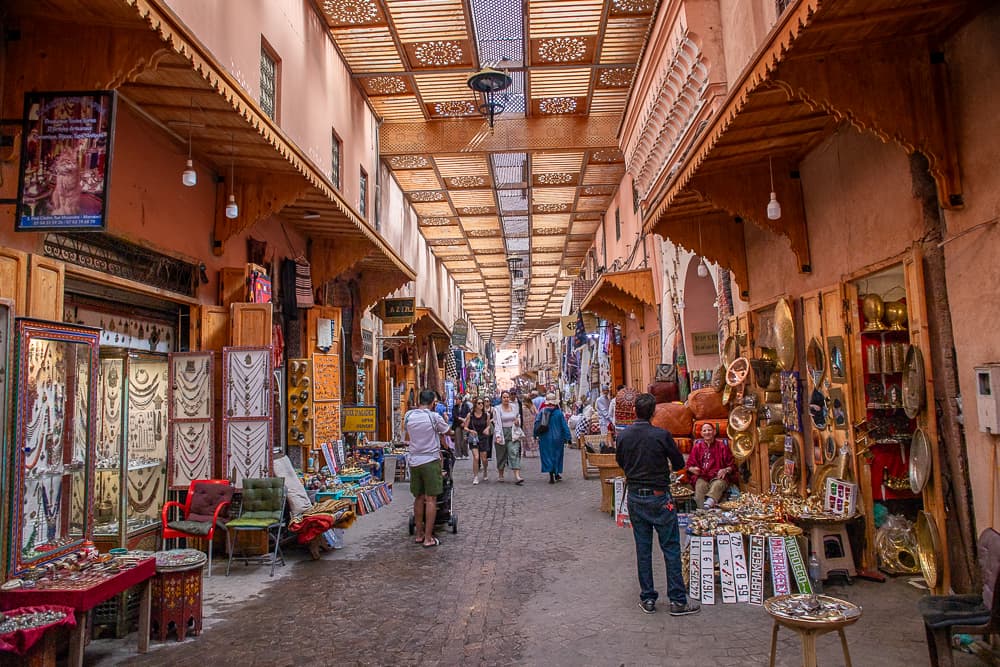
From the square, the souks spread north in a tangle of covered alleys. Each area traditionally has its own trade: spices, leather, lanterns, carpets, ceramics, slippers and metalwork. It is very easy to get lost, and honestly, getting lost is part of the fun.
Mopeds, Sellers and Herbal Pharmacies
If there is one thing nobody really prepares you for, it is the mopeds. The alleys of the medina are narrow and crowded, and they are shared by pedestrians, handcarts and an endless stream of mopeds, which come at you from every direction, often at a speed that seems completely unreasonable for the space available. It is total chaos, and after a while you learn to keep to the side and listen out for the sound of an engine behind you.
The sellers, on the other hand, turned out to be much less of an issue than I expected. Marrakech has a reputation for pushy vendors and people trying to drag you into their shops, but in our experience it was not a huge problem at all: people will call out to you, but a polite "no, thank you" and a smile were enough to keep walking.
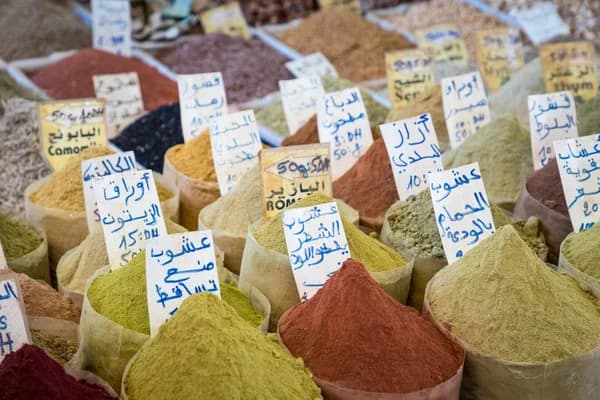
One type of shop I would absolutely recommend stepping into is the herbal pharmacy. Scattered across the medina, these small shops are lined from floor to ceiling with jars of spices, dried herbs, oils and natural remedies, and the owners will happily explain what each one is for. The variety of herbs and spices was amazing, and it is very hard to walk out empty-handed.
Bahia Palace and Ben Youssef Madrasa
Two sights you should not miss inside the medina are the Bahia Palace and the Ben Youssef Madrasa.
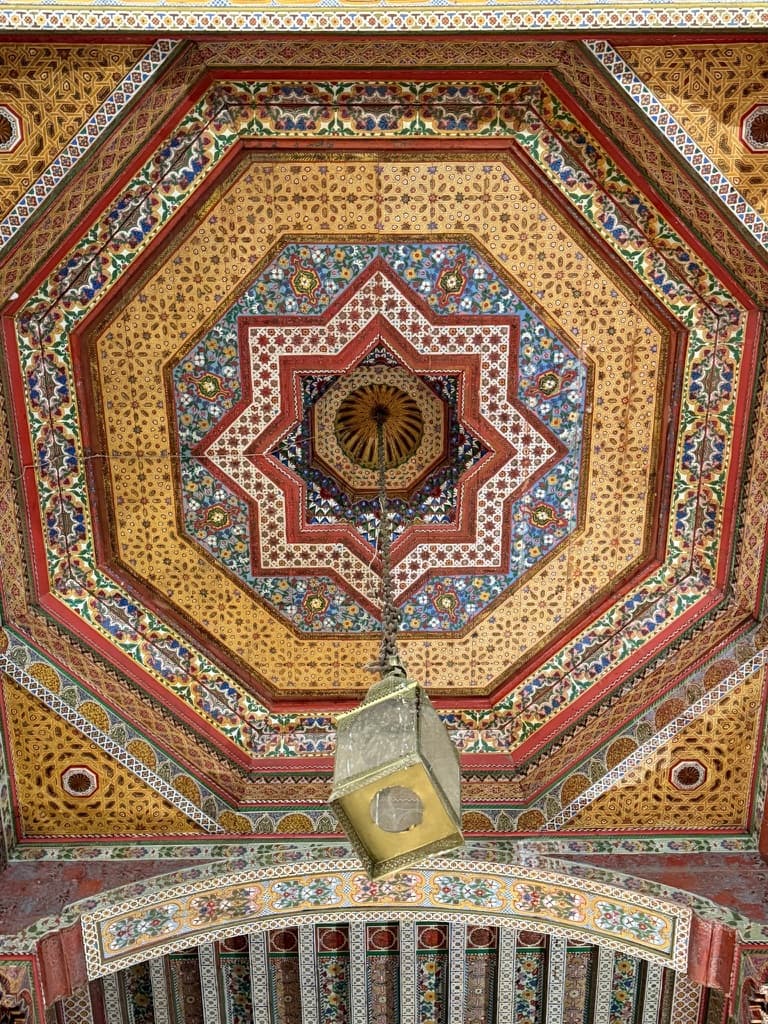
The Bahia Palace was built in the second half of the 19th century by Si Moussa, grand vizier to the sultan, and greatly expanded by his son, Ba Ahmed, between 1894 and 1900. Its name means "brilliance", and it lives up to it: room after room of carved and painted cedar ceilings, intricate stucco and zellige, the mosaic of hand-cut glazed tiles you will see everywhere in Morocco, all arranged around peaceful courtyards and gardens.
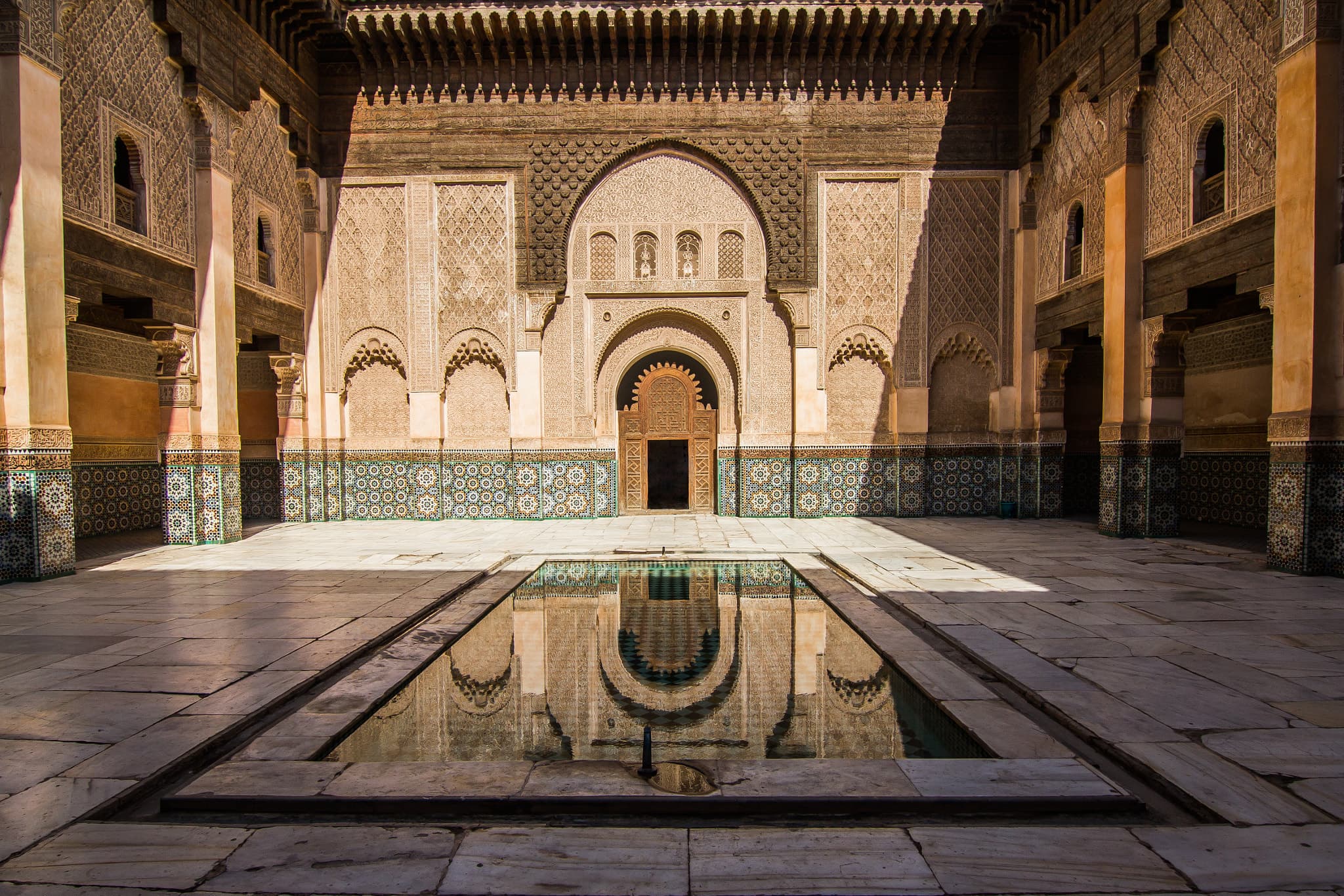
The Ben Youssef Madrasa, instead, is a former Islamic college. First founded in the 14th century, it was rebuilt in the 1560s by the Saadian sultan Abdallah al-Ghalib and was once the largest madrasa in Morocco, with around 130 student rooms built around its central courtyard. That courtyard, with its long rectangular pool framed by carved stucco, cedar wood and tiles, all perfectly symmetrical, is something you will not forget easily.
Two Gardens: Le Jardin Secret and Jardin Majorelle
When the medina starts to feel like too much, Marrakech has a couple of gardens that feel like a different world.
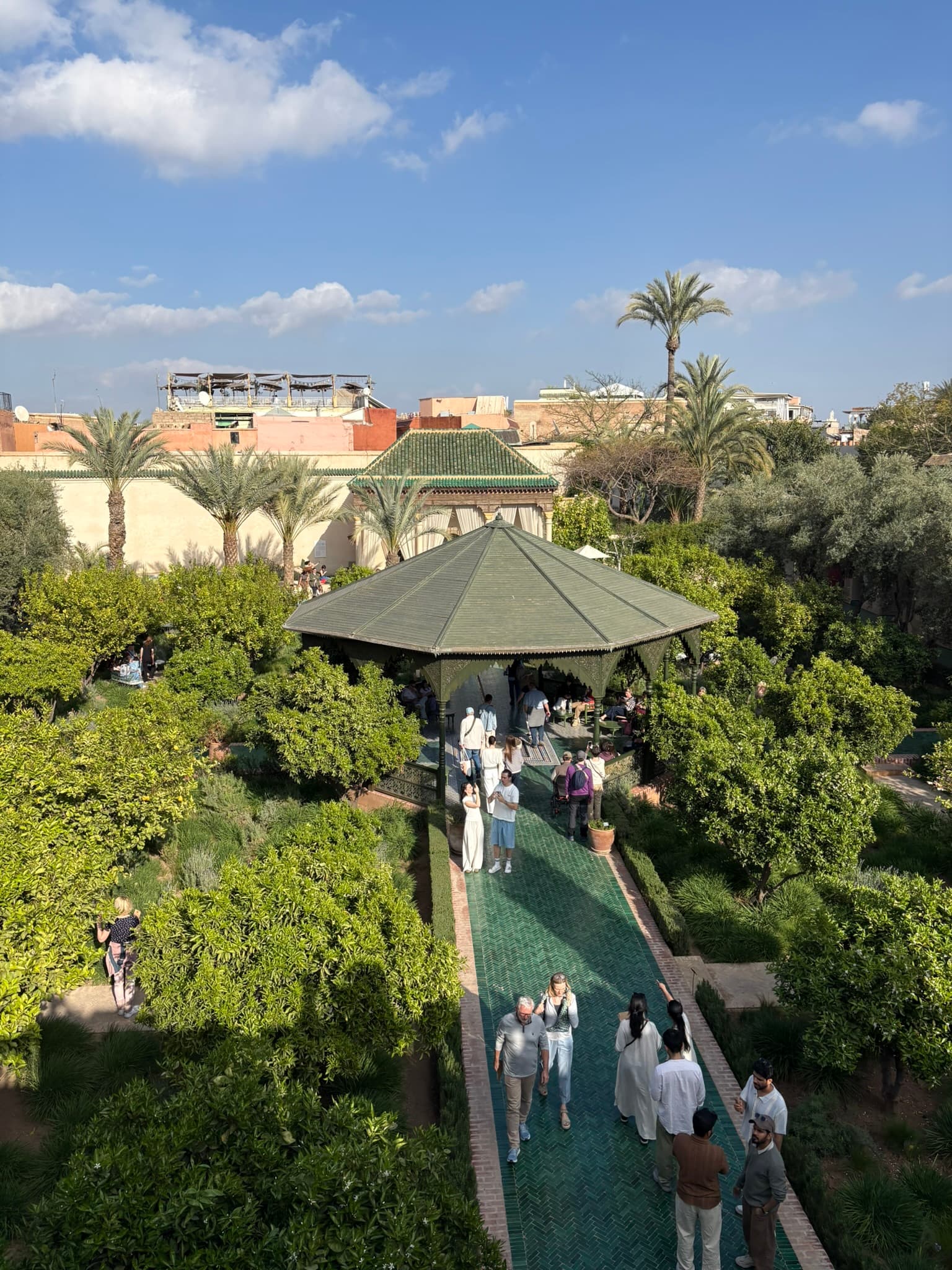
Le Jardin Secret is hidden right in the middle of the medina, in the Mouassine district, a few minutes from the souks. Its history goes back to the 16th century and the Saadian dynasty, but after years of neglect, it was restored and finally opened to the public in 2016. It is made up of two gardens, an Islamic garden laid out in the traditional style and an exotic garden with plants from all over the world, both fed by a restored khettara, an ancient system of underground channels that once carried water from the Atlas mountains into the city using gravity alone.
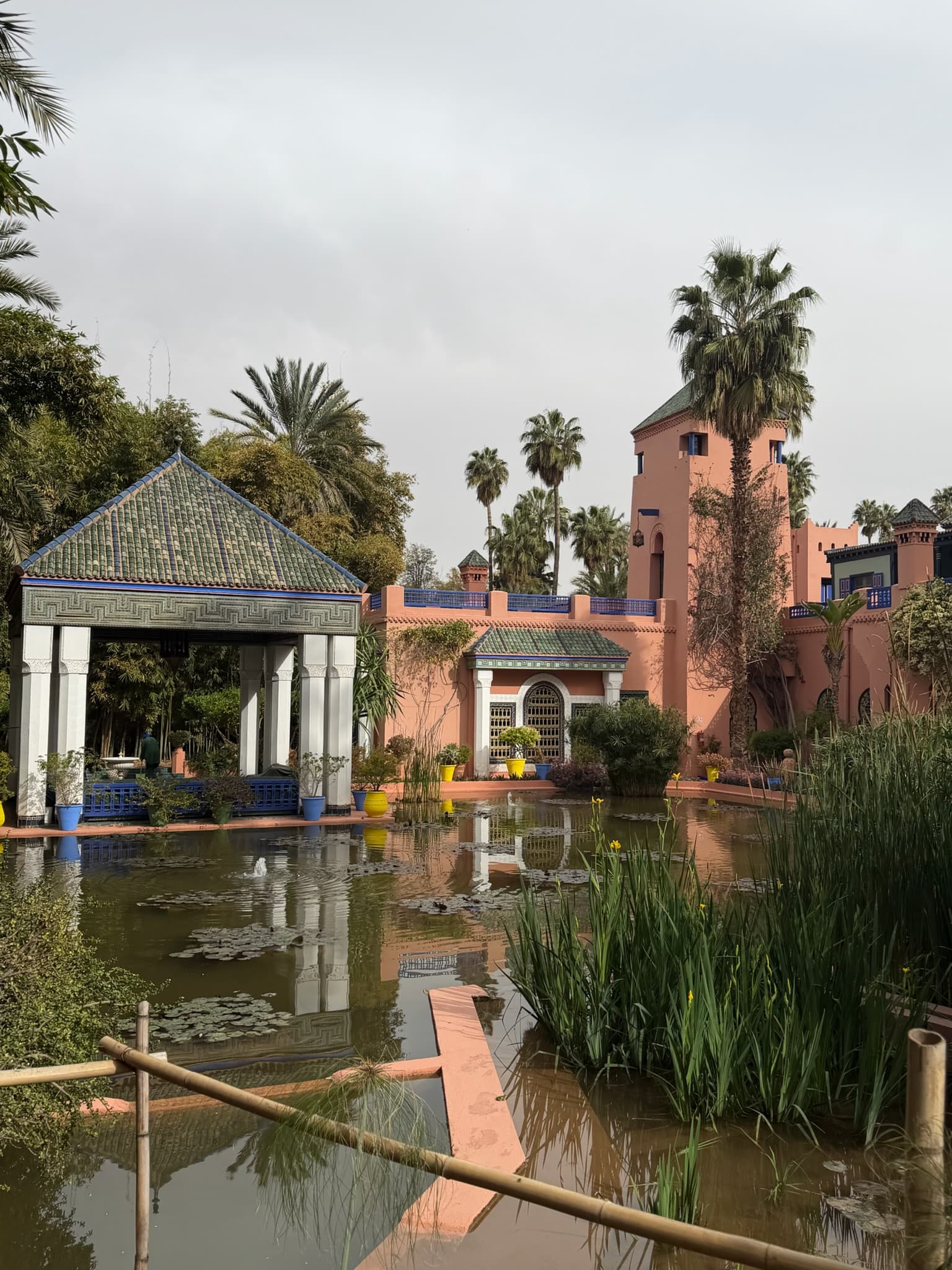
Jardin Majorelle, on the other hand, is outside the medina walls, in the Gueliz district, so you will need a taxi or a fairly long walk to reach it. The garden was created by the French painter Jacques Majorelle from the 1920s onwards and was bought by Yves Saint Laurent and Pierre Bergé in 1980, who saved it from being demolished. It is famous for its cacti, bamboo and palm trees and, above all, for the intense cobalt blue of its buildings, a shade now known as Majorelle blue. It is one of the most visited places in the city, so it is worth booking your tickets online in advance.
Sunset on the Rooftop of El Fenn
If you only have one sunset in Marrakech, spend it on the rooftop of El Fenn. El Fenn is a boutique hotel opened in the early 2000s by Vanessa Branson and Howell James, a short walk from Jemaa el-Fnaa, and its roof terrace is one of the most beautiful in the city: huge, full of plants and colourful corners, and looking straight onto the minaret of the Koutoubia Mosque, the tallest landmark in the medina. Watching the sky turn orange and pink over the rooftops, drink in hand, while the evening call to prayer echoed across the city, was the perfect way to end a day in the medina.
Eating in Marrakech
As for food, we stuck to Moroccan dishes almost every time, mostly in restaurants spread across the medina: tagines slow-cooked in their conical clay pots, couscous and, of course, endless glasses of sweet mint tea.
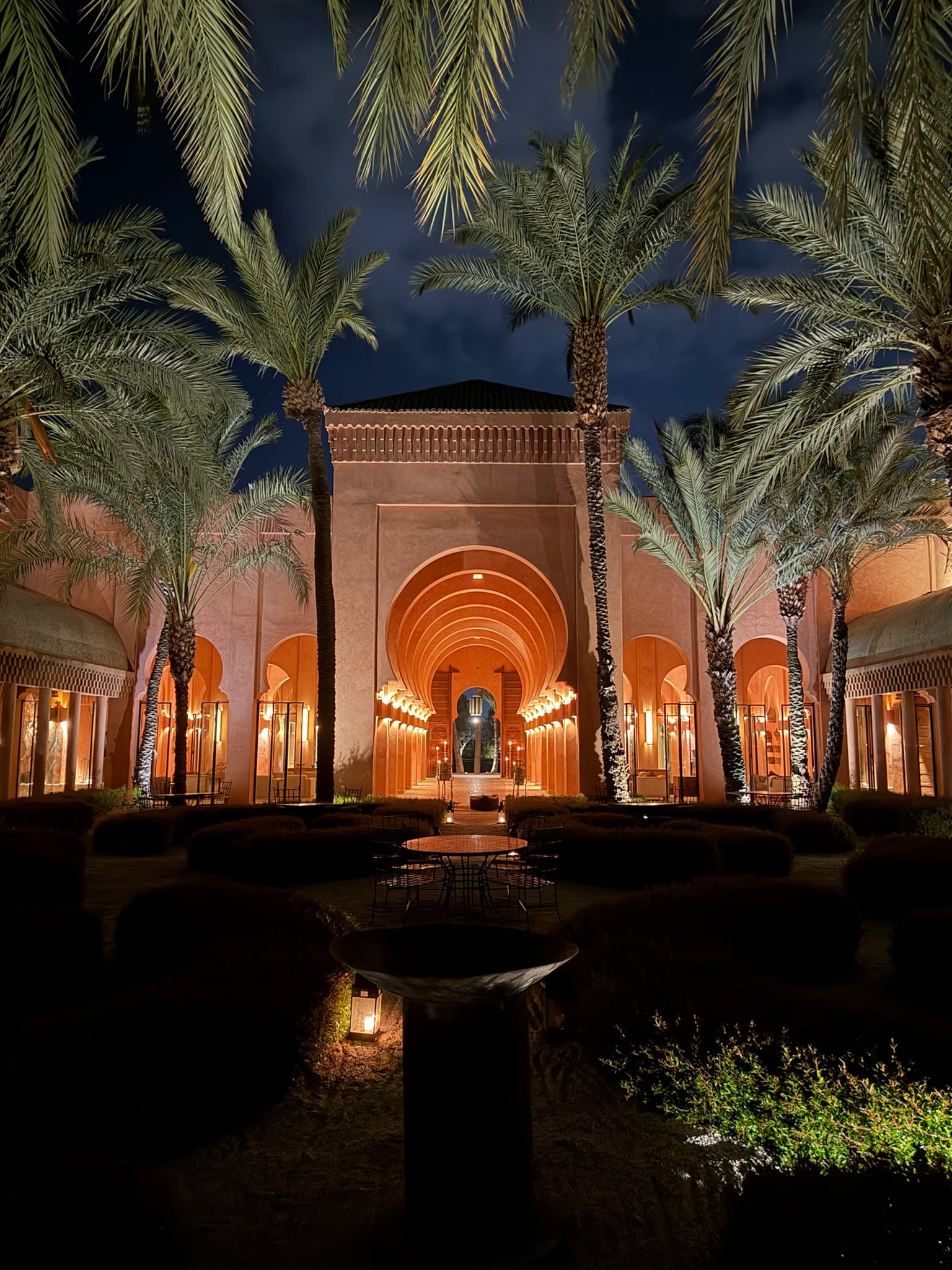
One evening, though, we left the medina behind for dinner at Amanjena. The resort sits around 12 kilometres outside the city, on the road to Ouarzazate, the same road that eventually leads towards the desert. It could not be more different from the medina: rose-coloured pavilions arranged around a large reflecting pool, surrounded by olive groves and palm trees. After the chaos of the mopeds and the souks, the calm was almost surprising.
A Hammam and a Massage to End the Trip
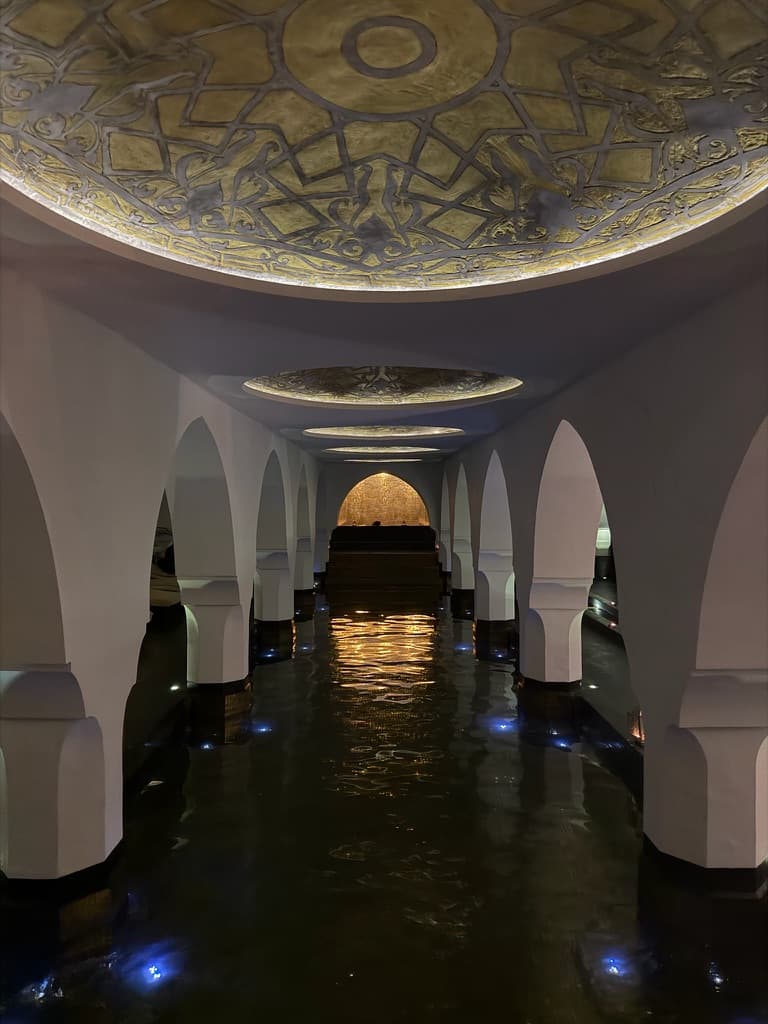
To end our time in Marrakech, we treated ourselves to a hammam followed by a massage. Traditionally, the hammam is a public bathhouse and an important part of daily life in Morocco, but today many riads and spas offer their own version of the ritual. You start in a steam room, are covered in black soap made from olives, and are then scrubbed from head to toe with a rough glove called a kessa, before being rinsed with buckets of warm water. It is not exactly the most relaxing part, but you walk out with the cleanest skin of your life.
The massage that followed was the relaxing part. Moroccan massages are typically done with argan oil, and after days of dust, sand, long drives and dodging mopeds in the alleys, it was the perfect way to close the trip before flying home.
Before You Go
- Stay in a riad inside the medina. It is the best way to experience the old city, and a riad in a quieter, less touristy area, like Riad Djebel near the meat market, gives you a break from the crowds while keeping everything within walking distance.
- Don't skip the riad breakfast. Ours was one of the highlights of the trip.
- Watch out for the mopeds. Keep to the side of the alleys and always keep an ear out for engines behind you.
- Don't worry too much about the sellers. A polite "no, thank you" goes a long way.
- Jardin Majorelle is outside the medina. Plan a taxi to get there, and book your tickets online in advance.
- Book your dinners ahead of time. Places like Amanjena and Jad Mahal are worth reserving in advance, especially if, like us, you are celebrating something.
- Save the hammam for the end. After days of walking, it is the best way to recover before the flight home.
- Leave some space in your suitcase. Between the herbal pharmacies and the souks, you will most definitely want to bring something home.
- Coming from Turin? If your flight leaves from Malpensa, consider spending the night before at an airport hotel, as we did at the Moxy.