Contributed by the SplitSlip team
Your first month in a new city is loud in the best way. Welcome dinners, weekend trains, a shared flat for the first trip inland, coffee that somehow becomes a group habit. The people around the table are still almost strangers. That is exactly when money gets awkward.
On our team, we built SplitSlip because this pattern is familiar: nobody wants to keep a mental tally, and nobody wants to be the person who always pays and hopes it balances out. A clear habit early on does more for a new friendship than waiting until someone feels used.
Why the first month is different
At home you already know who forgets their card and who settles the same evening. Abroad, you do not. You meet through university, a residence, or an Erasmus event, and you say yes to plans before you know anyone’s budget.
Shared costs pile up fast: a restaurant bill with three appetisers nobody claimed, a taxi after the last metro, groceries for a house dinner, museum tickets bought by one person for five. If you leave it fuzzy for a few weeks, small imbalances turn into quiet resentment. Talking about money on day three is easier than fixing it on day thirty.
Suggest a fair split before the bill arrives
The simplest line works in almost any language: “Shall we split by what each person had?” Most people prefer that to an equal split when orders are uneven. Say it while you are still choosing dishes, not when the waiter is waiting with the card machine.
A few practical habits help:
- One person collects the receipt (paper or the digital one on the phone).
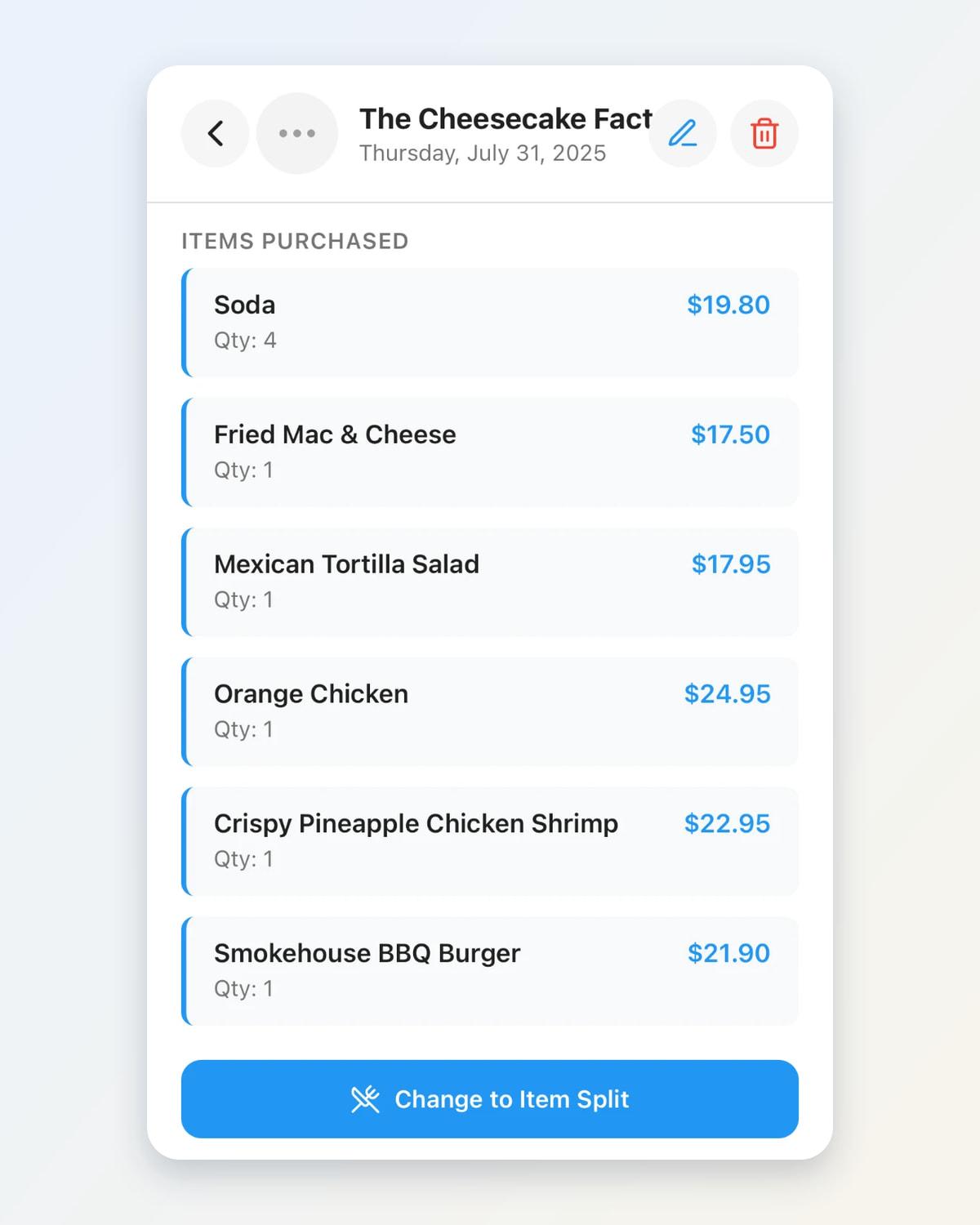
- You go through the lines together: who had the pasta, who shared the salad, who only drank water.
- Tax is split in proportion to what each person ordered, not as a flat equal share, so someone who ordered less does not subsidise someone who ordered more.
- If a tip is already included in the bill, share it in the same proportion as each person’s items.
- Settle the same day when you can. A transfer before everyone leaves the table beats a reminder two weeks later.
You do not need a spreadsheet speech. You need one calm sentence and a shared view of the numbers.
Why we care about item-by-item splits
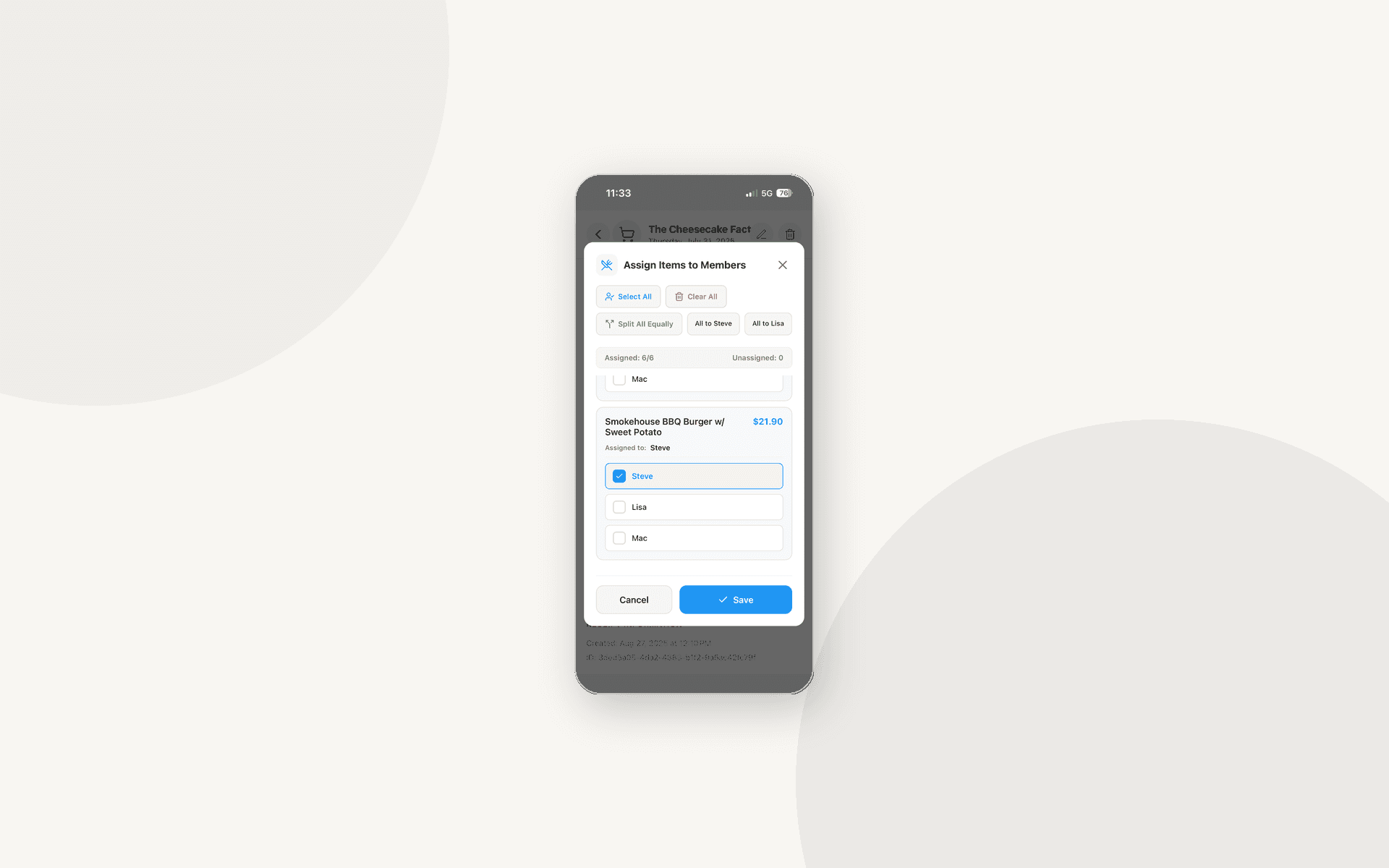
We did not invent a cast of characters for this piece. The reason we built item-by-item splitting is the ordinary dinner table: one person orders a main and a drink, someone else adds a starter and dessert, a third person sticks to a salad and water, and a shared plate sits in the middle. An equal split leaves the light eater paying for food they never touched. Matching each line to the people who had it, then applying tax (and any tip included in the bill) in proportion to those items, matches what people actually ordered. Everyone sees the same breakdown. The person who paid the restaurant gets reimbursed for the difference — outside whatever tool you used to do the maths.
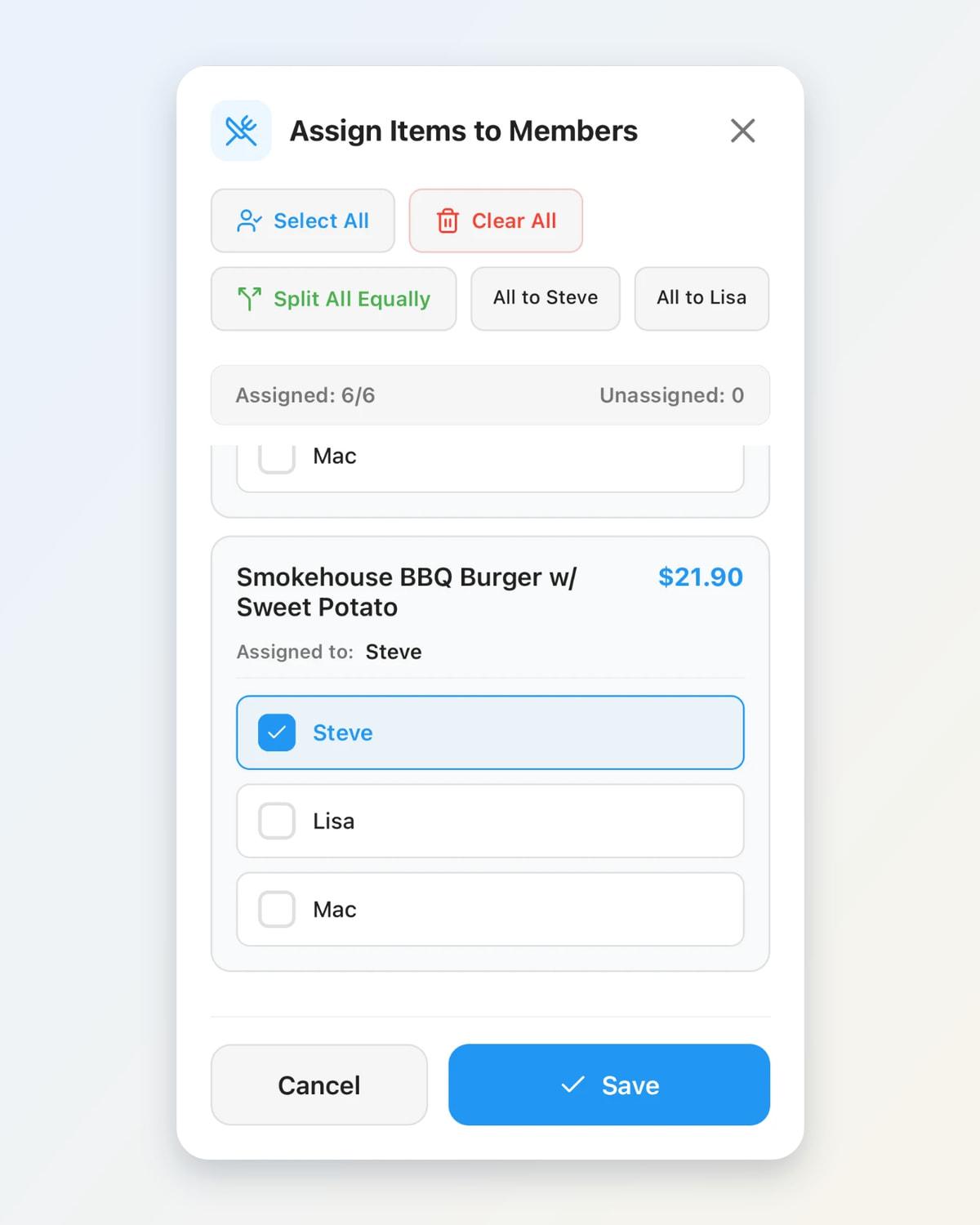
That last part matters: the note or app that shows who owes what is not the payment itself. Money still moves through the bank transfer or payment app you already use. Keeping those two steps separate avoids confusion and keeps control with the people at the table.
Weekend trips and the “one person booked everything” problem
The same pattern scales to a first weekend away. One person often books the train or the stay on their card because it was faster. That person should not become the unpaid banker of the group.
Before you go, agree on:
- What is shared (transport, stay, group tickets) and what is personal (souvenirs, a solo museum visit).
- Who advances which booking.
- How you will show the running total so late joiners can see it too.
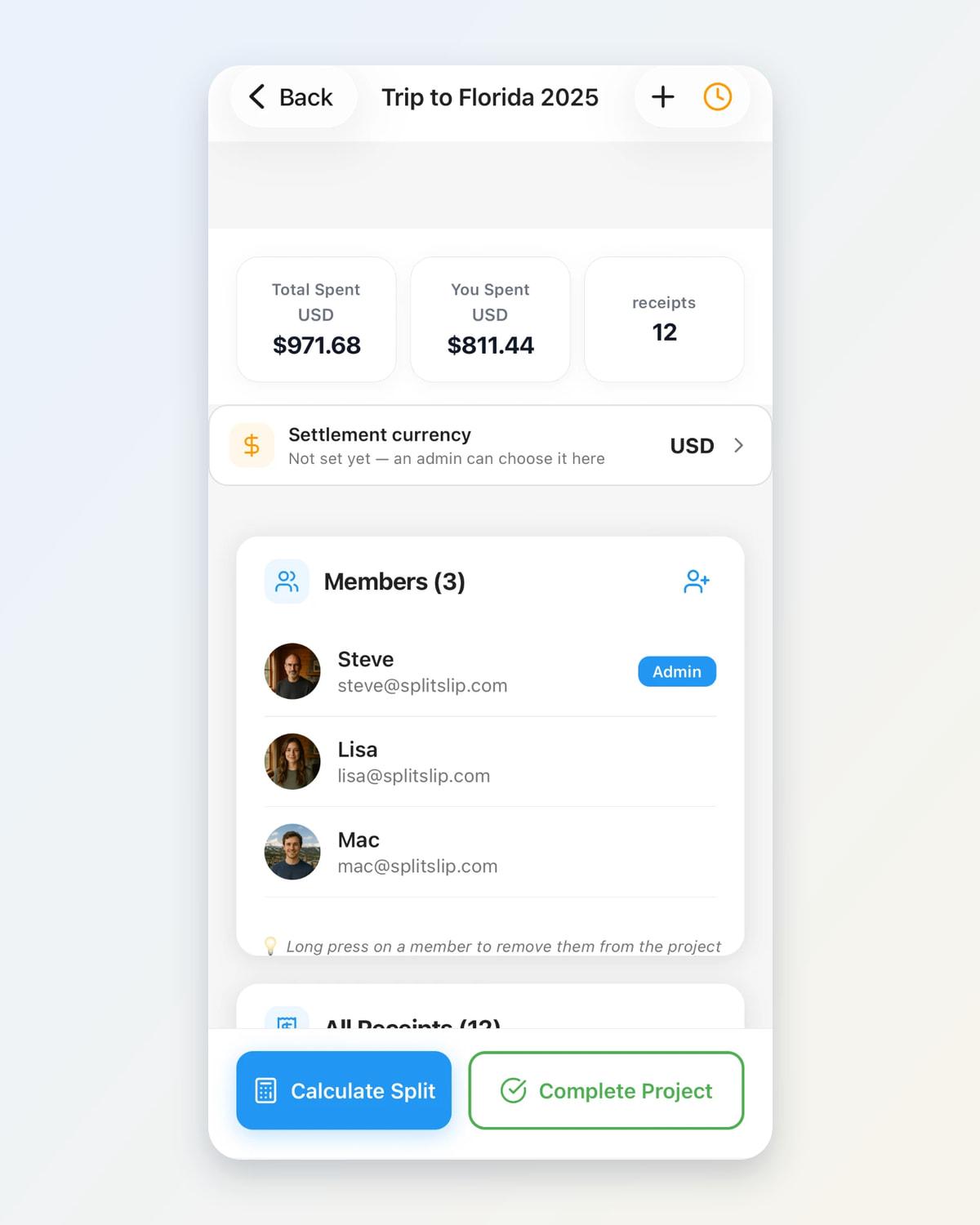
A shared link that guests can open in a browser, without creating an account, is useful here. Not everyone wants another app in the first week. They do want to see their own total before they transfer anything. (To join a project and edit, they install SplitSlip and sign in.)
If you want a dedicated walkthrough for trips, we wrote one on how to split travel expenses with friends step by step, including guest links and item-level splits.
How to say no when a plan is over your budget
Fair splitting does not fix every money tension. Sometimes the plan itself is too expensive for you right now. That is normal in the first month, when you are still learning local prices and your scholarship or salary rhythm.
A short, specific no lands better than a vague maybe:
- “I can’t do the paid club night, but I’ll join for dinner before.”
- “I’m in for the day tickets, not for the extra excursion.”
- “Can we cook at the apartment instead of eating out tonight?”
You are not rejecting the people. You are choosing the part of the plan you can afford. Friends who want you there will usually adapt. If someone only wants you there when you pay equally for everything, that is useful information early.
What tools help
Keep this short. Advice first; the tool second. Paper notes work until the third receipt. After that, add lines by hand for free, or scan a receipt (50 free AI scans, then in-app purchases). Guests can open a shared link without an account. Settlement stays outside the tool — it shows who owes whom; you pay with the method your group already trusts. Tools show numbers. People still have the conversation.
A light routine for month one
You do not need a household constitution. You need a repeatable five-minute habit:
- Before the bill or booking, say how you will split.
- Capture the receipt or the booking confirmation the same day.
- Assign items (and shared dishes) while everyone still remembers.
- Share a read-only view so nobody has to trust one person’s memory.
- Transfer what you owe before the next plan starts.
Do that for welcome week and the first weekend trip. By month’s end, money talk feels ordinary instead of loaded.
Closing
New cities are expensive in attention as well as in currency. You are learning names, routes, and how late the kitchen stays open. Putting costs in the open early is not cold. It is how you keep the fun parts fun.
Split by what each person had. Show the same numbers to everyone. Settle outside the chat thread. Say no to the parts you cannot afford. That will not make lifelong friendship certain — nothing does — but it removes one common way new groups fray in the first thirty days.
Contributed by the SplitSlip team