GR Stories | Caprese: Italy's Simplest Salad, Done Right
There is no recipe in Italian cooking that punishes corner-cutting more efficiently than the caprese. Three ingredients, no heat, no technique — and yet the distance between a mediocre caprese and a perfect one is enormous, and almost entirely determined by what you buy rather than what you do.
This is both the appeal and the trap. Students new to Italian kitchens often assume that simple means forgiving. The caprese teaches the opposite lesson: when you have nothing to hide behind, everything shows.
Make it with watery supermarket mozzarella and an underripe tomato from the discount shelf and it will taste of exactly that — fridge-cold dairy and bland acidity. Make it with a good mozzarella di bufala, a ripe tomato from the market, a handful of fresh basil, and a pour of decent olive oil, and you will understand, possibly for the first time, why Italians talk about ingredients the way other people talk about music.
This is the version worth making. It takes ten minutes, costs very little if you shop right, and requires no cooking equipment beyond a plate and a knife.
Where the Caprese Comes From
The name gives it away: caprese means "from Capri", the island off the coast of Naples in the Campania region. The salad is widely attributed to a mason who prepared it on the island in the 1920s as a patriotic nod to the Italian flag — red, white, and green, in the form of tomato, mozzarella, and basil. Whether that story is true or embellished in the retelling, as many Italian origin stories are, the geography is accurate: this is a Southern Italian dish, shaped by the ingredients that Campania does better than almost anywhere else in the world.
Buffalo mozzarella — mozzarella di bufala campana — is produced in the lowlands around Caserta and Salerno, where water buffaloes have been kept since the early Middle Ages. The cheese has held a protected designation of origin (DOP) since 1996, which means that anything labelled mozzarella di bufala campana DOP must come from that specific area and meet strict production standards. When Italians outside the region make a caprese for a dinner party, they often drive the extra distance to find a good bufala — or ask someone coming up from the south to bring one in a cool bag. That is not an affectation. It is an acknowledgement that the ingredient is worth the effort.

For an international student living in Italy, this context matters practically: you are, in fact, living in the country where this dish was invented and where its key ingredient is made and sold fresh. The mozzarella di bufala in your local supermercato or mercato rionale was probably made within the last two days. Most of the world never gets access to that. Take the opportunity seriously.
What You Need
Serves 2 as a starter, or 1 as a generous lunch.
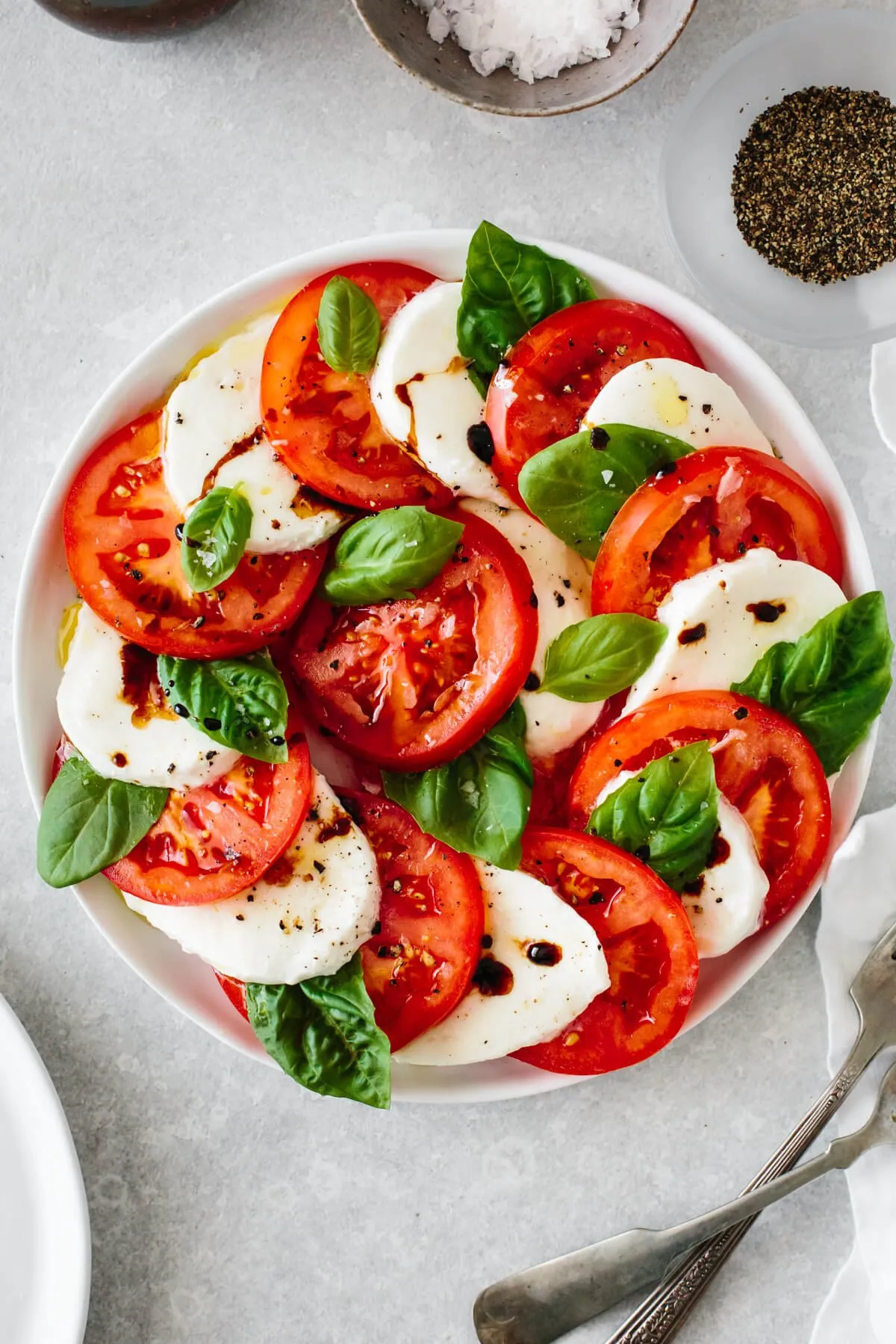
- 2 large, ripe tomatoes — cuore di bue (beef heart) or costoluto varieties are ideal; avoid anything sold as "salad tomatoes" in a plastic bag
- 1 ball of mozzarella di bufala (125–150 g), or fior di latte if bufala isn't available
- A small handful of fresh basil leaves — the large-leafed Genovese variety, not the small Thai basil you might find elsewhere
- Extra virgin olive oil — a good one; this is not the moment for the bottle you use to oil the pan
- Fine sea salt and black pepper, freshly ground
- Optional: a few drops of aged balsamic vinegar from Modena (aceto balsamico di Modena IGP) — not "balsamic glaze", not regular wine vinegar, but the real thing, which is thick and slightly sweet
That is the complete list. There is no garlic. There is no oregano. There is no lemon juice. These are additions that appear in tourist restaurants and recipe websites outside Italy, and they are not wrong exactly, but they are not a caprese — they are something else wearing the name.
On Choosing the Right Mozzarella
This is worth spending a paragraph on, because the mozzarella market is confusing and the difference between the options is significant.
Mozzarella di bufala DOP is the gold standard. It is made from water buffalo milk, which is richer and fattier than cow's milk. The result is a cheese that is yielding, slightly tangy, with a thin skin that gives when you press it and a milky interior that releases a little whey when you cut it. It costs more than the alternatives — expect to pay between €2.50 and €4 for a single 125 g ball in Italy — but it is the ingredient the dish was built around.
Fior di latte is mozzarella made from cow's milk. It is milder, slightly firmer, and noticeably cheaper. It is what most pizzerias use. For a caprese, it works well if the bufala isn't available or is out of your budget for the week, but the flavour will be gentler and the texture less dramatic.
Supermarket mozzarella in vacuum-sealed brine is what you want to avoid for a caprese. It is produced at industrial scale, often from pasteurised milk with a longer shelf life, and while it is perfectly acceptable on a pizza or in a pasta bake, it will not carry a cold salad that has nothing else to lean on.
If you are shopping in an Italian supermarket — Coop, Esselunga, Pam, Carrefour — look in the fresh dairy section for mozzarella floating in its own liquid in a small bag or tub, with a production date from the last two days. That is the version to buy.
Method
Step 1 — Take the mozzarella out of the fridge.
This sounds almost too obvious to mention, but cold mozzarella is less flavourful and less yielding than mozzarella at room temperature. Take it out twenty to thirty minutes before you plan to eat. Let it sit in its liquid on the counter. This is the only "preparation" it needs.
Step 2 — Slice the tomatoes.
Wash and dry the tomatoes. Cut them into rounds about 8–10 mm thick — thick enough to have presence on the plate, not so thin that they collapse. If you are using cuore di bue, which can be very large, halve the slices. Season the cut surfaces lightly with salt and leave them on the board for five minutes. This draws out a little water and concentrates the flavour slightly. Pat them dry with kitchen paper before plating.
Step 3 — Drain and slice the mozzarella.
Open the bag and let the whey drain off. Place the ball on a board and slice it with a sharp knife into rounds of similar thickness to the tomato — 8 mm or so. Some people tear mozzarella by hand rather than cutting it, which gives a more rustic, irregular texture and slightly more surface area for the oil to cling to. Both approaches work.
Step 4 — Plate it.
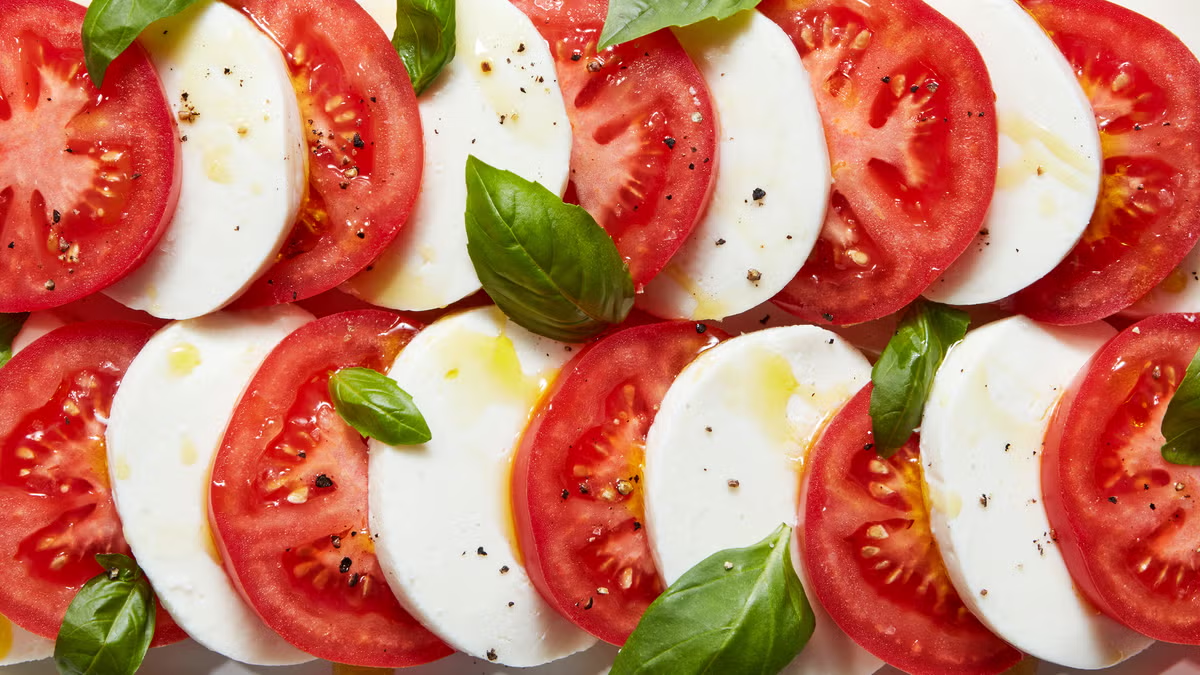
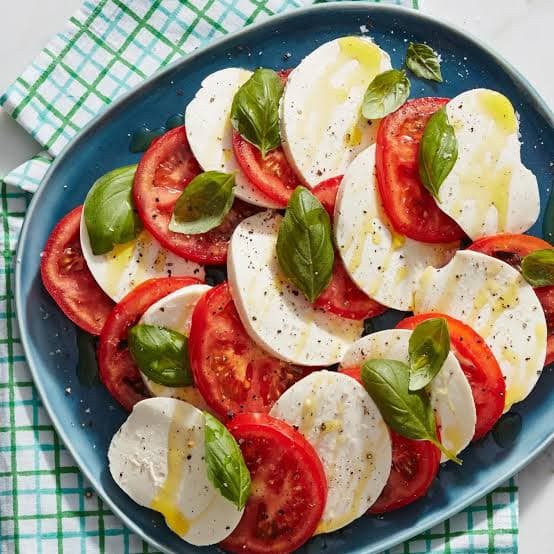
On a wide, flat plate, alternate slices of tomato and mozzarella, overlapping them slightly — the classic presentation. Tuck the basil leaves in between or scatter them on top. The leaves should be whole, not torn or chopped; they will darken and bruise quickly once cut.
Step 5 — Season and dress.
Season with a little more fine sea salt and a few turns of black pepper directly over the top. Then pour over a generous amount of extra virgin olive oil — more than you think is necessary. This is not a garnish; the olive oil is structural. It is the dressing and the sauce simultaneously. The oil should pool slightly in the gaps between the slices and be visible on the plate.
If you are using balsamic, add it now, a few drops at a time across the surface. It should not cover the dish; it should punctuate it.
Step 6 — Serve immediately.
A caprese does not wait. The salt will continue drawing water from the tomatoes, the basil will wilt, and the oil will start to absorb the whey from the mozzarella. It should be dressed and served within ten minutes of plating.
The Burrata Option
If you find burrata at your supermarket or local market — and in most Italian cities you will — it deserves a mention here, because it takes the caprese in a different and arguably more compelling direction.
Burrata is made from the same mozzarella curd, but the outside is formed into a pouch and filled with a mixture of cream and torn curd called stracciatella. When you cut into it, the filling spills out across the plate. It is richer than mozzarella, wetter, and more indulgent — less about structure and more about a kind of luxurious collapse.
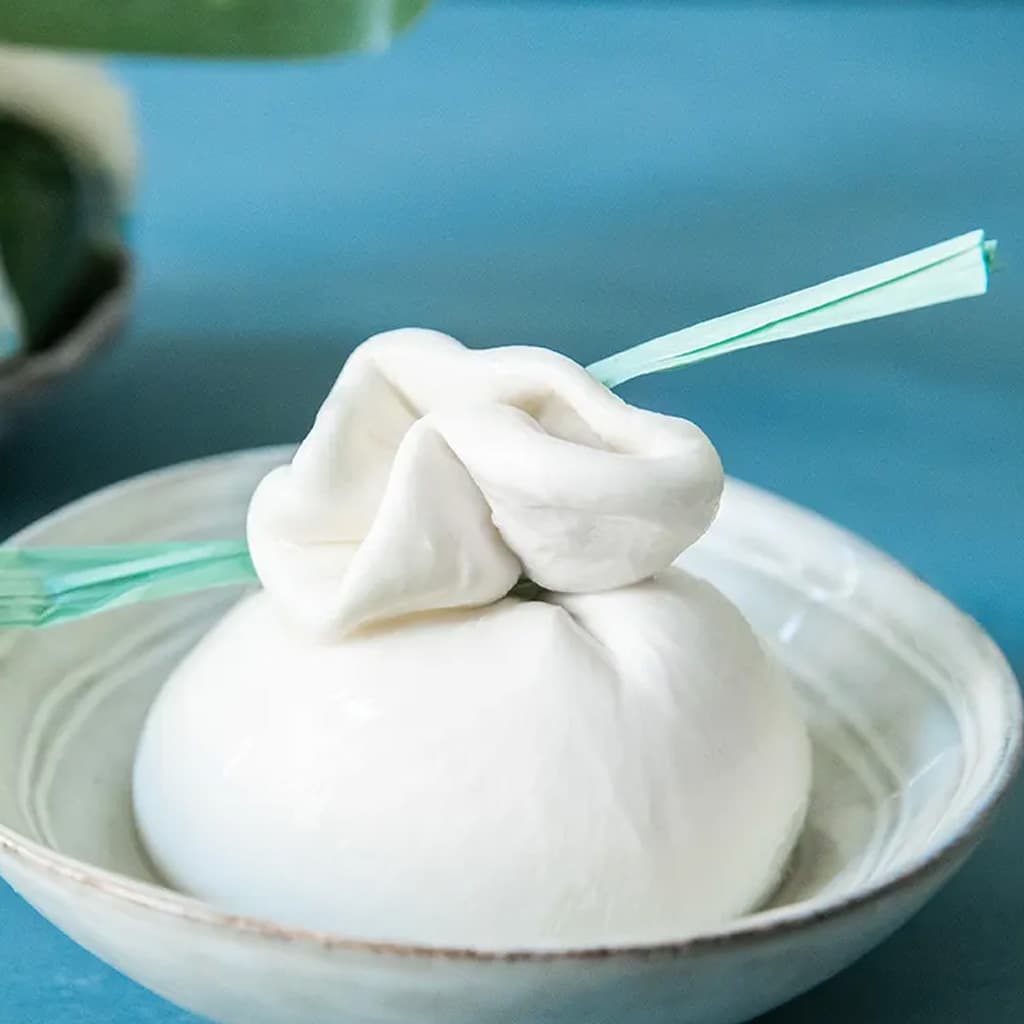
Used in place of mozzarella in a caprese, burrata changes the texture of the whole dish: the tomatoes and basil become a frame for something soft and almost liquid at the centre. It is still the same three-ingredient logic, but the eating experience is different — more suited to a warm evening with bread on the side than to a light lunch starter.
Both are worth trying. Mozzarella gives you a caprese. Burrata gives you something that doesn't quite have a name but tastes equally good.
A Few Things to Avoid
Dressing it too early. Salt pulls water from tomatoes and mozzarella alike. If you salt and dress the plate and then go answer a message, you will come back to a puddle.
Using cold mozzarella straight from the fridge. The fat in cold mozzarella is slightly set, the flavour muted. Room temperature is not a preference — it changes the cheese.
Chopping the basil. Basil oxidises quickly once the cells are damaged. Torn leaves hold their colour and aroma longer than chopped ones; whole leaves hold longer still.
Cheap olive oil. The oil is not a condiment here; it is an ingredient. A bottle of decent extra virgin — look for DOP designation or at minimum "cold-pressed" — costs €5–8 in any Italian supermarket and lasts for months. It is worth the investment.
Adding things that don't belong. Rocket, pine nuts, sun-dried tomatoes, red onion — all good in their own contexts. In a caprese, they are distractions.
Serving It as a Meal
For a student kitchen, the caprese works well as a light lunch alongside bread — a ciabatta or pane di casa from any forno will do — and perhaps a hard-boiled egg or a slice of prosciutto crudo on the side for protein. It is also the correct starter before a pasta, particularly something heavier like spaghetti al pomodoro, because it is cooling and acidic where the pasta will be warm and rich.
In summer, it is the dish to make when it is too hot to turn on any heat source at all. In Italy, July and August kitchens often produce nothing more cooked than this, and for good reason.