GR Stories | Fattoush: Lebanon's Bread Salad, Done Right
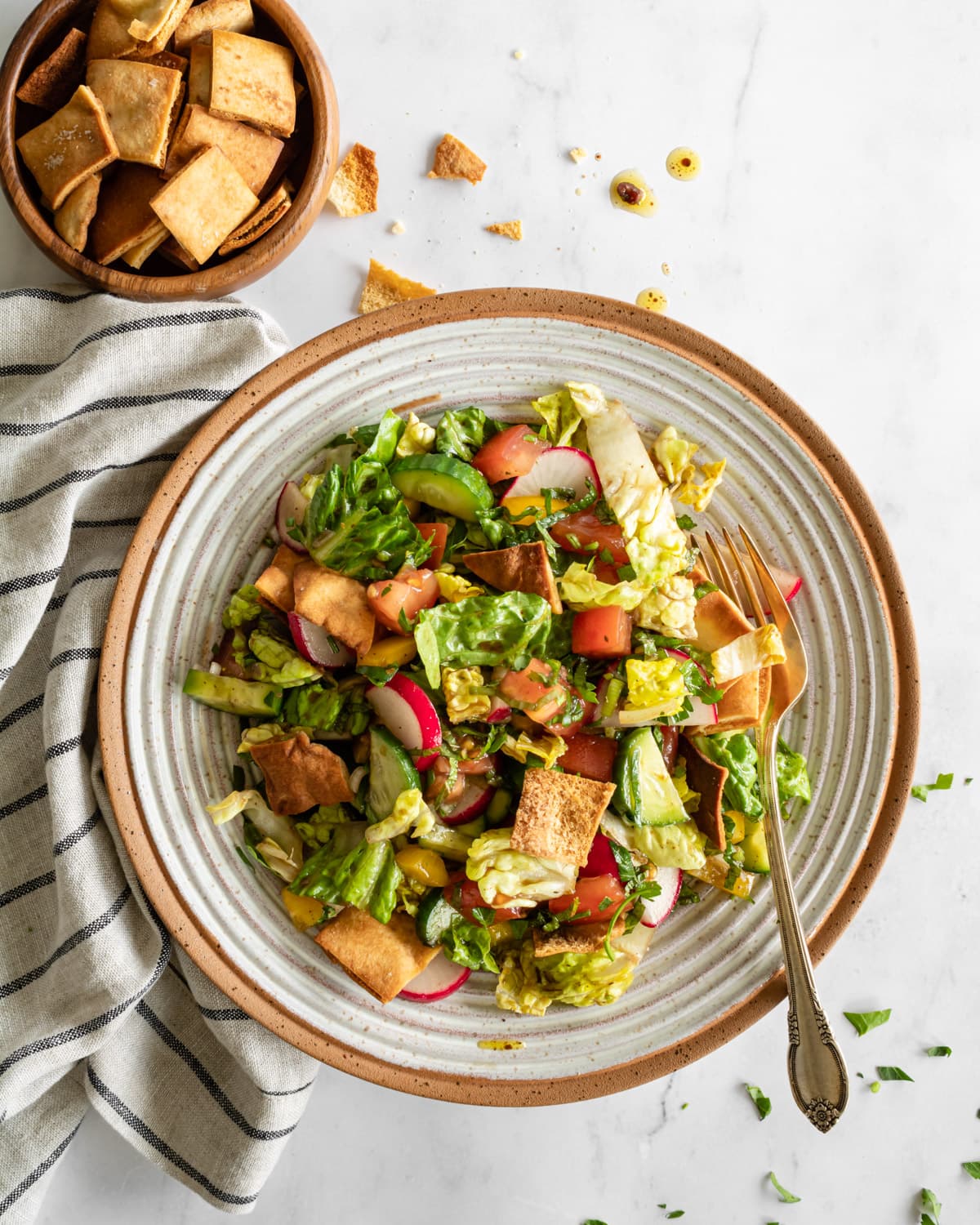
There is a particular pleasure in salads built to use something up. Fattoush — the Lebanese bread salad — was never meant to be a dish of abundance. It was a way of turning day-old flatbread and whatever the garden offered into lunch. That origin story, practical and unpretentious, is precisely why it translates so well to a student kitchen.
There is a version of this salad that exists in almost every food culture: Italy has its panzanella, Portugal has its açorda, the Levant has fattoush. Each one is a response to the same problem — stale bread is too good to throw away, and acidic dressing makes it edible again in a way that feels intentional.
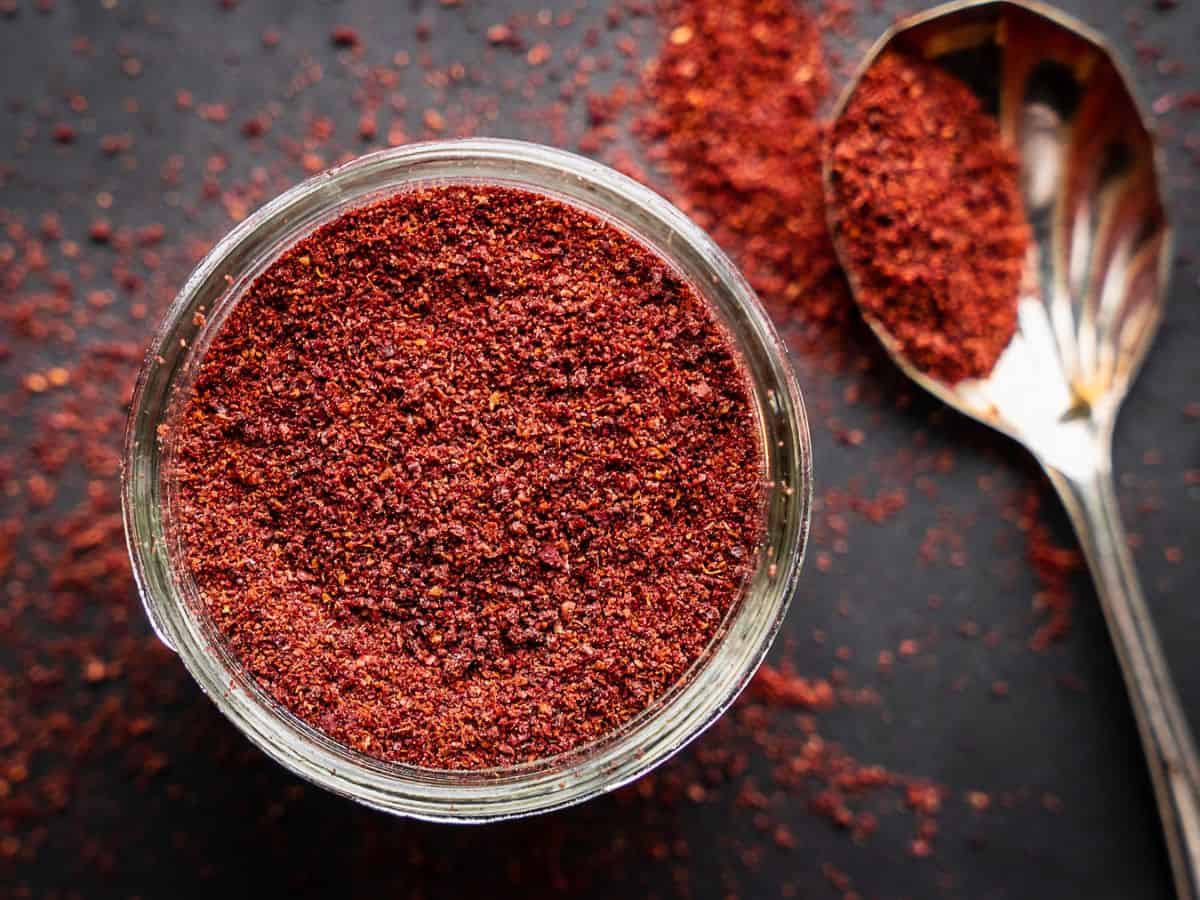
The Lebanese version is the one with the sharpest identity. What gives fattoush its character is not the bread or even the vegetables but a spice called sumac — a dark burgundy powder ground from the dried berries of Rhus coriaria, a shrub that grows across the Mediterranean and the Middle East. Sumac is tart without being aggressively sour, fruity in a way that is hard to place until you know the ingredient, and deeply savoury in a manner that most Western palates encounter without realising what they are tasting. It is the ingredient that transforms a bowl of chopped salad into something specifically, unmistakably Lebanese.
For an international student, fattoush solves several problems simultaneously. It requires no heat, takes roughly twenty minutes to assemble, costs very little, keeps well for twenty-four hours if you hold the pita separate, and scales easily between one person and four. It is also genuinely healthy in a way that does not require apology or explanation — high in fibre, vitamins, and plant protein if you add a spoonful of hummus or a few chickpeas on the side.
This is the version worth making.
Where Fattoush Comes From
The name comes from the Arabic root fatta, meaning to crumble or break bread into pieces — the same linguistic root that gives us the broader category of Levantine bread-and-ingredient dishes known collectively as fatteh. Fattoush is the salad branch of that family tree: bread broken into the bowl and dressed while it still has some structure left.
The dish is deeply associated with the Levant — the coastal and inland regions that today form Lebanon, Syria, Jordan, and parts of Palestine — where pita bread (khubz) has been a daily staple for thousands of years. In Lebanese home cooking, fattoush is seasonal and spontaneous: you make it when the tomatoes are ripe, the cucumbers are abundant, and there is a round of pita from yesterday sitting on the counter going dry. The idea of buying specific ingredients to make it would strike most Lebanese home cooks as missing the point.
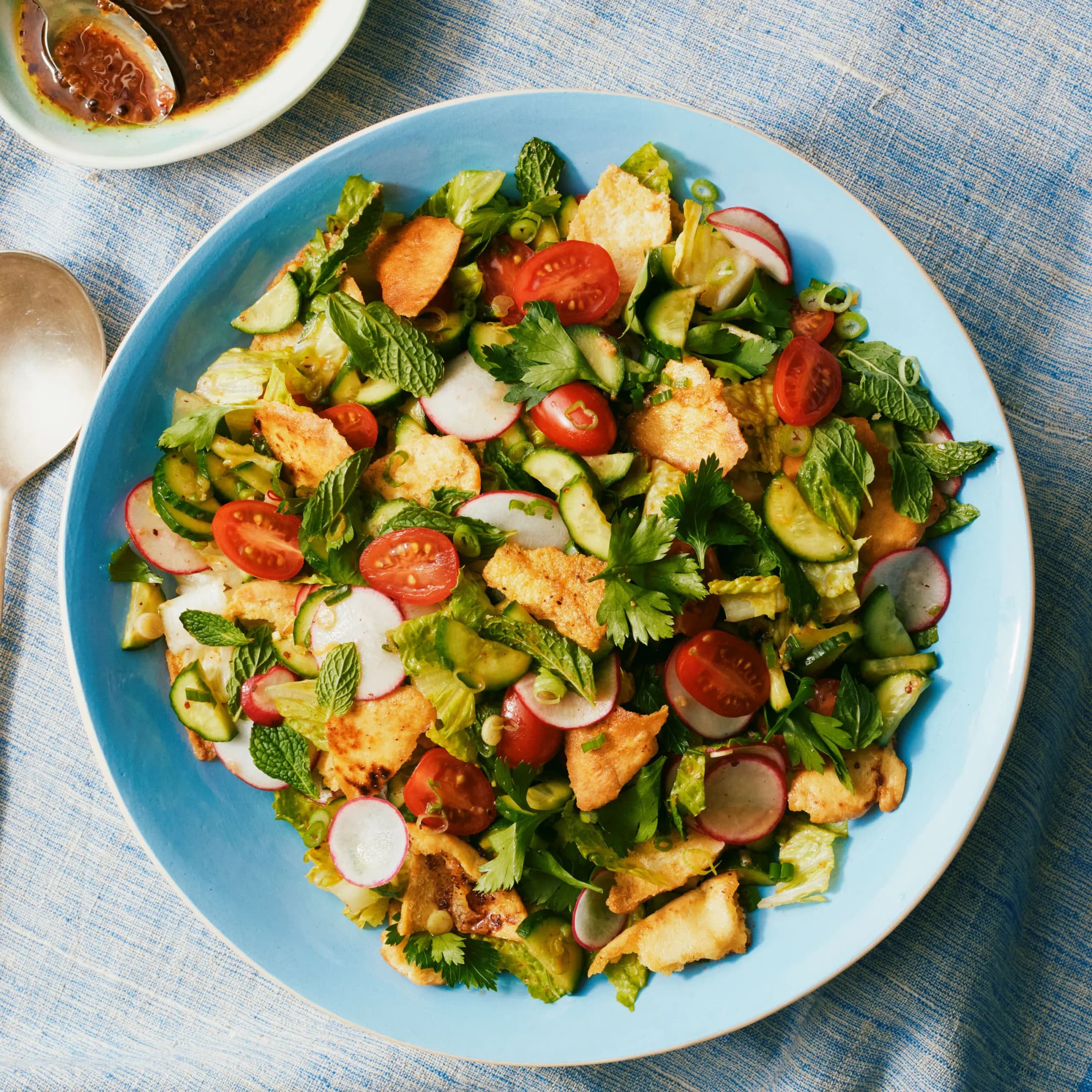
That said, the salad has a few fixtures that are non-negotiable: the sumac dressing, the toasted or fried bread, and the fresh herbs — particularly flat-leaf parsley and mint — that give it its bright green lift and aromatic character. Everything else is negotiable and always has been.
In Lebanon, fattoush is eaten year-round but peaks in spring and summer when purslane (baqleh), a slightly succulent herb with a mild, lemony flavour, grows readily and is thrown into the bowl alongside the other leaves. Outside the Levant, purslane is rare and often unsellable in mainstream supermarkets, so this recipe works without it — the parsley and mint carry the freshness convincingly on their own.
What You Need
Serves 2 generously, or 1 very generously.
For the salad:
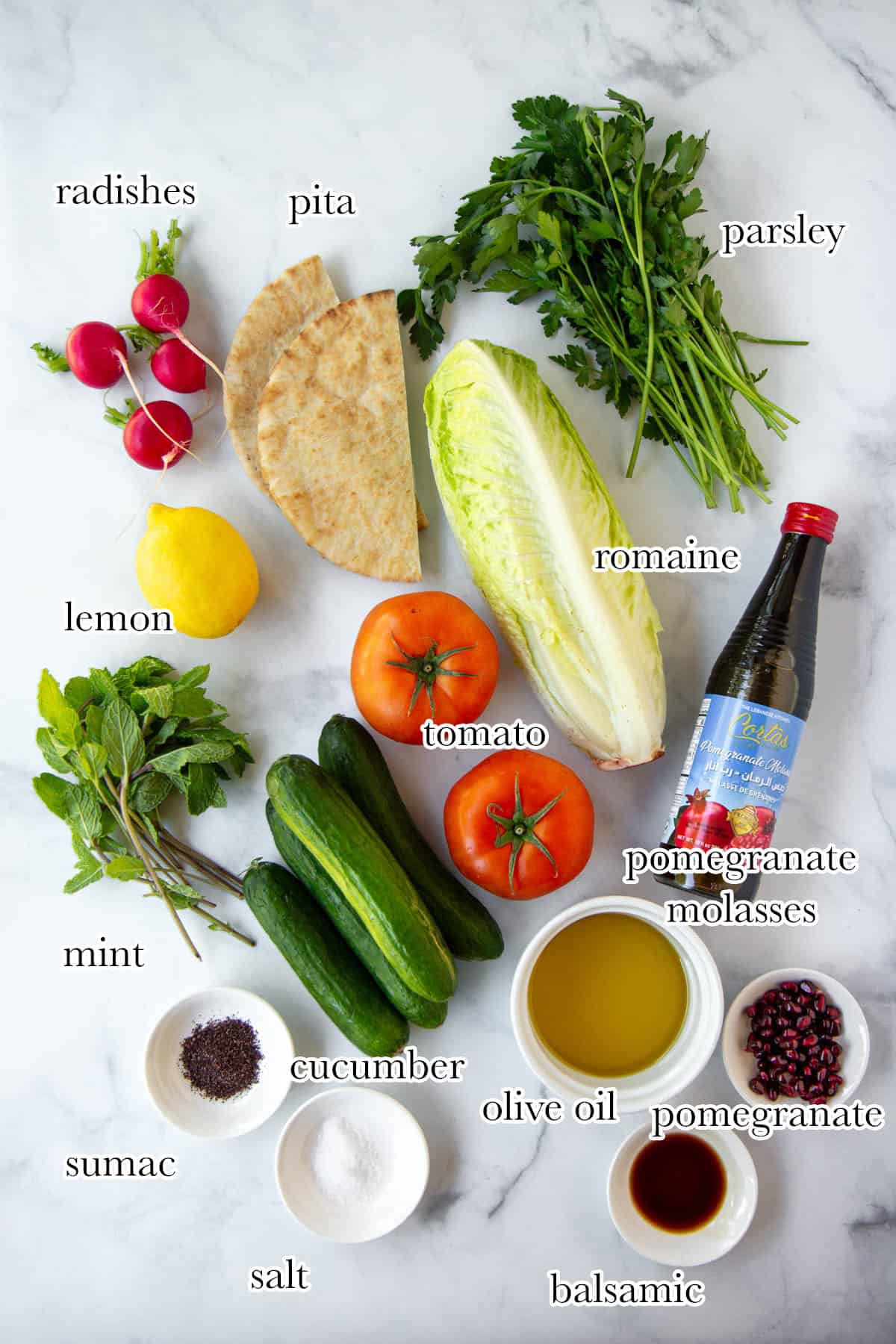
- 2 rounds of pita bread (day-old is ideal; fresh works if you toast it longer)
- 2 medium tomatoes, ripe and firm — cuore di bue, vine-ripened, or cherry tomatoes all work
- ½ cucumber — European or Lebanese cucumber; avoid the very large, watery varieties
- 4–5 radishes, thinly sliced
- 2 spring onions (scallions), sliced including the green tops
- ½ head of little gem lettuce or a handful of romaine, torn into pieces
- A large handful of flat-leaf parsley, roughly chopped
- A small handful of fresh mint leaves, torn
For the dressing:
- 2 tablespoons of extra virgin olive oil
- Juice of 1 lemon (approximately 3–4 tablespoons)
- 1 teaspoon of sumac, plus more for sprinkling at the end
- ½ teaspoon of dried mint (optional, but traditional)
- Salt and black pepper to taste
- Optional: 1 small garlic clove, minced or crushed — some Lebanese cooks include it, others do not
To serve:
- More sumac over the top
- A drizzle of good olive oil
- A few pomegranate seeds if you can find them — they are not traditional but add colour and a tart sweetness that works very well
Finding sumac is the one potential obstacle here. In most European cities, it is available at any Middle Eastern or Turkish grocery shop, often labelled in Arabic (سماق) or Turkish (sumak). It also appears in the international aisle of larger Carrefour and Albert Heijn branches, and is sold as a branded spice in Waitrose, Holland & Barrett, and similar health-oriented retailers in the UK. If you cannot find it, a small amount of pomegranate molasses thinned with lemon juice is the closest substitute, though the flavour profile will be noticeably different.
On the Bread
This is the structural decision of the dish. There are two schools, and both are legitimate.
Toasted in the oven gives you a drier, lighter chip — closer to a crouton. Tear or cut the pita into rough pieces (do not aim for uniformity), toss them with a little olive oil and a pinch of salt, and spread them on a baking tray. Ten to twelve minutes at 200°C/180°C fan should give you pieces that are golden and crisp throughout. This version is right if you want the bread to hold its texture in the dressed salad for fifteen or twenty minutes before it begins to soften.
Fried in a pan gives you something richer and more flavourful — the bread absorbs the oil and takes on a golden exterior with a slightly chewy interior. Tear the pita into pieces and fry them in a tablespoon or two of olive oil or vegetable oil over a medium-high heat, turning them until golden on all sides. This takes five to seven minutes and requires attention. The fried version is the more traditional approach in Lebanese cooking and, if you are honest, the better-tasting one. The trade-off is that it absorbs more oil and softens faster in the dressing.
If you have no oven, the pan method is your only option and it is a good one. Most student kitchens can manage this.
A third option exists — leaving the bread raw, torn into pieces and simply added to the bowl. This gives you a softer, bread-soaked texture once the dressing is applied, which some people find more appealing than the crisp version. It is less common but not wrong.
Method
Step 1 — Prepare the bread.
Choose your method — oven-toasted or pan-fried — and prepare the pita pieces first, so they have a few minutes to cool slightly before joining the salad. Warm, just-crisped bread going directly onto cold vegetables and dressing will lose its texture very quickly.
Step 2 — Make the dressing.
In a small bowl or jar, whisk together the olive oil, lemon juice, sumac, dried mint (if using), salt, pepper, and garlic if you are including it. Taste it: it should be bracingly tart, savoury, and slightly fruity from the sumac. The lemon and sumac together are the point — do not hold back on either.
Step 3 — Prepare the vegetables.
Chop the tomatoes into rough chunks about 2 cm across — not too small, because they need to hold up in the bowl. Halve or quarter them depending on size. Dice the cucumber similarly. Slice the radishes and spring onions thinly. Tear the lettuce. Roughly chop the parsley and mint.
A brief note on the parsley: flat-leaf Italian parsley is strongly preferred here. Curly parsley, the variety sold in most supermarkets across northern Europe, has a tougher, more bitter flavour and a visual quality that does not suit a fresh salad. If you can find flat-leaf, use it; if not, curly will still work but should be used in smaller quantities.
Step 4 — Assemble the salad.
Add the vegetables, parsley, and mint to a wide bowl. Pour over most of the dressing and toss gently. Taste and adjust — more lemon, more salt, more sumac as needed.
Step 5 — Add the bread.
Add the toasted or fried pita pieces last, and toss once more, briefly. The bread should be coated in dressing but not yet soft. If you are eating immediately, this is fine. If you are planning to serve the salad in ten minutes or more, hold the bread separate and add it at the last moment.
Step 6 — Finish and serve.
Transfer to a wide serving plate or bowl. Sprinkle generously with extra sumac — this is both flavour and presentation. Add a final pour of olive oil. If using pomegranate seeds, scatter them over the top. Eat immediately.
A Few Things Worth Knowing
The bread softens. That is not a mistake. Fattoush is not a salad where the bread should stay crisp for hours after dressing. Some softening is expected and part of the eating experience — the dressed pita absorbs the flavour and becomes something between a crouton and a dumpling. If you want maximum crunch throughout, dress and serve within five minutes. If you want a more integrated, slightly softer texture, toss and wait ten. Both are correct depending on what you prefer.
Sumac is the non-negotiable. The lemon and olive oil could theoretically appear in any salad dressing. The sumac is what places this firmly in the Levantine tradition. Without it, you have a pleasant chopped salad; with it, you have fattoush. Do not substitute lemon zest or extra acid — the fruity, tannic quality of sumac is not replicable with citrus alone.
The vegetables are flexible; the herbs are not. You can swap radishes for spring onion, add green pepper, include romaine instead of little gem, or omit the cucumber if you are out. What you should not skip is the parsley and mint. They are not garnish — they are primary ingredients, present in roughly the same volume as the other vegetables. A fattoush without generous herbs is a different, lesser dish.
It does not keep well once dressed. The bread will be completely soft by the following morning. If you want to prepare in advance, keep the dressing, bread, and salad components in separate containers and assemble when you are ready to eat. Undressed, the chopped vegetables will hold comfortably in the fridge for up to twenty-four hours.
Making It More Substantial
As a student meal, fattoush works well as a full lunch alongside hummus, labneh (strained yoghurt, widely available in Middle Eastern shops and increasingly in mainstream supermarkets), or a soft-boiled egg. It also pairs naturally with grilled flatbreads, falafel from a local Middle Eastern takeaway, or a spoonful of tinned chickpeas drained and tossed with olive oil and cumin.
If you want to add protein without complicating the recipe, a tin of good-quality tuna dressed with a little olive oil and lemon juice laid alongside — not in — the salad is a practical option that works surprisingly well with the sumac dressing.
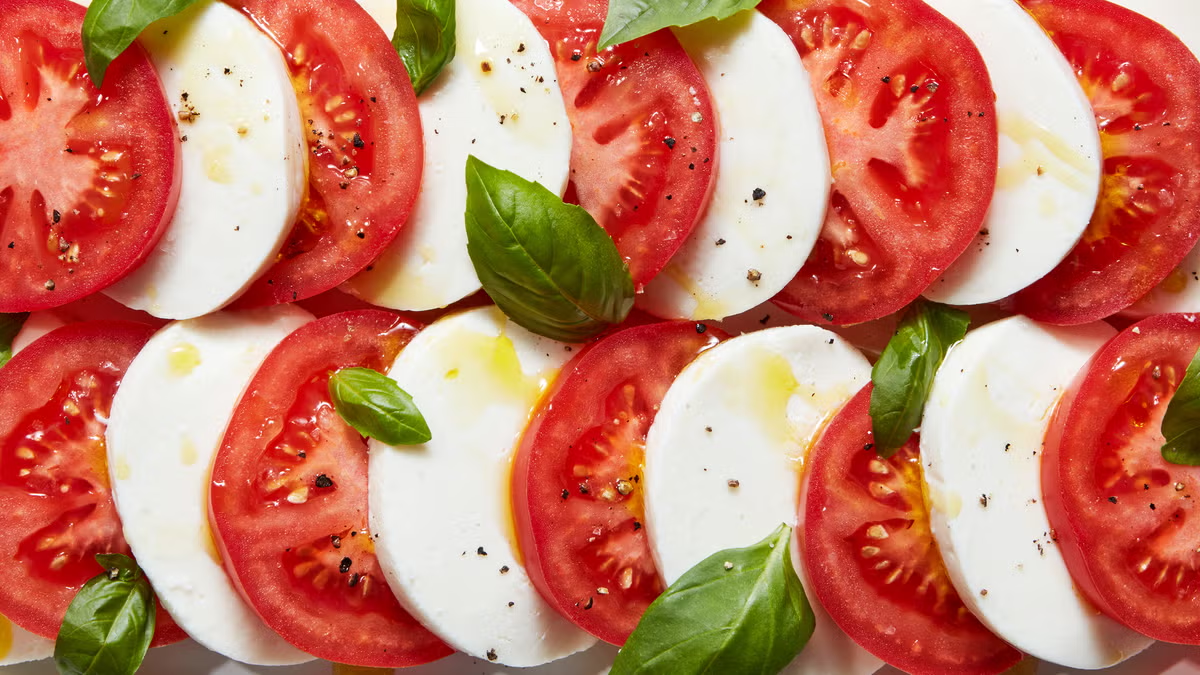
Fattoush is, like the caprese, a dish that does not need elaboration to be good. It needs good ingredients, proper seasoning, and the confidence to leave it alone once it is right.
Closing Note
There is something quietly satisfying about cooking that starts from what is already there — bread going stale, a handful of herbs, whatever the market offered that morning. Fattoush is honest in this way. It is not a dish that asks you to buy anything special beyond a small jar of sumac, which will then sit in your spice drawer and earn its place again and again.
If you make this salad once in your student kitchen, you will probably make it every week that the tomatoes are good. That is not a promise made lightly.