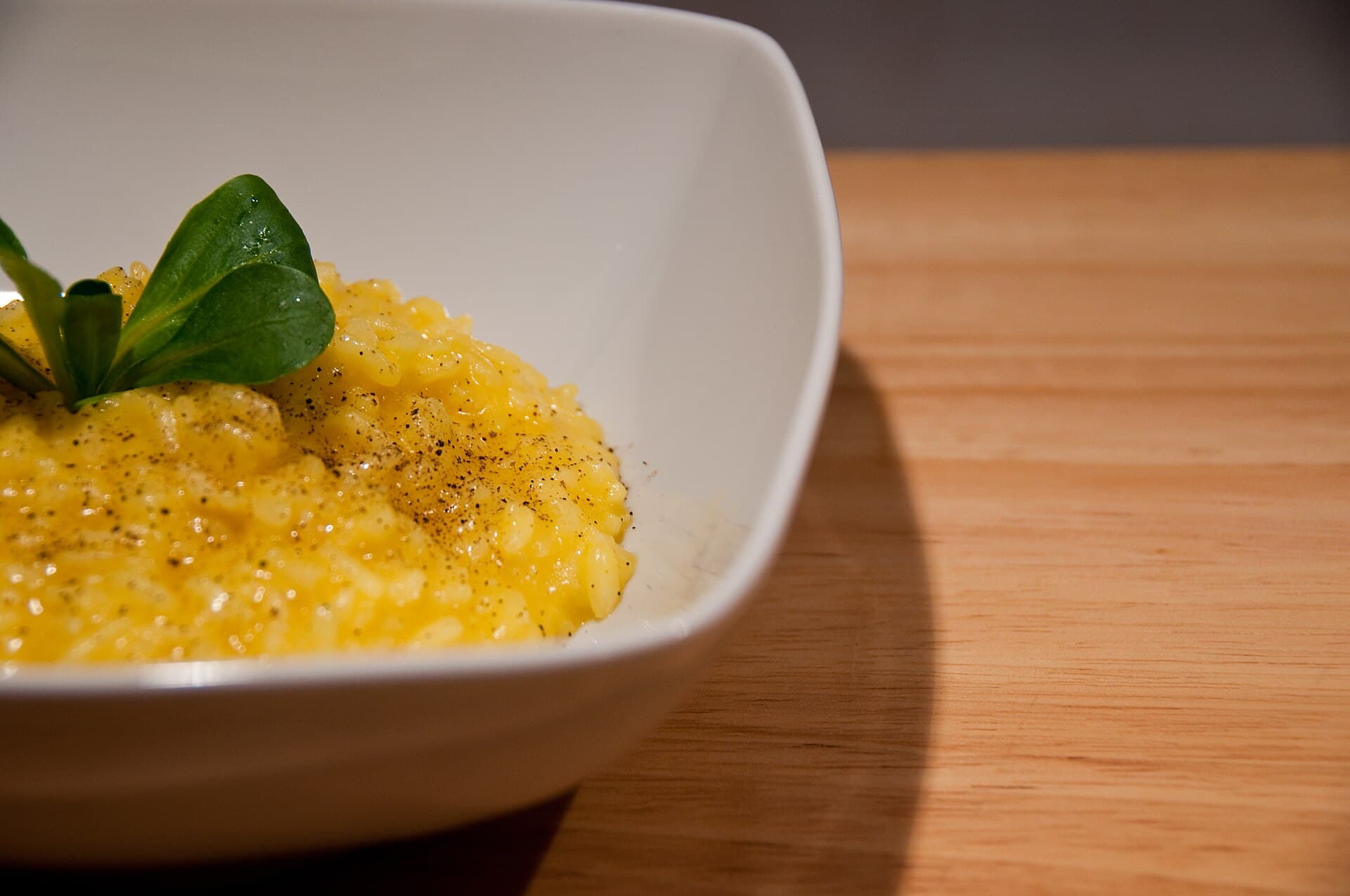
Few dishes look as much like Italy on a plate as risotto allo zafferano: a shallow bowl of rice the colour of late-afternoon sun, glossy, loose enough to ripple when you tap the edge of the plate, and smelling faintly of honey and hay. It is the signature dish of Milan, it is served in trattorias and in some of the most famous restaurants in the country, and it is made with a handful of ingredients you can carry home in one hand.
It is also the perfect recipe for a student kitchen. There is no oven involved, no special equipment beyond a wide pan and a wooden spoon, and once you have understood how a risotto works, you have understood dozens of other Italian dishes at the same time. The only real cost is the saffron, and even that comes down to a few euros for a whole dinner.
This version follows the risotto allo zafferano published by Il Cucchiaio d'Argento, the cookbook that has sat on Italian kitchen shelves since 1950: Carnaroli rice, a proper meat broth, saffron infused for a couple of hours, and a final mantecatura with very cold butter and grated grana. Nothing more, nothing less.
Risotto allo Zafferano or Risotto alla Milanese?
In Milan, the two names are often used as if they meant the same thing, and on most menus you will simply see risotto giallo, "yellow risotto". Strictly speaking, though, they are not quite the same dish.
Risotto allo zafferano is the simpler of the two: rice, meat broth, saffron, butter and cheese, sometimes with a splash of white wine.
Risotto alla milanese is the richer, codified version. On 14 December 2007, the City of Milan recognised it as a De.Co. (Denominazione Comunale, a municipal designation of origin), with a recipe that includes chopped beef marrow, melted into the butter at the start, and no wine at all.
And then there is the version of Gualtiero Marchesi, the father of modern Italian cuisine, which uses neither wine nor marrow and finishes the rice with burro acido, a butter sharpened with a reduction of wine, vinegar and shallot. His famous Riso, oro e zafferano, crowned with a single square of gold leaf, is one of the most famous risottos ever created.
This article gives you the classic risotto allo zafferano first, and the alla milanese version, marrow and all, in the variations at the end.
A Short History
The story Milanese people like to tell takes place in 1574, on the building site of the Duomo. A Flemish master glassmaker, Valerio di Fiandra, was working on the cathedral's stained-glass windows, and his workshop used saffron to colour the glass yellow. According to the legend, at the wedding of his daughter, someone in the workshop added a little saffron to the plain buttery rice served to the guests, half as a joke. The dish was a success, and Milan had its golden rice.
Whether or not it really happened, the written record starts much later. A recipe for riso giallo in padella, yellow rice in the pan, appears in 1809, and in the 19th century the Milanese cook Giovanni Felice Luraschi was already calling it risotto alla milanese giallo in his cookbook, Nuovo cuoco milanese economico. Since then, it has become one of the symbols of the city, traditionally served on its own as a primo, or next to an ossobuco as a complete meal.
Ingredients
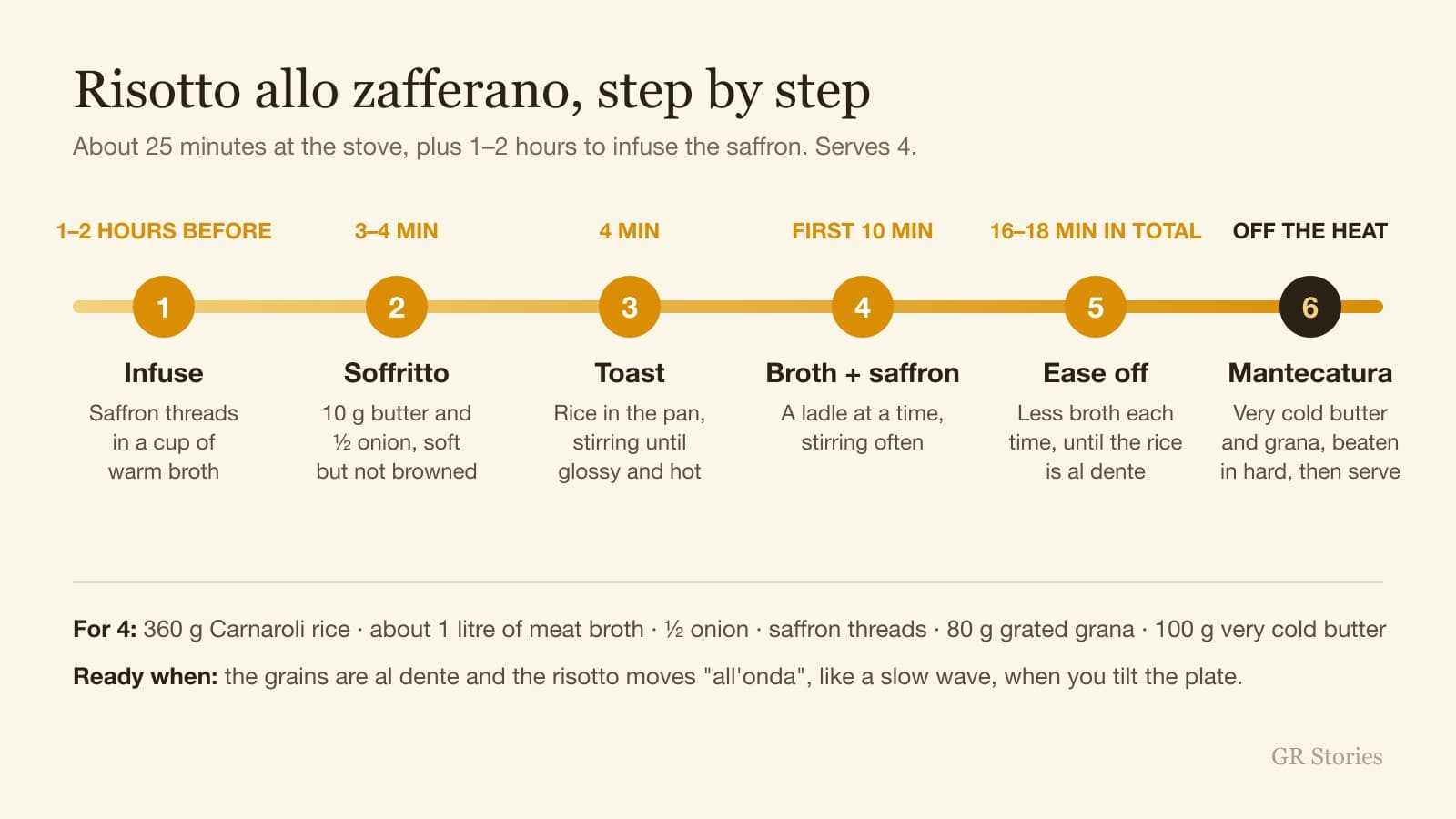
Serves 4. Preparation: 10 minutes, plus 1–2 hours to infuse the saffron. Cooking: about 25 minutes.
- 360 g Carnaroli rice
- About 1 litre of meat broth, kept hot, with one cup of it set aside, warm, for the saffron
- ½ onion, finely chopped
- Saffron threads: about 0.1–0.15 g, the amount in one small sachet
- 80 g grated grana (Grana Padano or Parmigiano Reggiano)
- 100 g butter, very cold: 10 g for the onion, and 90 g cut into small cubes and kept in the fridge until the very last moment
- Salt, only if needed
You will also need a wide, heavy-bottomed pan for the risotto, a saucepan to keep the broth simmering right next to it, a ladle, and a wooden spoon.
A Note on Ingredients
Saffron. Saffron is the dried stigma of the saffron crocus, Crocus sativus. Each flower produces just three of them, they are picked by hand, and it takes around 150,000 flowers to make a single kilo, which is why it is the most expensive spice in the world. Italy produces excellent saffron of its own, with three protected designations: Zafferano dell'Aquila DOP, Zafferano di San Gimignano DOP and Zafferano di Sardegna DOP.
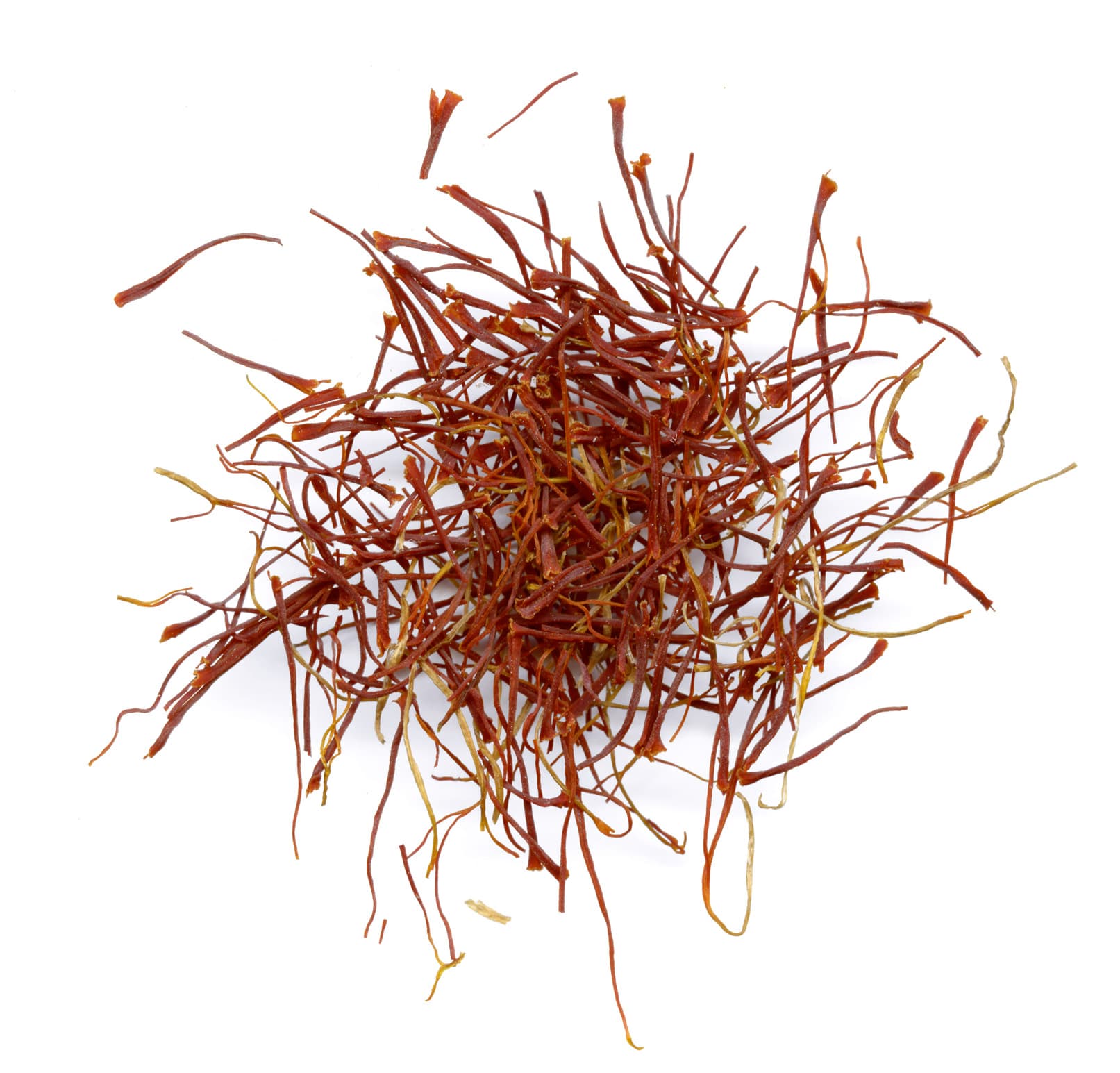
Threads give the best aroma and are what this recipe uses. The small sachets of saffron powder sold in every Italian supermarket also work, and they are the student-friendly option; just stir the powder into the warm broth instead of infusing it for hours. Whatever you buy, be wary of "saffron" that seems too cheap: it is one of the most frequently faked spices on the market.
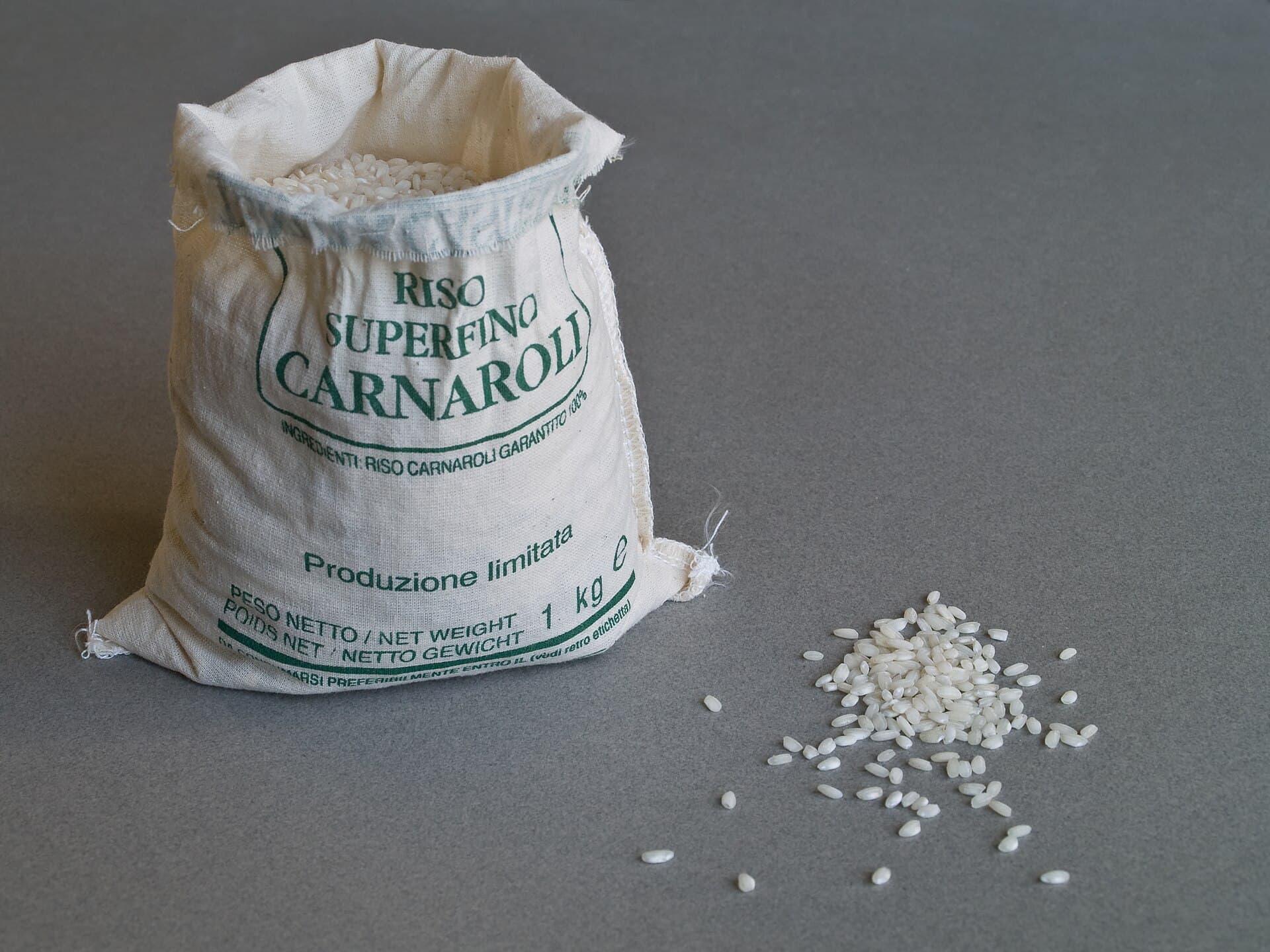
Rice. Carnaroli is often called the king of risotto rice. Its large grains absorb a lot of broth without falling apart, and they release just the right amount of starch to make the risotto creamy while keeping a firm bite in the centre. Vialone Nano is a good alternative, and Arborio will do in a pinch, although it softens and overcooks more easily. Two rules: never rinse the rice, because you need that surface starch, and never use long-grain or basmati rice, which simply will not turn into a risotto.
Broth. Il Cucchiaio d'Argento insists on a good meat broth, and it is right: it is where most of the flavour comes from. A homemade broth of beef, onion, carrot and celery, simmered gently for a couple of hours, is ideal, and it freezes perfectly, so it is worth making a big pot on a quiet Sunday and freezing it in portions. If you have no time, a good ready-made broth or stock cube will get you a perfectly decent risotto, but purists will frown: the City of Milan's official recipe specifically says the broth should not come from a cube.
Butter and cheese. The butter for the final step must be very cold. Cold butter emulsifies with the starch and the broth into a creamy, glossy sauce, while warm or melted butter just makes the risotto greasy. For the cheese, use Grana Padano or Parmigiano Reggiano, freshly grated if you can.
Method
The whole process takes about 25 minutes at the stove, and for most of that time you will be standing next to the pan. Get everything chopped, measured and within reach before you start.
Step 1 — Infuse the saffron
One or two hours before cooking, pour a cup of warm broth into a small bowl and drop the saffron threads into it. Leave them to infuse: the threads will slowly release their colour and aroma, and the broth will turn a deep orange. If you are using powder, you can skip the wait and simply dissolve it in the warm broth just before you start.
Step 2 — Keep the broth hot
Bring the rest of the broth to the boil in a saucepan, then lower the heat and keep it barely simmering on the hob, right next to your risotto pan. The broth must be hot every time it goes in: cold broth stops the rice cooking and ruins the texture.
Step 3 — Soften the onion
In the wide pan, melt 10 g of butter over a medium-low heat, add the chopped onion and cook it for a few minutes, stirring now and then, until it is soft and translucent. It should not take on any colour.
Step 4 — Toast the rice
Add the rice to the pan and toast it for 4 minutes, stirring continuously. This is the tostatura: the grains will turn glossy and slightly translucent at the edges, and they should feel hot to the touch. Toasting seals the outside of each grain so that it cooks evenly and holds its shape.
Step 5 — Add the broth and the saffron
Pour in a ladle of boiling broth together with the saffron infusion, threads and all, and stir. From now on, the rhythm is simple: when the rice has almost absorbed the liquid, add another ladle of broth, a little at a time, stirring often. The stirring is not just for show: the friction between the grains of Carnaroli makes them release their starch, which is what makes the risotto creamy before you even add any butter.
Step 6 — Ease off the broth
After about 10 minutes, start adding less broth each time, so that you do not end up with soupy rice when the grains are cooked. Start tasting: Carnaroli usually needs 16–18 minutes in total from the first ladle of broth. It is ready when the grains are tender but still have a slight bite in the centre, al dente, and the risotto is loose rather than stiff. If it looks too thick, add a final splash of broth.
Step 7 — The mantecatura
Take the pan off the heat. Add the 90 g of very cold butter and the grated grana, and beat them into the rice vigorously with the wooden spoon for a minute or so, shaking the pan as you go. This is the mantecatura, and it is what turns a pan of cooked rice into a risotto: creamy, glossy and never greasy. Taste, and add a pinch of salt only if it needs it; a well-seasoned broth and the cheese are often enough.
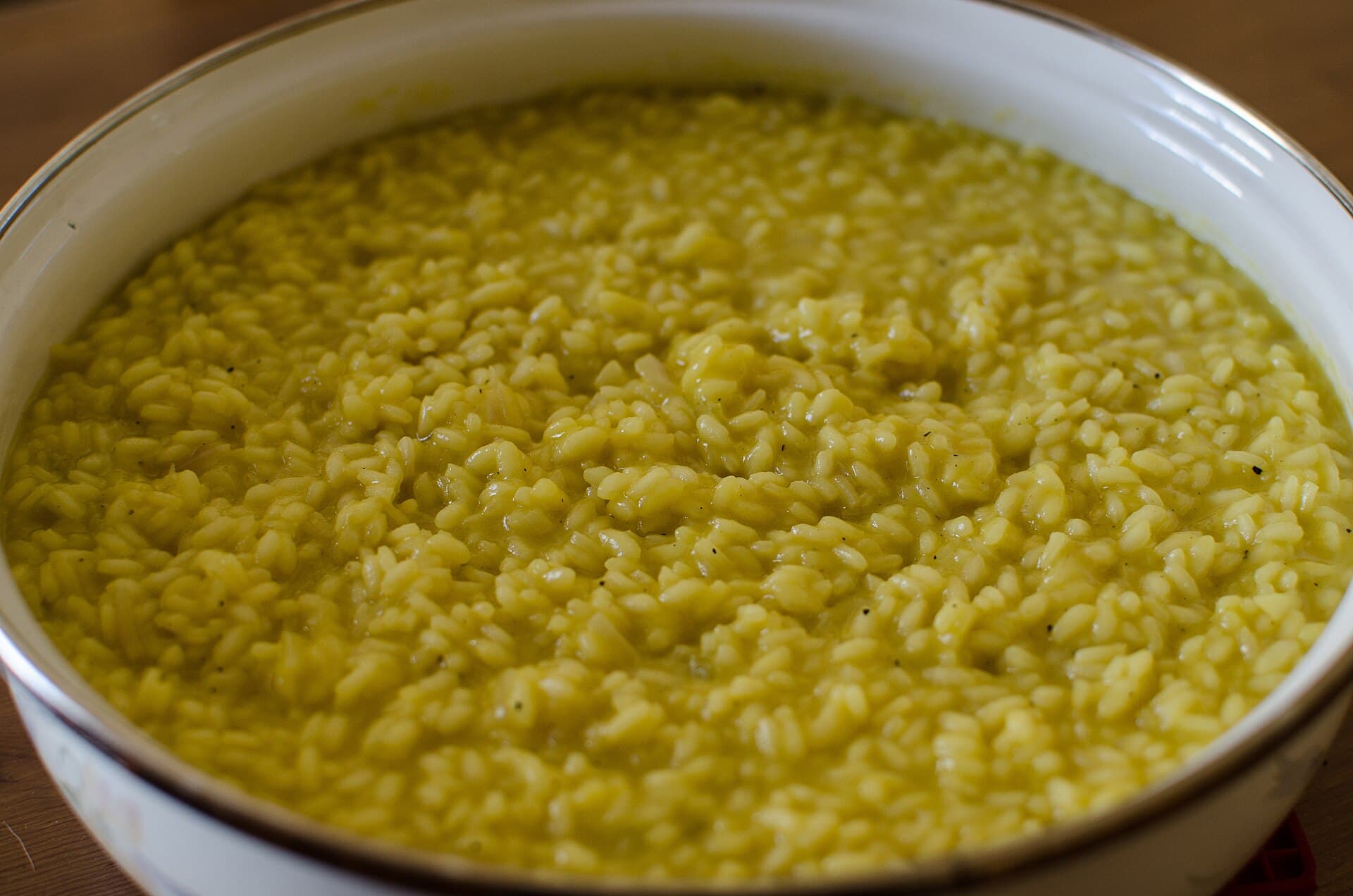
The finished risotto should be all'onda, "like a wave": when you tilt the plate or tap its edge, it should move slowly and settle back, rather than standing up in a stiff mound.
Step 8 — Serve straight away
Let the risotto rest for a minute, then spread it onto warm, shallow plates and garnish each one with a few saffron threads. Risotto waits for no one: call everyone to the table before you start the mantecatura, not after.
Leftovers: Riso al Salto
As Il Cucchiaio d'Argento points out, leftover risotto allo zafferano is precious, because the next day it becomes riso al salto, another Milanese classic. Press the cold risotto into a thin, even disc in a buttered non-stick pan and cook it over a medium heat, without stirring, until the bottom forms a crisp, golden crust. Flip it like a big pancake, using a plate if needed, and crisp the other side too. Crunchy outside and soft inside, it is arguably even better than the original.
As with all cooked rice, cool any leftovers quickly, keep them covered in the fridge, and use them within a day.
Common Mistakes (and How to Avoid Them)
- Rinsing the rice. You wash away the starch that makes the risotto creamy. Never rinse risotto rice.
- Using cold broth. Every ladle of cold broth stops the cooking. Keep the broth simmering next to the pan.
- Adding all the broth at once. You end up boiling the rice instead of making a risotto. Add it gradually, a ladle at a time.
- Overcooking. Carnaroli is ready in 16–18 minutes. A few minutes too long and the grains split and turn to mush. Start tasting early.
- A stiff, dry risotto. It should be all'onda, loose and flowing. If it is too thick before the mantecatura, add a final splash of hot broth.
- Melted butter at the end. Warm butter makes the risotto greasy. It must come straight from the fridge.
- Cheap saffron. If the colour comes out dull or the aroma is missing, the saffron was probably poor quality. It is worth spending a little more.
Variations Worth Trying
Risotto alla milanese. For the richer Milanese version, Il Cucchiaio d'Argento's risotto alla milanese uses, for 4 people: 320 g of Carnaroli, 1.5 litres of meat broth, 1 small onion, 1 sachet of saffron, 20 g of veal bone marrow, 60 g of butter and 60 g of grated cheese. Ask your butcher for marrow bones cut into discs, push the marrow out with a small knife and chop it roughly. Melt it in the pan with 30 g of the butter before the onion, then proceed as above, adding the saffron, dissolved in a little warm broth, halfway through the cooking. Finish with the remaining butter and the cheese, then cover the pan and let the risotto settle for a couple of minutes before serving.
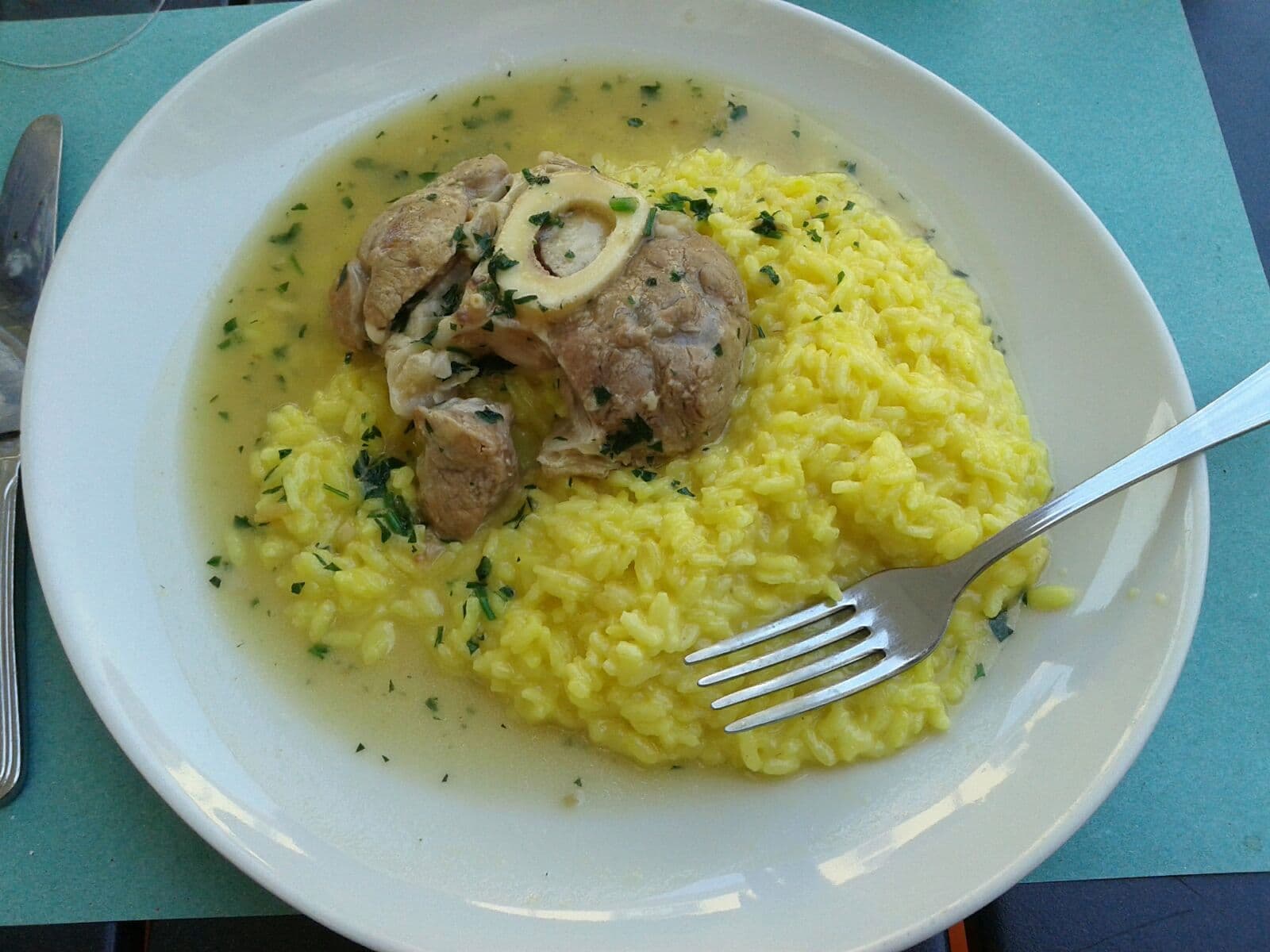
With ossobuco. In Milan, risotto alla milanese is the traditional partner of ossobuco, braised veal shank with its marrow bone, served together on the same plate as a piatto unico, a complete meal in one dish.
With or without wine. Some cooks add half a glass of dry white wine after toasting the rice, letting it evaporate completely before the first ladle of broth, for a little extra acidity. The City of Milan's official recipe leaves it out, so if you want to stay true to tradition, skip it.
The Marchesi way. For a more refined finish, replace part of the butter in the mantecatura with burro acido: butter flavoured with a reduction of white wine, vinegar and shallot, then strained and chilled. It adds a gentle acidity that balances the richness of the risotto.
Vegetarian. Use a good vegetable broth instead of meat broth. Keep in mind that traditional Grana Padano and Parmigiano Reggiano are made with animal rennet, so for a fully vegetarian risotto, choose a hard cheese made with vegetarian rennet.
What to Serve with It
Risotto allo zafferano is a primo, so in an Italian meal it comes after the starter and before the main course, or on its own, with a green salad, on a weeknight. For a complete Italian dinner with friends, start with a caprese, serve the risotto as the main event, and finish with a tiramisù, which you can make the night before so you are free to stand by the risotto pan.
As for wine, a dry, aromatic white works beautifully with saffron. A Roero Arneis from Piedmont is a lovely match, and it comes from the same UNESCO wine landscape as the Langhe, just across the Tanaro river.
Why This Recipe Belongs in a Student Kitchen
If the spaghetti al pomodoro teaches you that Italian cooking is about a few good ingredients, risotto teaches you the other half of the lesson: patience. Twenty-five minutes, one pan, and your full attention. It is not difficult, but it does not forgive you if you wander off to check your phone.
That is also what makes it such a good dish to cook for other people. One evening, take over the stove, and if you live in a shared flat, have a look at the hidden social rules of shared student kitchens abroad before you claim the big pan for half an hour. Put a saucepan of broth on to simmer, hand someone a glass, and stir. By the time the risotto turns gold and starts to ripple like a wave, the kitchen will be full, and nobody will be in a hurry to leave.
Sources and Photo Credits
- Recipe: adapted from Il Cucchiaio d'Argento's Risotto allo zafferano and Risotto alla milanese.
- Cover: Risotto allo zafferano by Giorgio Minguzzi, CC BY-SA 2.0, via Wikimedia Commons.
- Saffron threads: Iran saffron threads by Rainer Zenz, public domain, via Wikimedia Commons.
- Carnaroli rice: Carnaroli by Myrabella, CC BY-SA 3.0, via Wikimedia Commons.
- Risotto texture: Risotto giallo by Michele Ursino, CC BY-SA 2.0, via Wikimedia Commons.
- Ossobuco with risotto: Ossobuco con risotto alla milanese by pier, CC BY-SA 4.0, via Wikimedia Commons.
- Step-by-step illustration: © GR Stories.