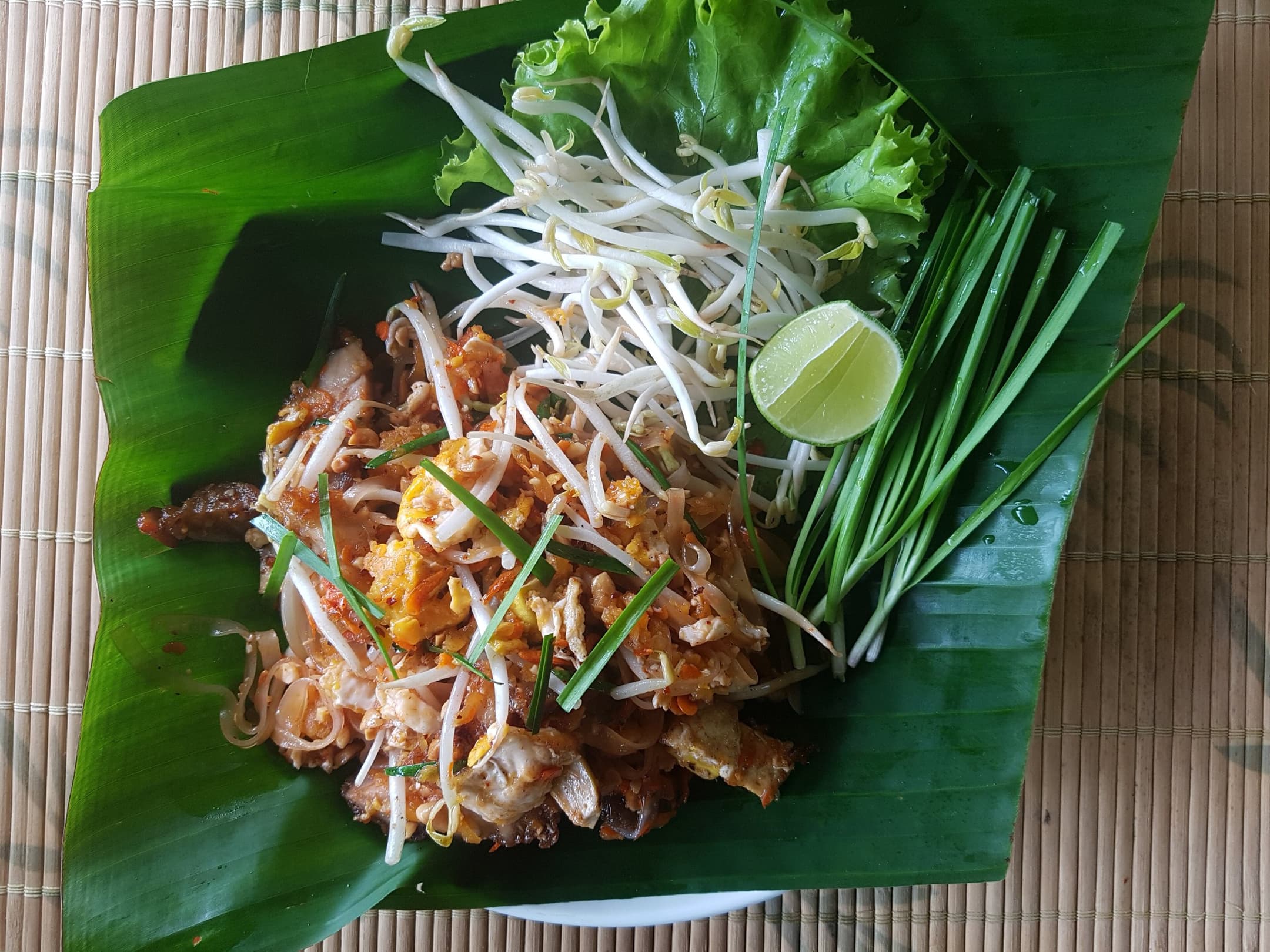
If there is one dish the whole world associates with Thailand, it is pad thai: soft rice noodles tossed in a hot wok with egg, tofu and bean sprouts, coated in a sauce that is sweet, sour and salty all at once, and finished with crushed peanuts and a squeeze of lime.
Outside Thailand, it is often the first Thai dish people try, and too often it is a disappointing one: sticky, overly sweet noodles drowned in ketchup-coloured sauce. The real thing is lighter, brighter and much more balanced, and the good news is that it is not difficult to make at home, as long as you get hold of a few key ingredients.
This version follows the Pad Thai Goong Sod recipe published by Thai SELECT, the programme run by Thailand's Department of International Trade Promotion, part of the Ministry of Commerce, to promote authentic Thai food around the world. Thai SELECT certifies Thai restaurants abroad that cook with genuine Thai ingredients and methods, and publishes the recipes it considers the reference versions of the country's classic dishes.
A Noodle Dish with a Political Past
Few national dishes have a history as unusual as pad thai's. Stir-fried rice noodles had been eaten in Thailand for a long time, brought by Chinese immigrants, but the dish we know as pad thai, originally called kuai tiao pad thai, became famous in the middle of the 20th century.
The most common story links it to Plaek Phibunsongkhram, who was Thailand's prime minister from 1938 to 1944 and again from 1948 to 1957, and who promoted a strong sense of Thai national identity. According to this account, his government encouraged people to eat noodles, partly to reduce the country's consumption of rice at a time of shortages, and promoted a stir-fried noodle dish with an explicitly Thai name. Historians still debate the details, and some food writers point out that a dish called "Thai stir-fry" in its own country probably had foreign roots, but nobody disputes that pad thai and Thai nationalism grew up together.
Decades later, the Thai government turned to the dish again, this time for diplomacy. In the early 2000s, a state-backed campaign set out to multiply the number of Thai restaurants around the world, and pad thai became the country's culinary ambassador. Thai SELECT is part of that same effort, which makes its recipe a particularly fitting one to follow.
Ingredients
Serves 2 light portions, or 1 very hungry person. Preparation: 20 minutes, plus soaking. Cooking: 10 minutes. Difficulty: easy.
For the sauce:
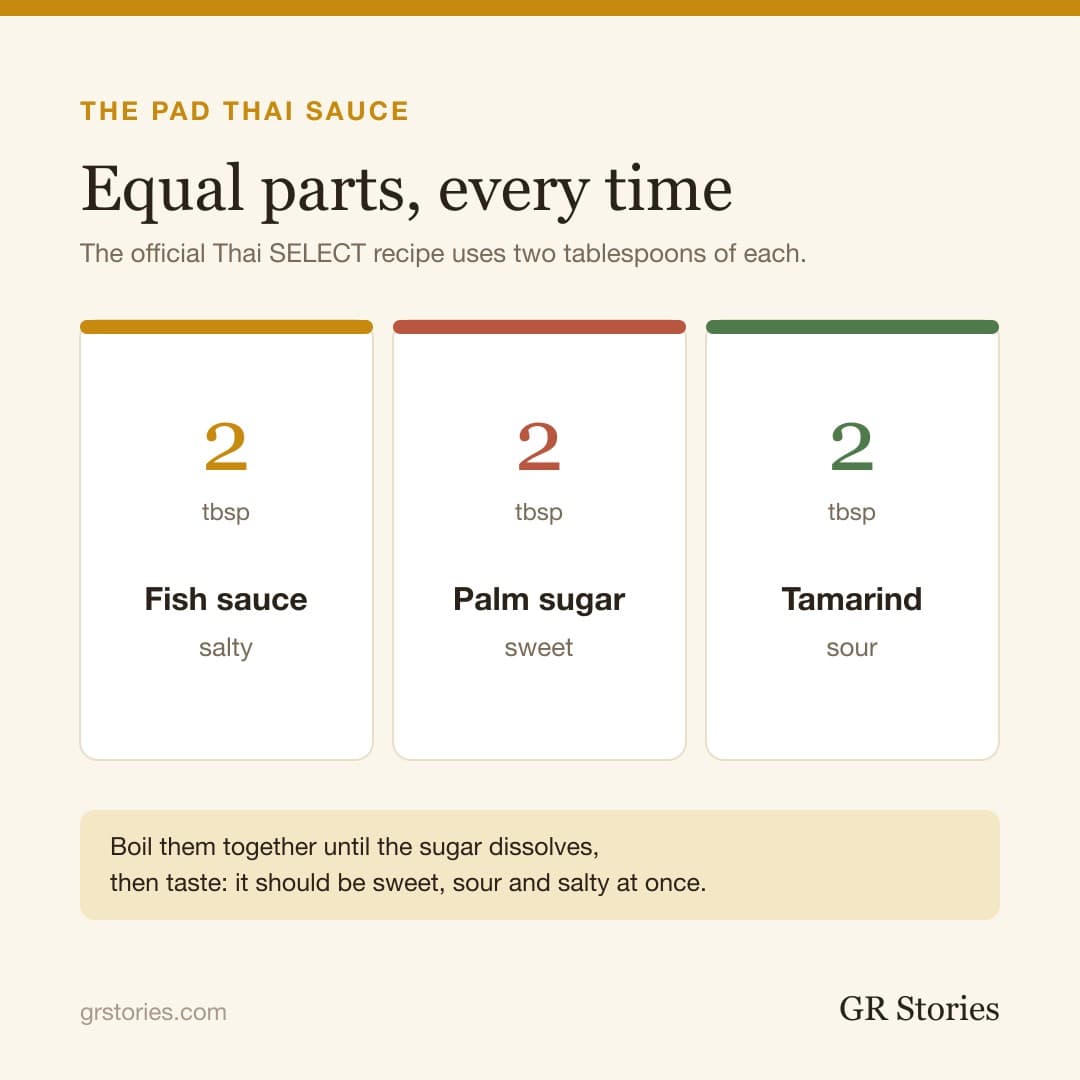
- 2 tbsp fish sauce
- 2 tbsp palm sugar
- 2 tbsp tamarind juice
For the noodles:
- 120 g thin rice noodles
- ¼ cup yellow tofu (firm, pressed tofu), cut into small cubes
- 1 tsp garlic, finely chopped
- 2 tsp shallot, finely chopped
- 2 tbsp sweet pickled radish, finely chopped
- 15 g dried shrimp
- 2 eggs
- 1 cup bean sprouts
- ¼ cup garlic chives, cut into 3 cm pieces
To serve, as in the Thai version of the recipe: crushed roasted peanuts, chilli flakes, lime wedges and fresh vegetables on the side.
You will also need 2 to 3 tablespoons of vegetable oil for the wok, which the official ingredient list takes for granted, and a wok or a large, deep frying pan.
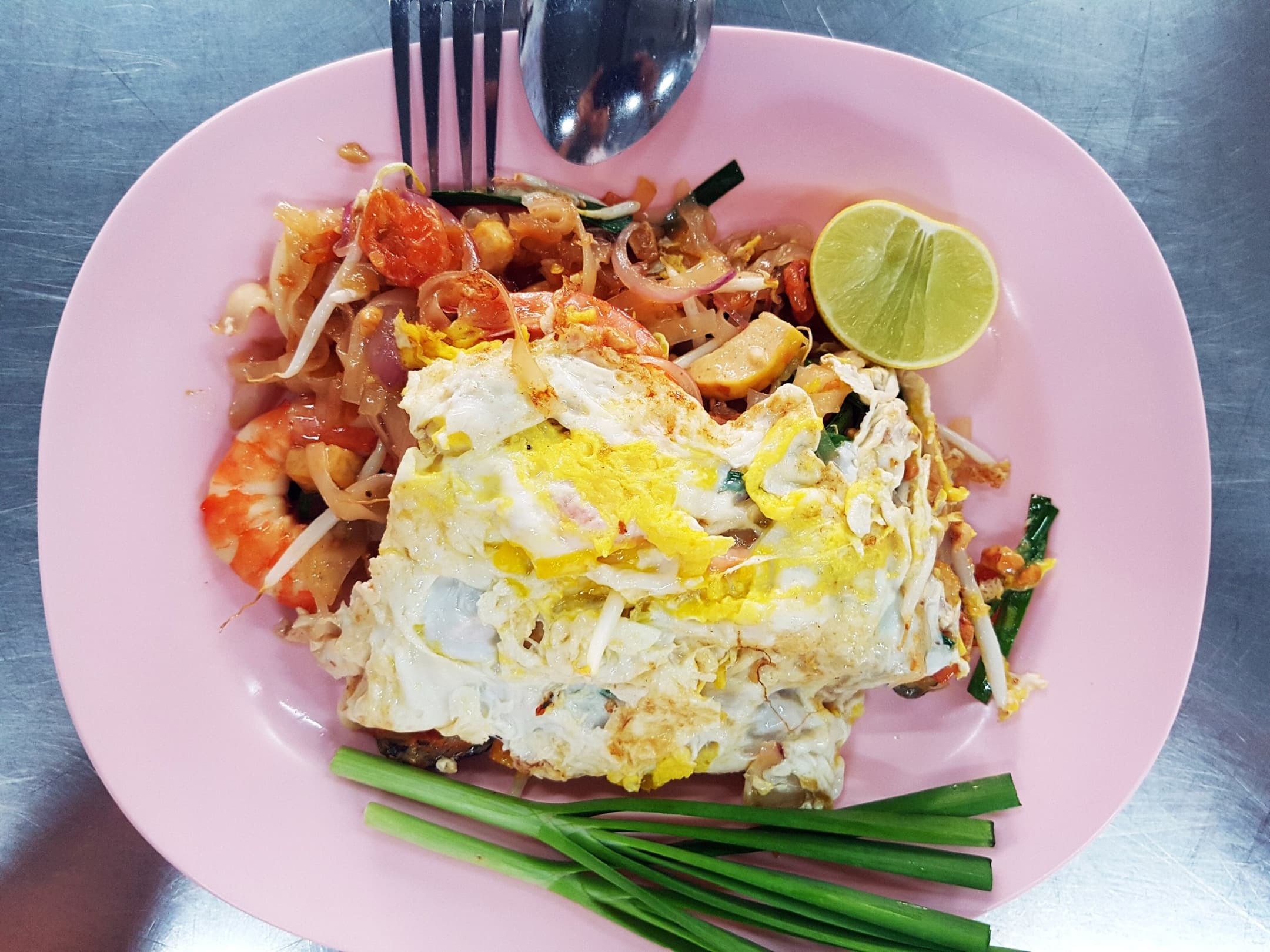
A note on the prawns. The official recipe is called Pad Thai Goong Sod, pad thai with fresh prawns, but its ingredient list does not give a quantity for them. If you would like to add them, as we do, use 6 to 8 medium raw prawns, peeled, and cook them with the aromatics in step 3. Without them, you have a classic, cheaper pad thai that is just as good.
A Note on Ingredients
The ingredient list looks long, but almost everything keeps for weeks in a cupboard or fridge, and you will find all of it in an Asian supermarket.
The sauce: equal parts, every time. The heart of pad thai is a sauce made of three ingredients in equal amounts: fish sauce for saltiness, palm sugar for sweetness and tamarind for sourness. Once you know this ratio, you can make pad thai for any number of people.
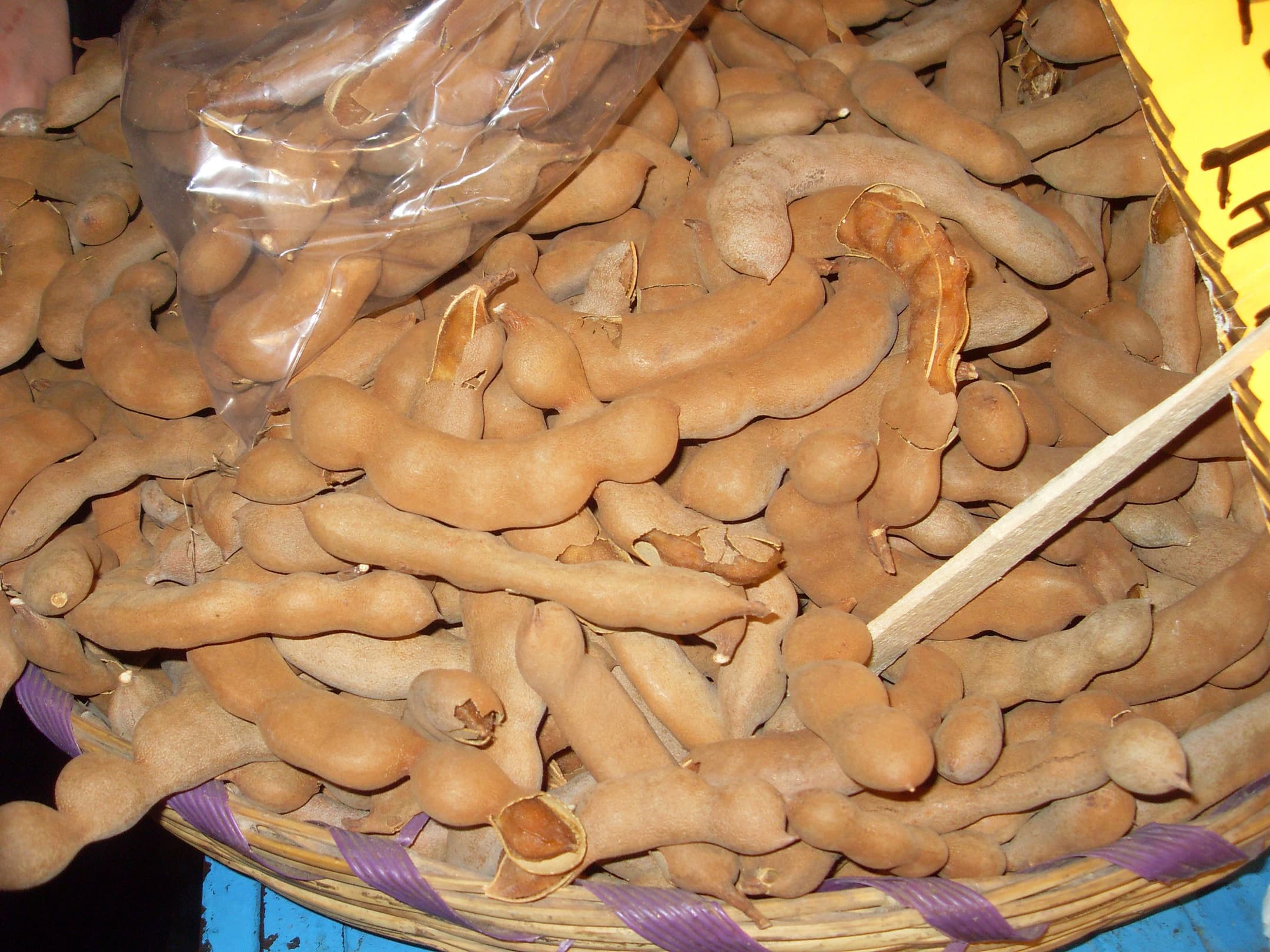
Tamarind juice. Tamarind is a sour, slightly fruity pod, and it is what gives real pad thai its tang. It is usually sold as a block of pulp: soak about 50 g of it in 100 ml of hot water for ten minutes, squeeze it with your fingers, then strain it and keep the liquid. Jars of ready-made tamarind concentrate also exist, but they are much stronger, so start with less and taste. Ketchup is not a substitute.
Palm sugar. Thai palm sugar is sold in soft cakes or tubs and has a gentle, caramel-like sweetness. If you cannot find it, coconut sugar or light brown sugar will do.
Fish sauce. Salty, pungent in the bottle and wonderfully savoury once cooked. It is the salt of Thai cooking, so you will not need any other.
Rice noodles. Look for flat, thin rice noodles, often sold as "rice sticks" or labelled for pad thai. Soak them in room-temperature water for about 30 minutes, until they are pliable but still firm, then drain them. They finish softening in the wok.
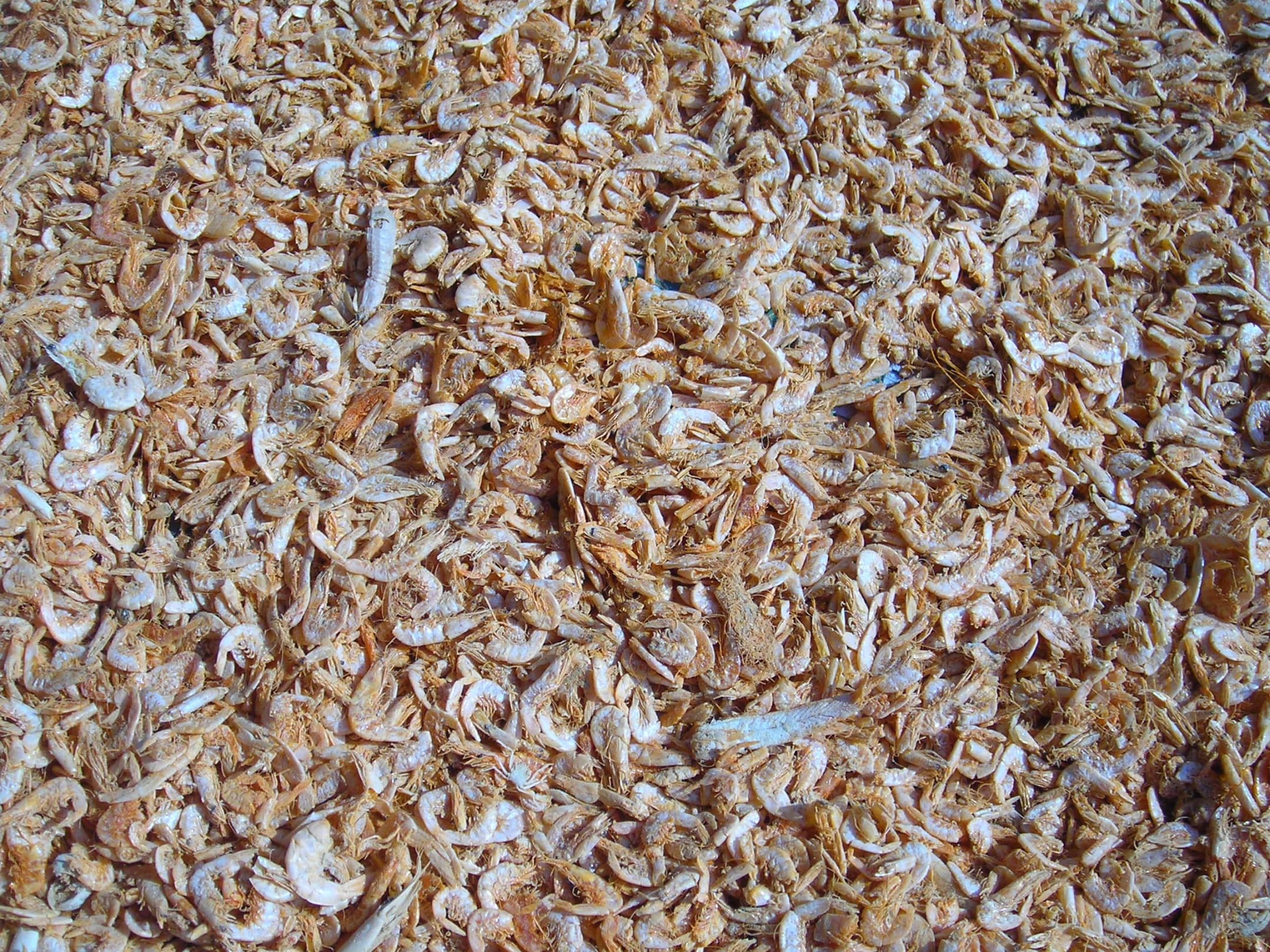
Dried shrimp and sweet pickled radish. These two small ingredients give pad thai its deep, savoury flavour. Dried shrimp are tiny sun-dried prawns, and sweet pickled radish, chai po, is salted, sweetened and finely chopped. Both are sold in small packets in Asian shops.
Yellow tofu. Thai yellow tofu is firm, pressed tofu with a yellow outer layer. Any extra-firm tofu works: cut it into small cubes and pat it dry.
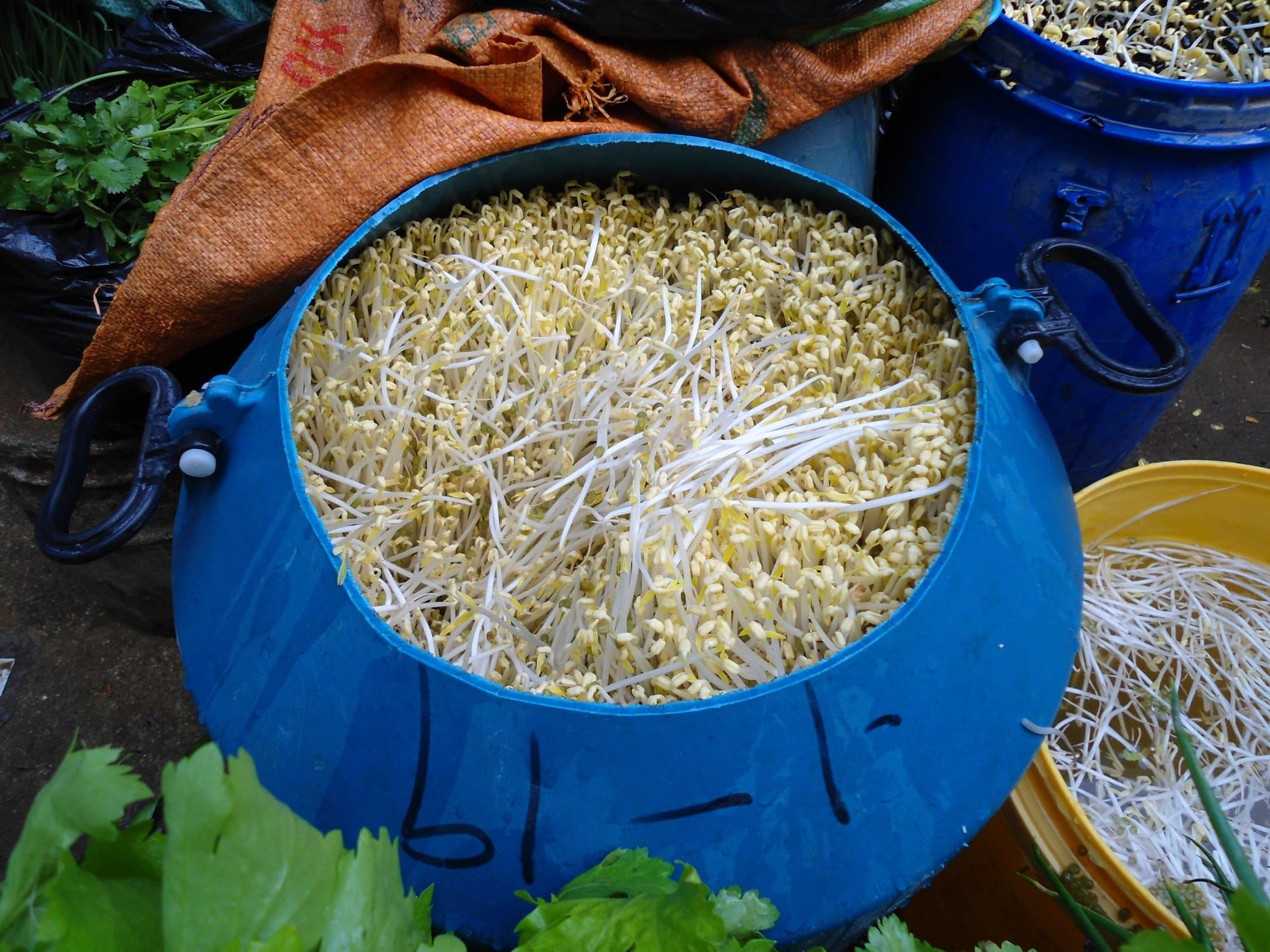
Bean sprouts and garlic chives. They go in at the very end and should stay crunchy. Garlic chives have flat leaves and a mild garlic flavour. If you cannot find them, spring onion is the easiest substitute.
Method
Pad thai cooks in less than ten minutes, so do all the chopping, soaking and measuring before you turn on the heat. Once the wok is hot, there is no time to stop and chop.
Step 1 — Make the sauce
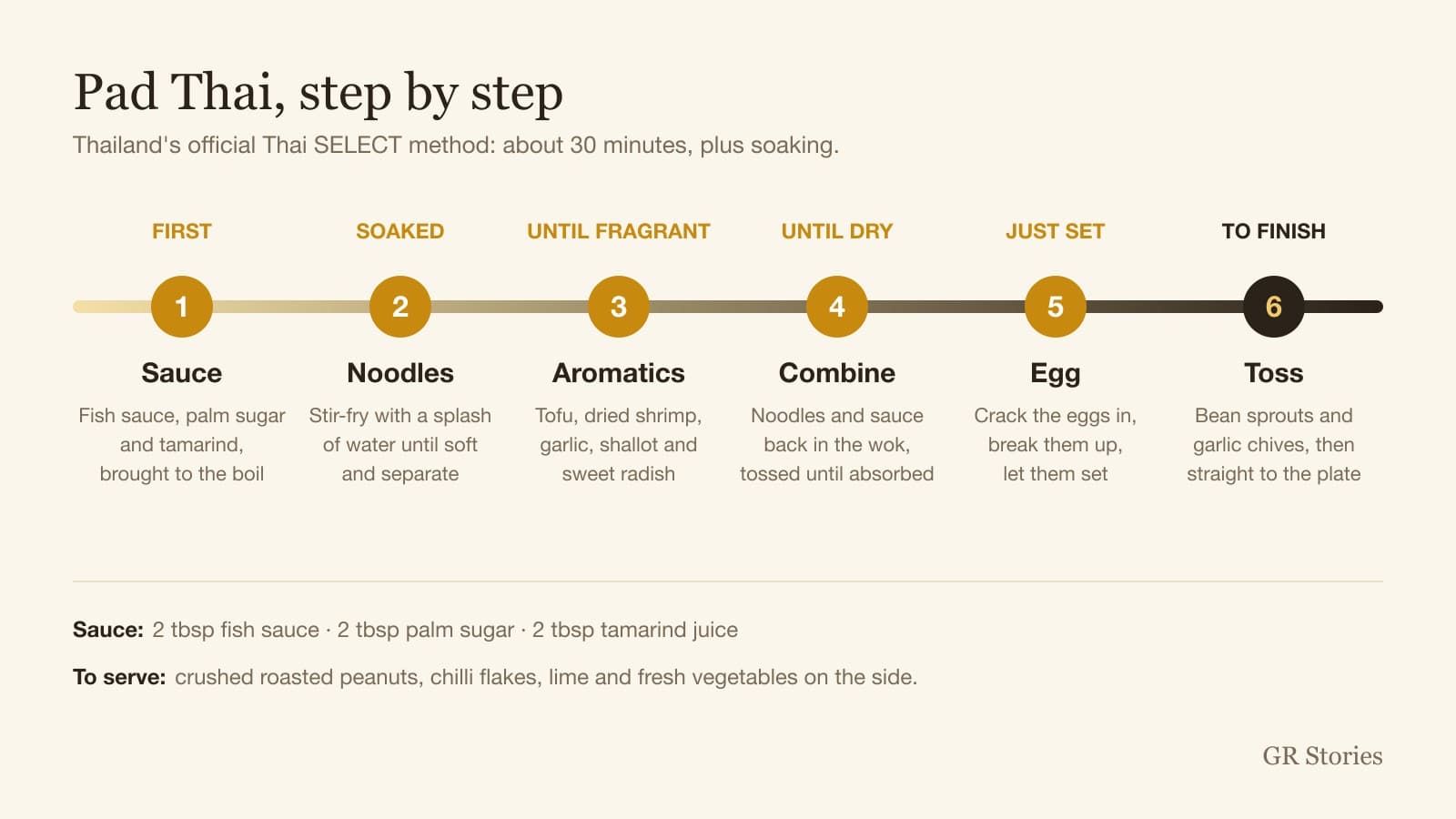
Put the fish sauce, palm sugar and tamarind juice in a small pan and bring them to the boil, stirring until the sugar has dissolved. Taste it: it should be sweet, sour and salty at the same time. Set it aside.
Step 2 — Soften the noodles
Heat a little oil in the wok over a medium-high heat. Add the soaked, drained noodles with a splash of water and stir-fry them until they are soft and no longer stuck together in clumps. Tip them out onto a plate.
Step 3 — Fry the aromatics
Add a little more oil to the wok, then add the tofu, dried shrimp, garlic, shallot and sweet pickled radish. Stir-fry for a minute or two, until everything smells fragrant. If you are using fresh prawns, add them now and cook until they turn pink.
Step 4 — Bring it together
Put the noodles back in the wok and pour over the sauce. Toss everything continuously until the noodles have absorbed the sauce and the bottom of the wok is almost dry.
Step 5 — Add the eggs
Push the noodles to one side, crack the eggs into the empty space and break them up with your spatula. When they start to set, fold them through the noodles.
Step 6 — Finish and serve
Add the bean sprouts and garlic chives, toss for a few seconds, then move everything straight onto a plate. Serve with crushed roasted peanuts, chilli flakes, lime wedges and fresh vegetables on the side, so everyone can season their own plate.
Common Mistakes (and How to Avoid Them)
- Boiling the noodles. Boiled rice noodles turn mushy in the wok. Soak them in room-temperature water instead, and let them finish cooking in the pan.
- Using ketchup. Many pad thai recipes outside Thailand replace tamarind with ketchup or tomato paste. The colour might look similar, but the flavour is completely different.
- Overcrowding the wok. If you are cooking for more than two, make the pad thai in batches. Too many noodles in one wok steam instead of frying, and turn sticky.
- Leaving the noodles wet. Keep tossing until the sauce is absorbed and the wok is almost dry. Wet pad thai is soggy pad thai.
- Cooking the bean sprouts. They go in at the very end, for a few seconds only. They should still crunch.
- Skipping the garnishes. Peanuts, chilli and lime are not decoration. Each person seasons their own plate, and that final squeeze of lime brings the whole dish together.
One Dish, Many Versions
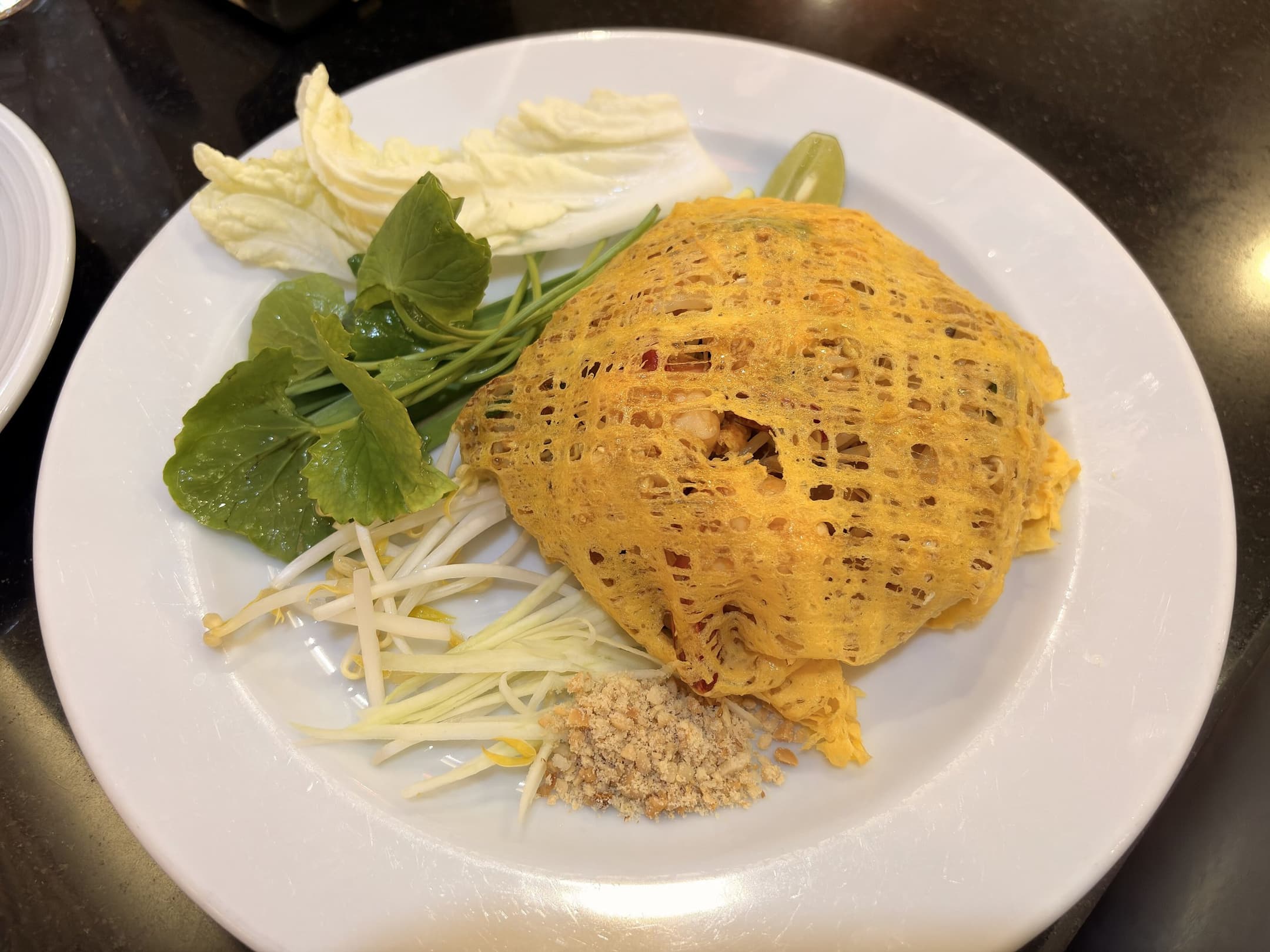
Once you have mastered the basic recipe, pad thai is easy to adapt. Chicken or pork work in place of prawns, and leaving out the shrimp and fish sauce, with a little soy sauce instead, makes a vegetarian version. In Bangkok, you will also find a beautiful variation called pad thai hor kai, where the noodles are wrapped in a thin, lacy omelette.
Why This Recipe Belongs in a Student Kitchen
Pad thai is the perfect example of a dish that looks like a takeaway and costs a fraction of one. Once you have bought the sauce ingredients, which last for months, each plate costs very little, and the whole recipe takes less time than a delivery would. It is also a great dish to cook for friends: set out bowls of peanuts, chilli and lime, and let everyone finish their own plate.
If you enjoyed cooking it, try our Korean bibimbap or our Japanese oyakodon next, and you will have three of Asia's great everyday dishes in your repertoire. Just remember that a very hot wok in a shared kitchen means a lot of smoke, so open a window, and check the hidden social rules of shared student kitchens abroad before the smoke alarm goes off.
Sources and Photo Credits
- Recipe: adapted from Pad Thai Goong Sod (Fried Noodle Thai Style with Prawns), Thai SELECT, Department of International Trade Promotion, Ministry of Commerce of Thailand.
- History: Pad thai, Wikipedia.
- Cover: Pad thai in Chiang Rai by Iudexvivorum, CC0, via Wikimedia Commons.
- Pad thai with prawns: Pad Thai by Index Librorum Permissorum, CC0, via Wikimedia Commons.
- Tamarind: Tamarind pods by Wicki, public domain, via Wikimedia Commons.
- Dried shrimp: Dried shrimps, Thailand by Mattes, public domain, via Wikimedia Commons.
- Bean sprouts: Bean sprouts by Anna Frodesiak, CC0, via Wikimedia Commons.
- Pad thai hor kai: Pad Thai Hor Kai by Tree Lightbulb, CC0, via Wikimedia Commons.
- Illustrations: © GR Stories.