The International Baccalaureate Diploma has a reputation that arrives before it does. Parents hear that it is demanding, students hear that it is all-consuming, and universities around the world know exactly what it means. Yet if you ask someone to explain how it actually works, what HL means, why 45 is the magic number and why 24 points are not always enough to pass, the answers tend to get vague.
This guide explains the IB Diploma Programme from the inside, using the IB's own rules: the six subjects, the three parts of the "core", how the points add up and the conditions you need to meet to be awarded the diploma.
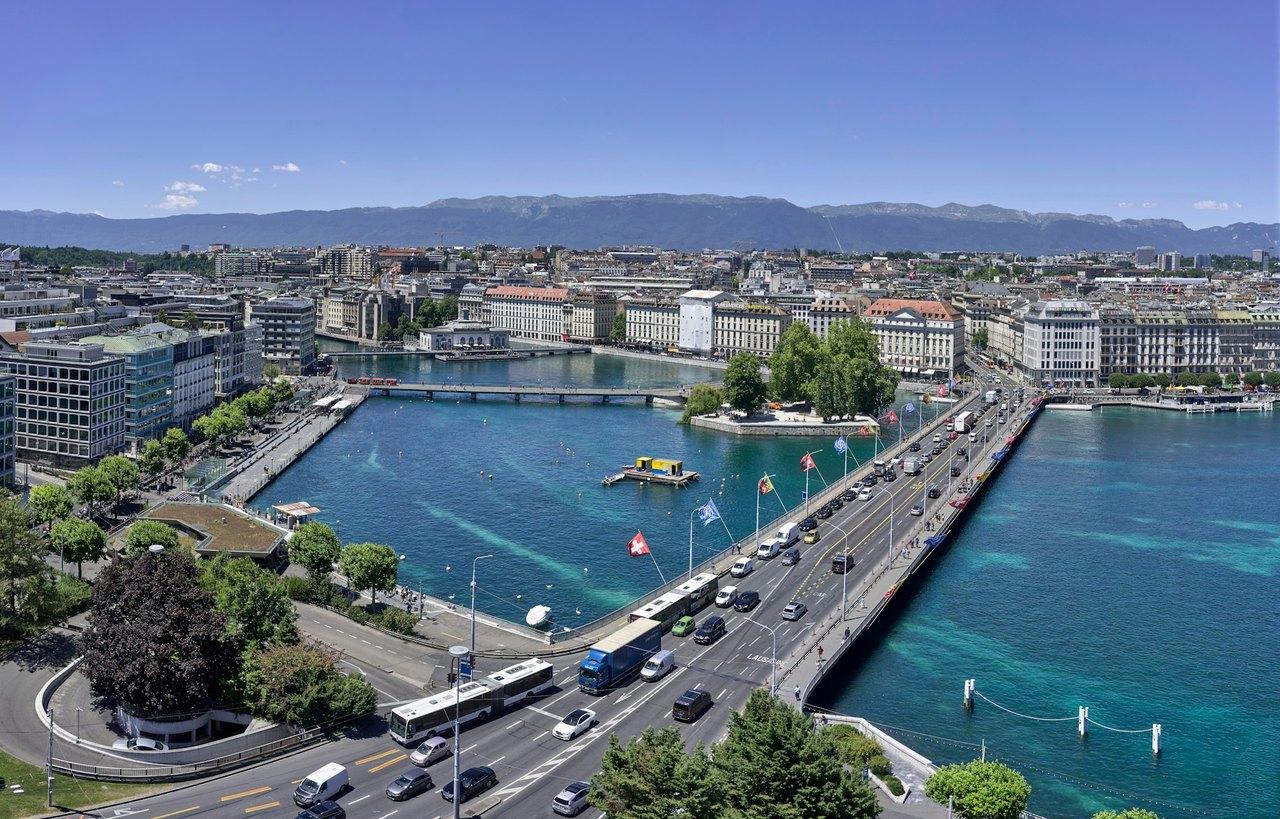
The IB itself was founded in Geneva in 1968, and the Diploma Programme was its first programme, created by teachers at the International School of Geneva. Today it is taught in thousands of schools in countries all over the world, in English, French and Spanish, and it is the qualification many international students bring with them when they arrive at university.
Six Subjects, Two Levels
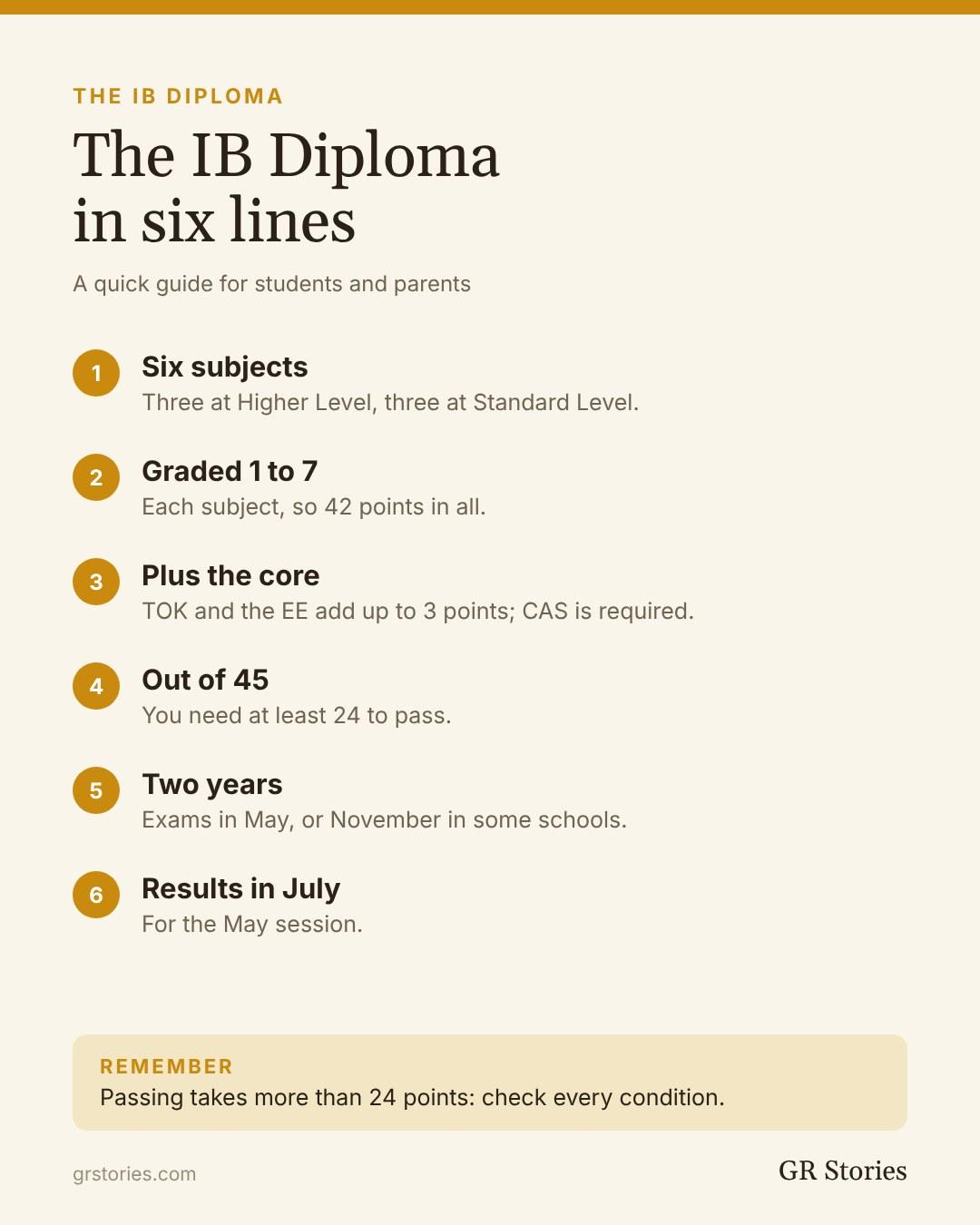
An IB Diploma student studies six subjects over two years, usually one from each of six groups: studies in language and literature, language acquisition, individuals and societies, sciences, mathematics and the arts. Many students take a second subject from one of the other groups instead of an arts subject.
The shape is what makes the IB different. Almost every student keeps studying their own language, a second language, a humanity, a science and maths until the end of school. You can lean towards the sciences or the humanities, but you cannot drop everything else.
Subjects are taken at two levels. Higher Level (HL) subjects go further and take more teaching time; Standard Level (SL) subjects are lighter. Most students take three subjects at HL and three at SL, and some take four at HL. Universities usually care most about your HL subjects, so choose them with your future course in mind.
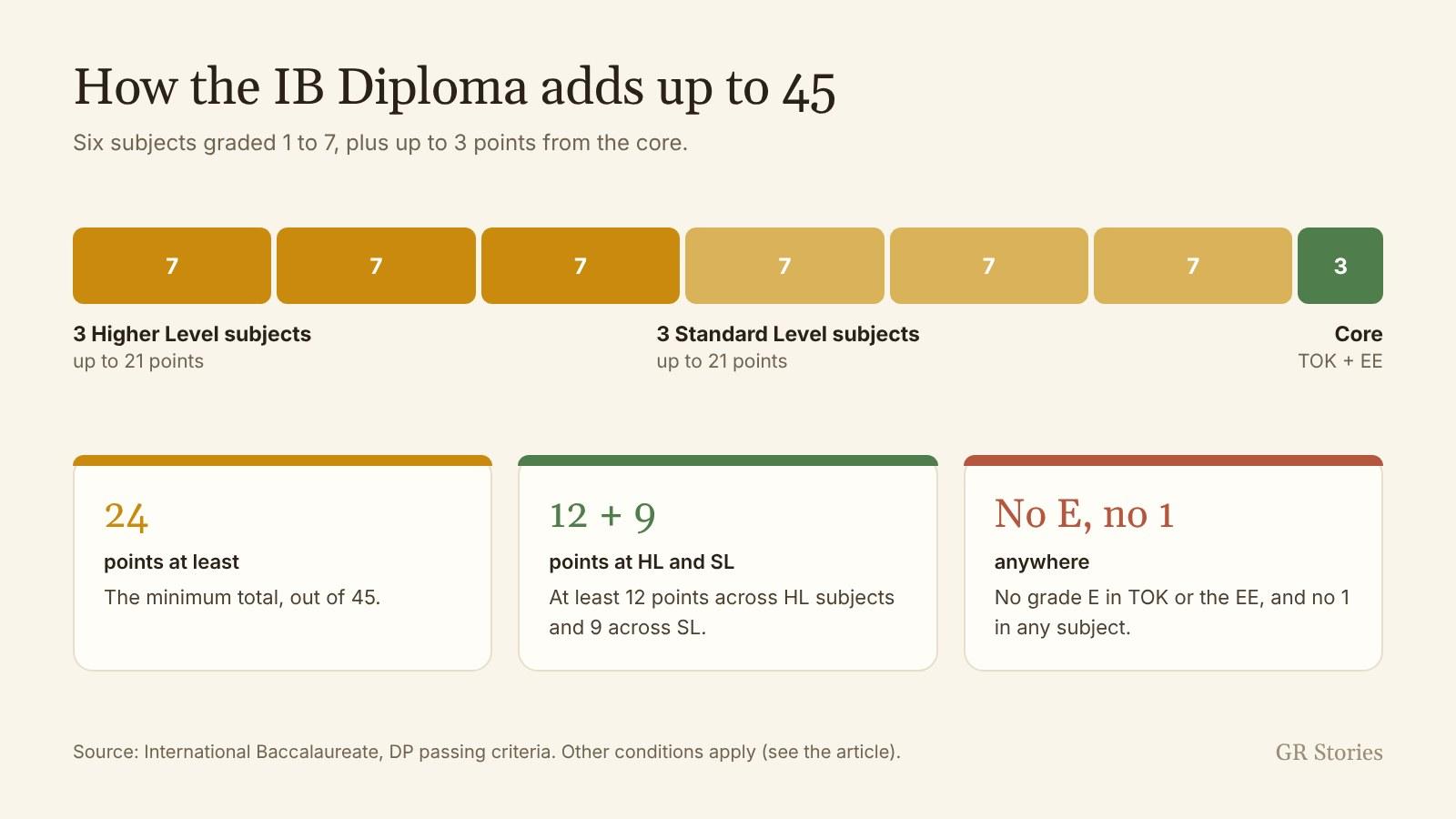
Each subject is graded on a scale from 1 to 7, where 7 is the highest. With six subjects, that makes a maximum of 42 points.
The Core: TOK, the Extended Essay and CAS
On top of the six subjects, every diploma student completes three compulsory elements, known as the core.
Theory of Knowledge (TOK) asks how we know what we claim to know, across subjects as different as history, physics and the arts. It is assessed through an essay and an exhibition.
The Extended Essay (EE) is a piece of independent research of up to 4,000 words, on a question you choose, in one of your subjects. For many students it is the first real research project of their lives, and it is excellent preparation for university.
Creativity, activity, service (CAS) is a programme of experiences outside the classroom, from sport and music to volunteering, including a project. CAS earns no points, but it is not optional: if you do not meet the CAS requirements, you do not receive the diploma.
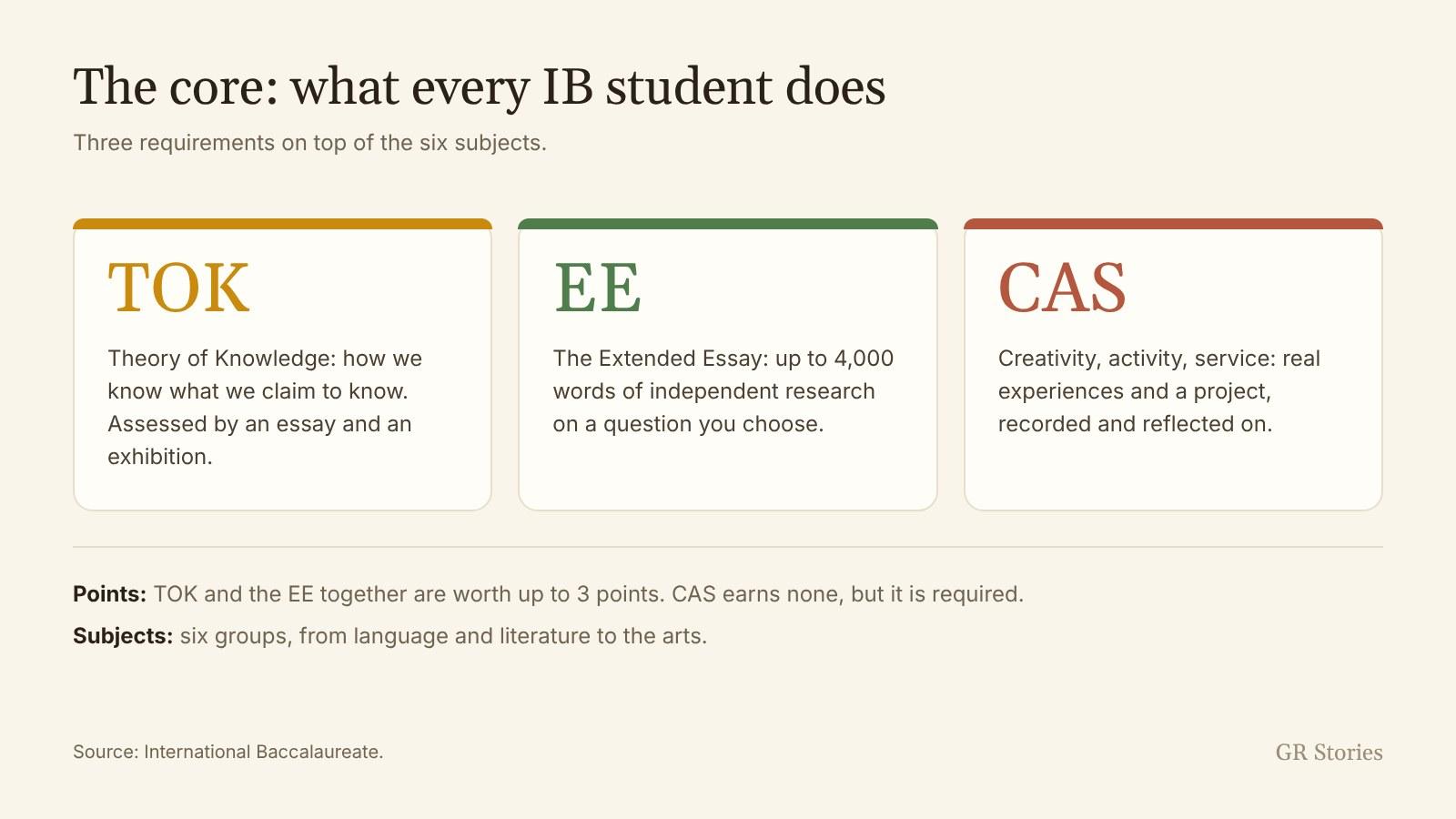
TOK and the EE are each graded from A to E. The two grades are then combined in a matrix that gives up to 3 extra points. The IB calls them additional points; most students call them bonus points.
How the Points Add Up
Six subjects at 7 give 42 points; add the 3 points from the core and you reach the famous maximum of 45. Very few students get there. In the May 2025 session, the IB reported a global average of 30.58 points.
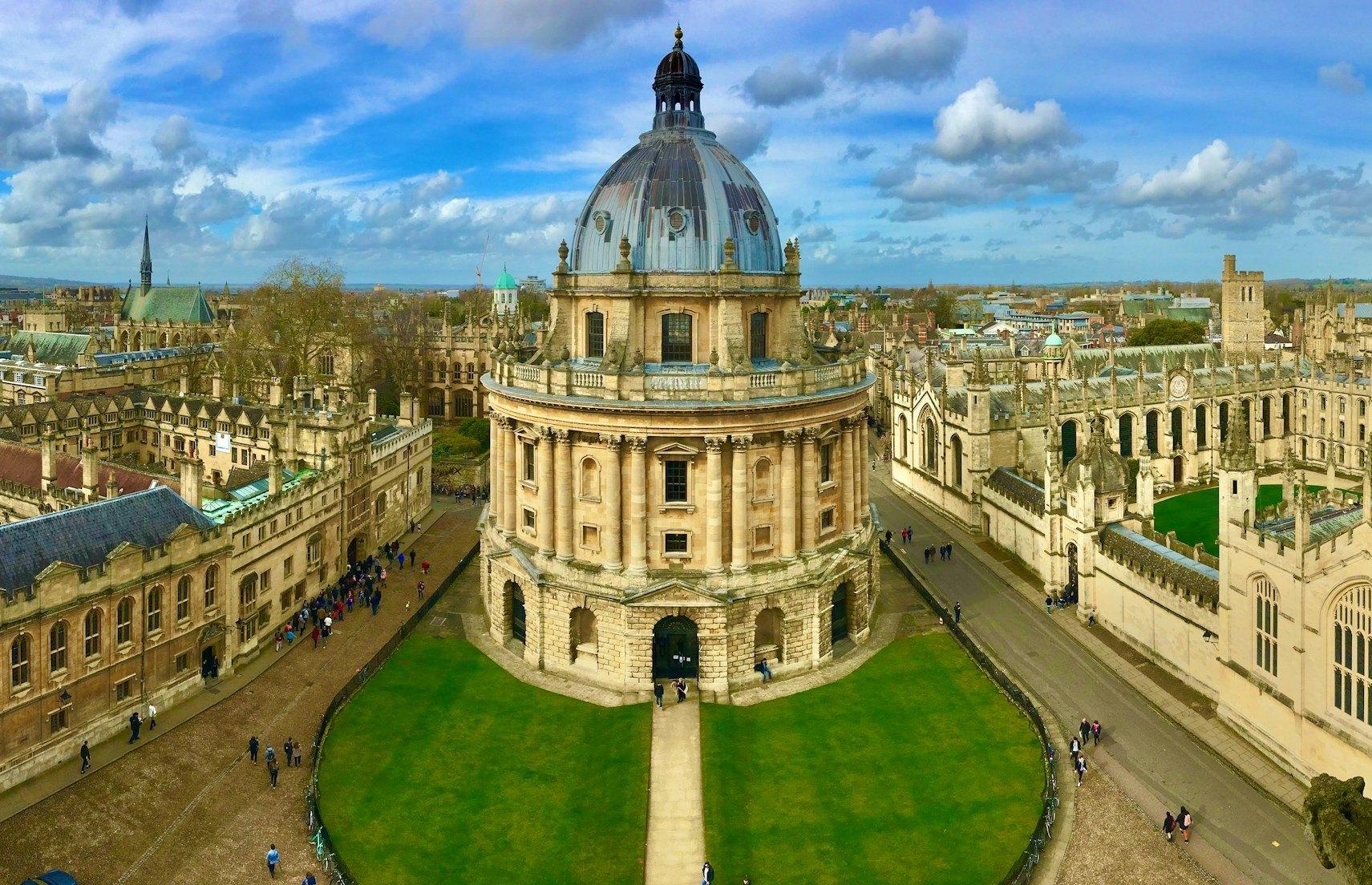
Universities usually make offers in points, often with conditions on your HL grades. Oxford's physics course, for example, asks for 39 points including the core, with 7, 6 and 6 in your HL subjects.
What You Need to Pass
This is the part many students misunderstand. 24 points is the minimum, but it is not enough on its own. According to the IB's passing criteria, you are awarded the diploma only if all of these are true:
- you have at least 24 points in total;
- you have completed all the CAS requirements;
- a grade has been awarded in every subject, TOK and the EE;
- you have no grade E in TOK or in the Extended Essay;
- you have no grade 1 in any subject;
- you have no more than two grade 2s;
- you have no more than three grades of 3 or below;
- you have at least 12 points across your HL subjects and at least 9 points across your SL subjects.
So a student with 30 points and an E in the Extended Essay does not pass, while a student with 24 points and no weak spots does. If you fall short, you still receive a record of the grades you earned in each subject, and you can retake subjects in a later session.
Exams, Results and Timing
Most assessment happens at the end of the two years, in written exams, but every subject also includes internal assessment: coursework, projects or orals marked by your teachers and checked by the IB. That means the work counts long before the final exams.
Most schools take their exams in the May session; some, mainly in the southern hemisphere, take them in November. Results for the May session arrive in early July, in time for university offers to be confirmed.
Is the IB Right for You?
The IB suits students who enjoy many subjects, like writing and research and want to keep their options open. It asks for steady work across two years, because coursework, the EE and TOK all have deadlines alongside your exam preparation. If you know exactly what you want to study and would rather go deep in three subjects, other qualifications may suit you better.
Whatever you choose, the skills the IB builds, managing long projects, writing well, arguing with evidence, are the ones that matter most at university. Our guide on how to study smarter at university builds on exactly those habits, and if your university is in Italy, our guide to how Italian university grades work explains what comes next.
Sources and Photo Credits
- International Baccalaureate, DP passing criteria (passing conditions, core points matrix, maximum score).
- International Baccalaureate, Diploma Programme assessment and IB Foundation Office, Geneva.
- International Baccalaureate, IB students worldwide receive their results (2025).
- University of Oxford, Department of Physics, How to apply (example offer).
- Cover: Diverse group of students gathered around a laptop by Vitaly Gariev, Unsplash.
- Geneva: Geneva and the lake by Xavier von Erlach, Unsplash.
- Points diagram, core cards and summary card: original graphics by GR Stories.