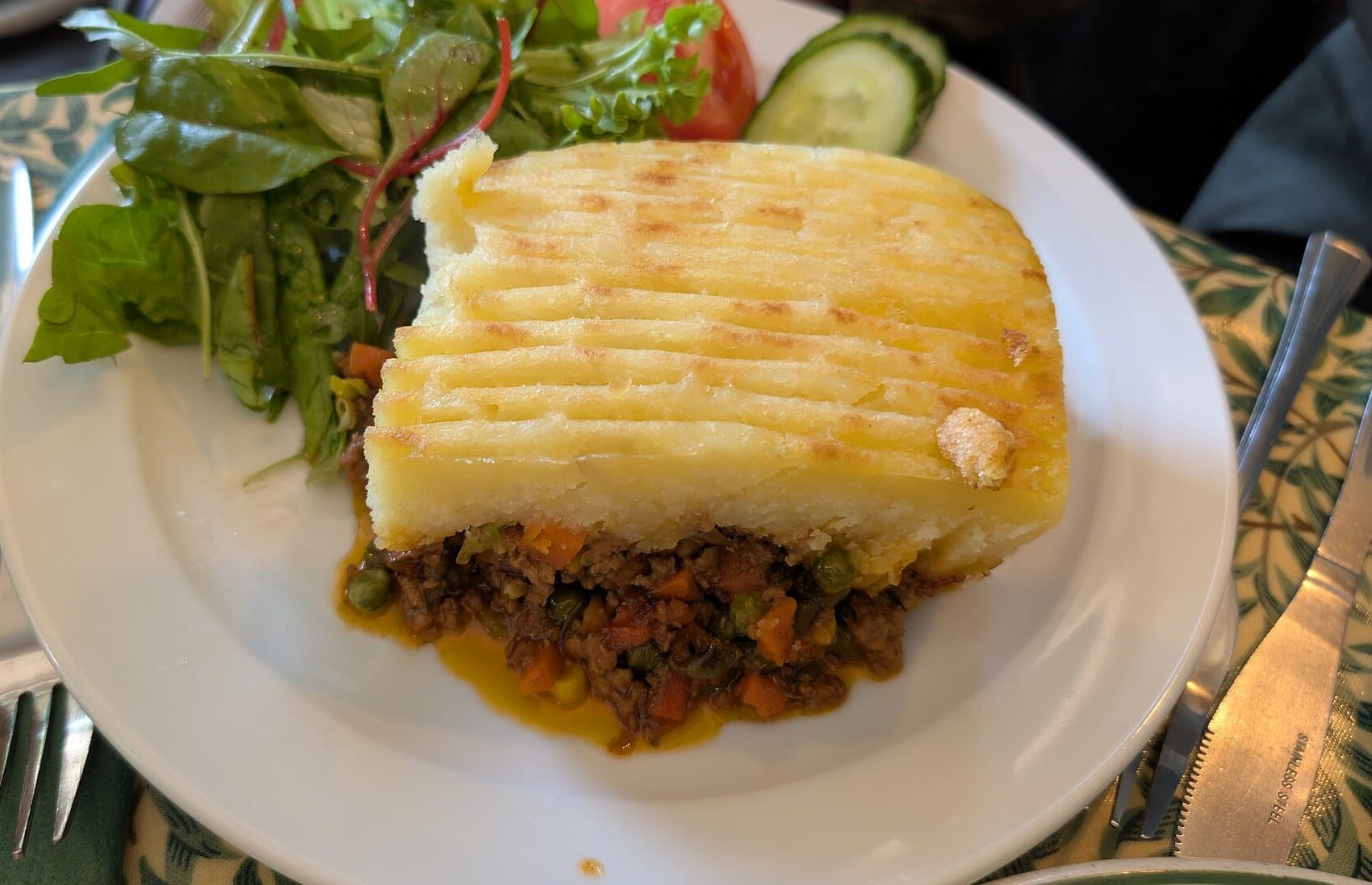
Every country has a dish that tastes like being looked after. In Britain, one of them is shepherd's pie: lamb mince simmered in a rich gravy with onion and carrot, hidden under a thick layer of mashed potato and baked until the top turns golden and the gravy bubbles up at the edges. It is served in school canteens, pubs and family kitchens up and down the country, and it is far better than its humble reputation suggests.
It is also one of the most practical dishes a student can learn. The ingredients are cheap, it feeds four (or one person four times), it can be made ahead, and it freezes beautifully.
This version follows the no-fuss shepherd's pie published by BBC Good Food, one of Britain's best-known recipe websites, in a recipe by Barney Desmazery. It is the classic version, with no shortcuts and no reinvention: lamb, a few vegetables, a splash of Worcestershire sauce and a buttery mash.
A Short History
Shepherd's pie began as a way of using up leftovers. For generations, the Sunday roast was the big meal of the British week, and whatever meat was left over had to become something else by Monday or Tuesday. Mincing it, moistening it with gravy and covering it with mashed potato was a cheap, filling answer.
The dish is older than its name. The earliest known use of the term cottage pie dates from 1791, a time when potatoes were becoming an everyday food for the rural poor who lived in cottages. Shepherd's pie appears in print a few decades later, during the 19th century, and for a long time the two names were used for the same thing.
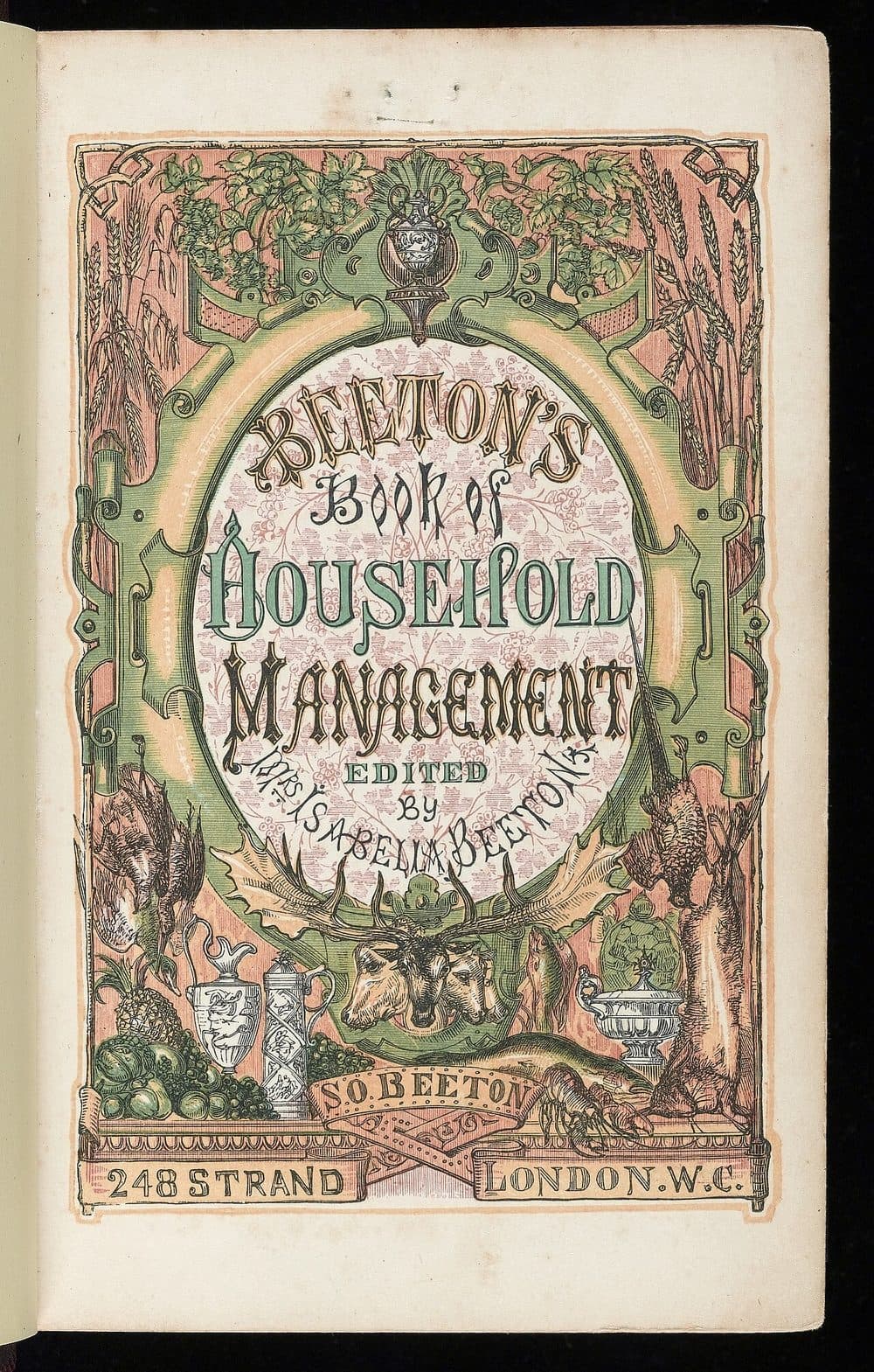
Even Mrs Beeton, whose Book of Household Management (1861) became the great reference of Victorian kitchens, used neither name. But in her chapter on cooking with cold meat, recipe number 703 is unmistakably an ancestor: the remains of a joint of roast mutton, minced with fried onion and herbs, moistened with gravy, layered with mashed potatoes and baked for half an hour. She put the cost, not counting the meat, at four pence.
Shepherd's Pie or Cottage Pie?
Over time, a simple rule took hold, and in Britain people take it seriously: shepherds look after sheep, so shepherd's pie is made with lamb, while cottage pie is made with beef. Everything else, from the vegetables to the gravy and the mash, is essentially the same.
If beef is all you have, use it. Just call it a cottage pie, or a British friend will politely correct you.
Ingredients
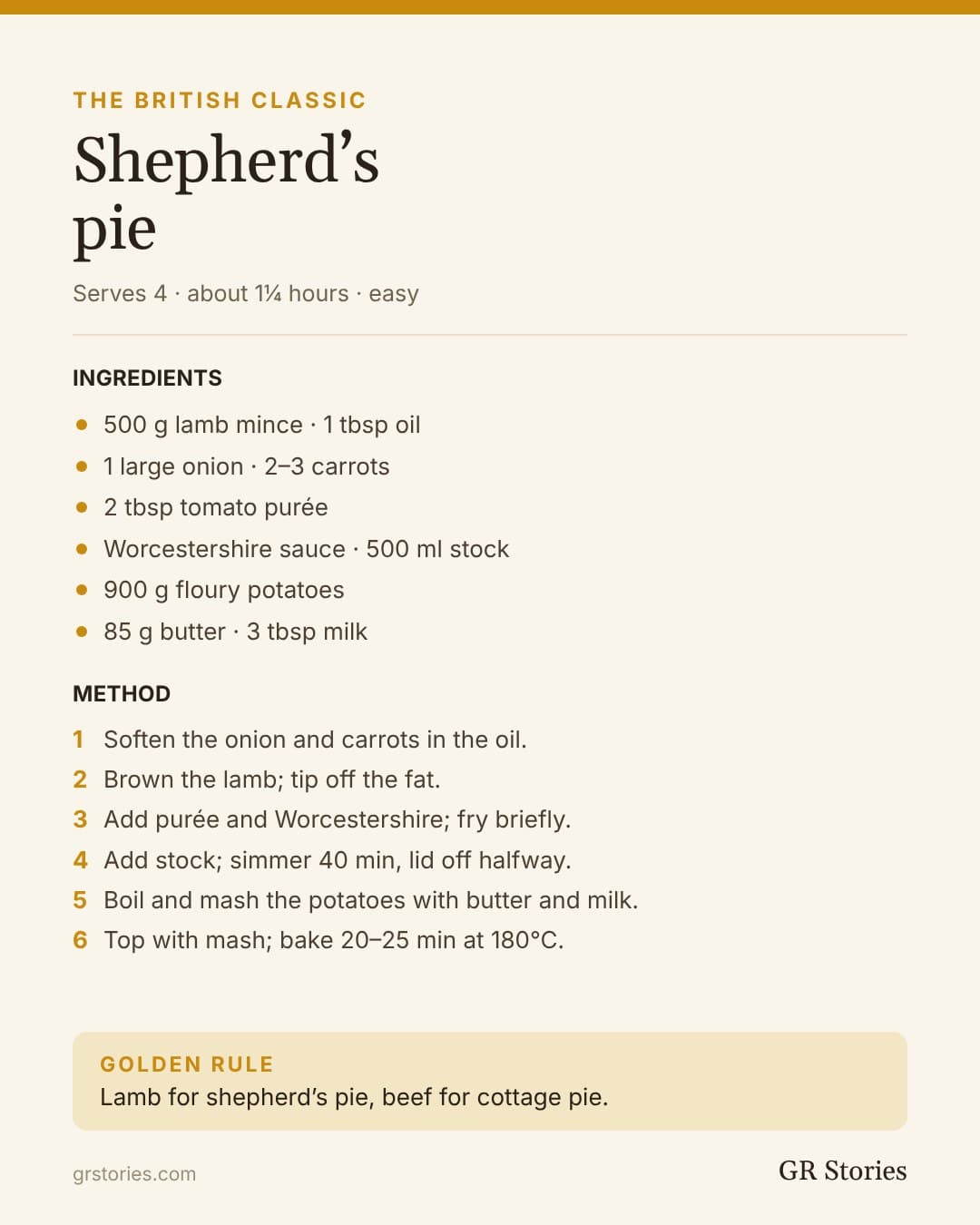
Serves 4. Preparation: 15 minutes. Cooking: about 1 hour. Difficulty: easy.
For the filling
- 1 tablespoon sunflower oil
- 1 large onion, chopped
- 2–3 medium carrots, chopped
- 500 g lamb mince
- 2 tablespoons tomato purée
- A large splash of Worcestershire sauce
- 500 ml beef stock
For the mash
- 900 g potatoes, cut into chunks
- 85 g butter
- 3 tablespoons milk
- Salt, for the potato water
You will also need a medium saucepan with a lid, a second pan for the potatoes, a potato masher and a medium ovenproof dish.
A Note on Ingredients
Lamb mince. This is what makes it a shepherd's pie. In the UK it is sold in every supermarket, but abroad it can be harder to find: ask a butcher to mince some lamb shoulder for you, or use beef and call the result a cottage pie. Lamb releases quite a lot of fat as it browns, which is why the recipe tells you to tip off the excess.
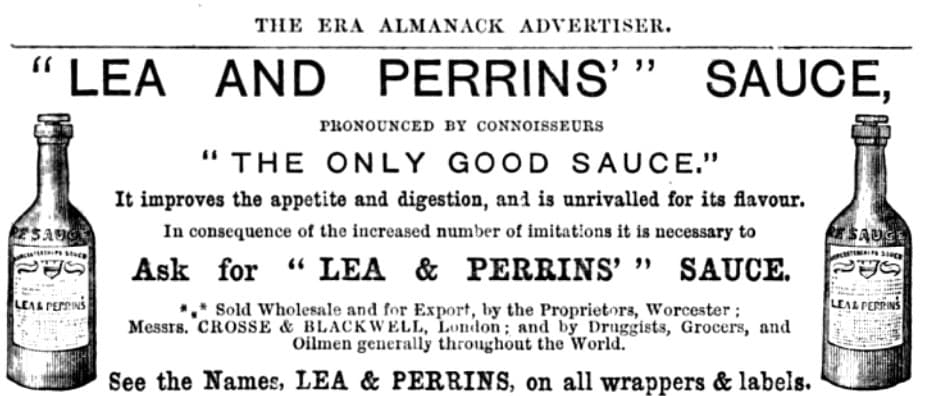
Worcestershire sauce. A dark, tangy, savoury sauce first sold by two chemists from Worcester, John Wheeley Lea and William Henry Perrins, in 1837. Its recipe is still a secret, but it includes vinegar, tamarind and anchovies, which means it is not vegetarian. A splash adds depth to the gravy without tasting of anything in particular.
Potatoes. For a fluffy mash, choose floury potatoes. In Britain the classics are Maris Piper and King Edward; elsewhere, look for anything sold as floury or good for mashing or baking. Waxy salad potatoes turn gluey when mashed.
Stock. BBC Good Food uses beef stock even for the lamb version, and a stock cube dissolved in boiling water is perfectly fine.
Method
Step 1 — Soften the vegetables
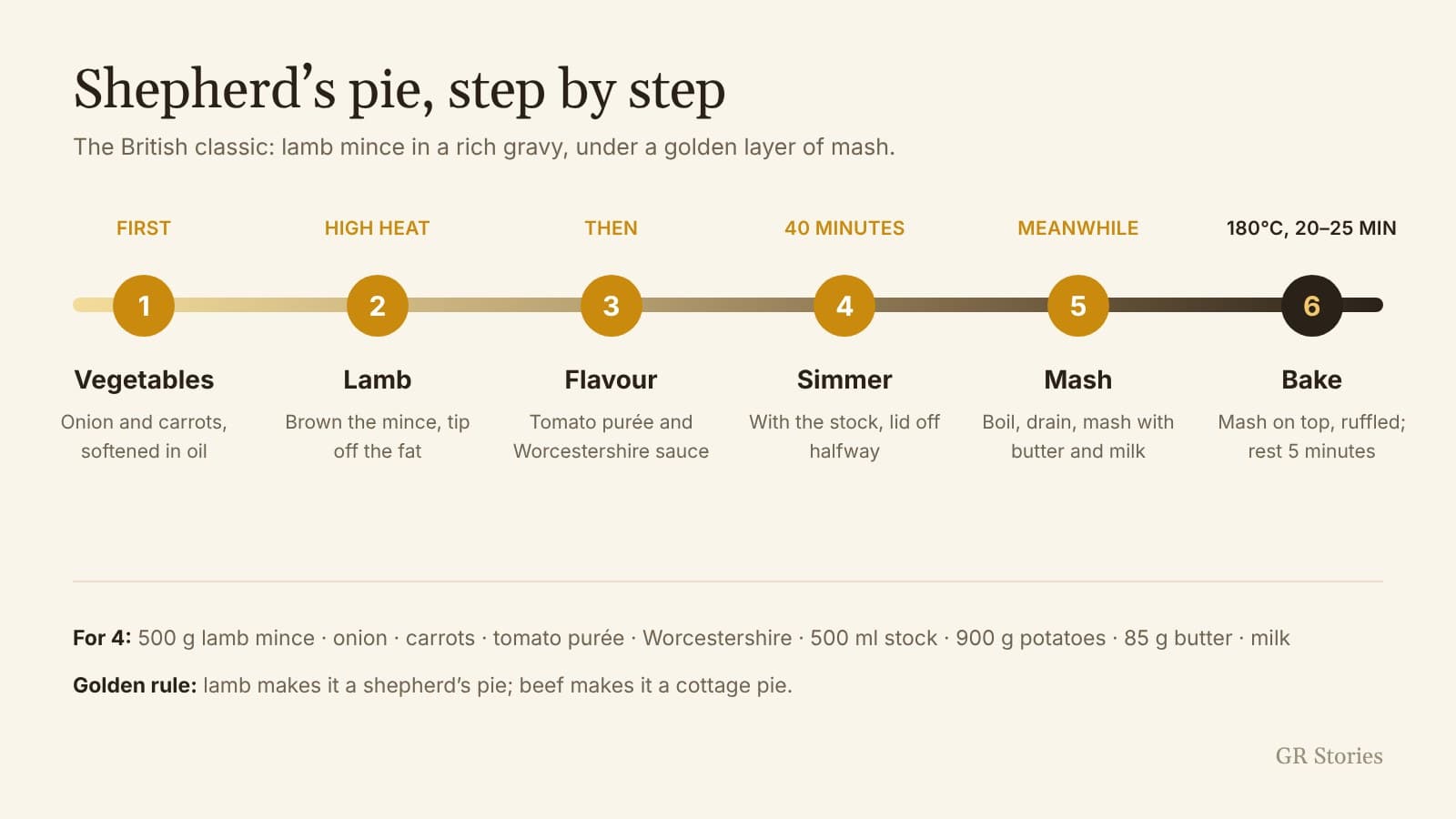
Heat the sunflower oil in a medium saucepan and cook the chopped onion and carrots for a few minutes, until they start to soften.
Step 2 — Brown the lamb
Turn up the heat, crumble in the lamb mince and let it brown well, breaking it up with a wooden spoon. Tip off any excess fat.
Step 3 — Tomato and Worcestershire sauce
Add the tomato purée and a large splash of Worcestershire sauce, and fry for a few minutes more.
Step 4 — Simmer
Pour in the beef stock, bring to a simmer, then cover and cook for 40 minutes, taking the lid off halfway through so that the gravy can thicken. Taste it before it goes into the dish, and add salt and pepper if it needs them.
Step 5 — Make the mash
Meanwhile, heat the oven to 180°C (160°C fan, gas 4). Boil the potatoes in salted water for 10–15 minutes, until tender. Drain them well, then mash with the butter and milk.
Step 6 — Assemble
Spoon the mince into the ovenproof dish, cover it with the mash and ruffle the top with a fork. Those ridges catch the heat and turn crisp and golden in the oven. If you have time, let the filling cool a little first, so that the mash sits on top instead of sinking into the gravy.
Step 7 — Bake and rest
Bake for 20–25 minutes, until the top is starting to colour and the gravy is bubbling up at the edges. Leave it to stand for 5 minutes before serving.
Making it ahead. Once assembled, the pie can be chilled, or frozen for up to a month. BBC Good Food bakes it from frozen at 160°C (140°C fan, gas 3) for 1 hour to 1 hour 20 minutes, until piping hot in the centre, then flashes it under the grill to brown the top.
Common Mistakes (and How to Avoid Them)
- Not browning the mince. Grey, steamed mince means a flat-tasting filling. Turn the heat up and give it time to colour.
- Leaving all the fat in. Lamb is fatty. Tip off the excess, or the pie will be greasy.
- A runny filling. Take the lid off halfway through the simmering so that the gravy reduces, and let the pie rest before serving.
- Watery mash. Drain the potatoes well and let them steam for a minute before mashing.
- Using waxy potatoes, or a blender. Both make the mash gluey. Floury potatoes and a hand masher are all you need.
- Serving it straight from the oven. Five minutes' rest lets the filling settle, so it does not run all over the plate.
Variations Worth Trying
- Cottage pie. The same recipe with beef mince instead of lamb.
- Cumberland pie. A cottage pie with a crunchy layer of breadcrumbs, and often cheese, on top.
- A cheesy top. Grate a little Cheddar over the mash before it goes into the oven.
- A different mash. Swap some of the potatoes for sweet potato, swede or parsnip.
- Vegetarian. Use cooked green or brown lentils instead of the lamb, vegetable stock and a vegetarian Worcestershire sauce.
What to Serve with It
Shepherd's pie needs very little alongside it: a pile of peas or any green vegetable, such as buttered cabbage, green beans or broccoli, is the classic way. If you want something sweet afterwards, a batch of chocolate chip cookies never goes to waste.
Why This Recipe Belongs in a Student Kitchen
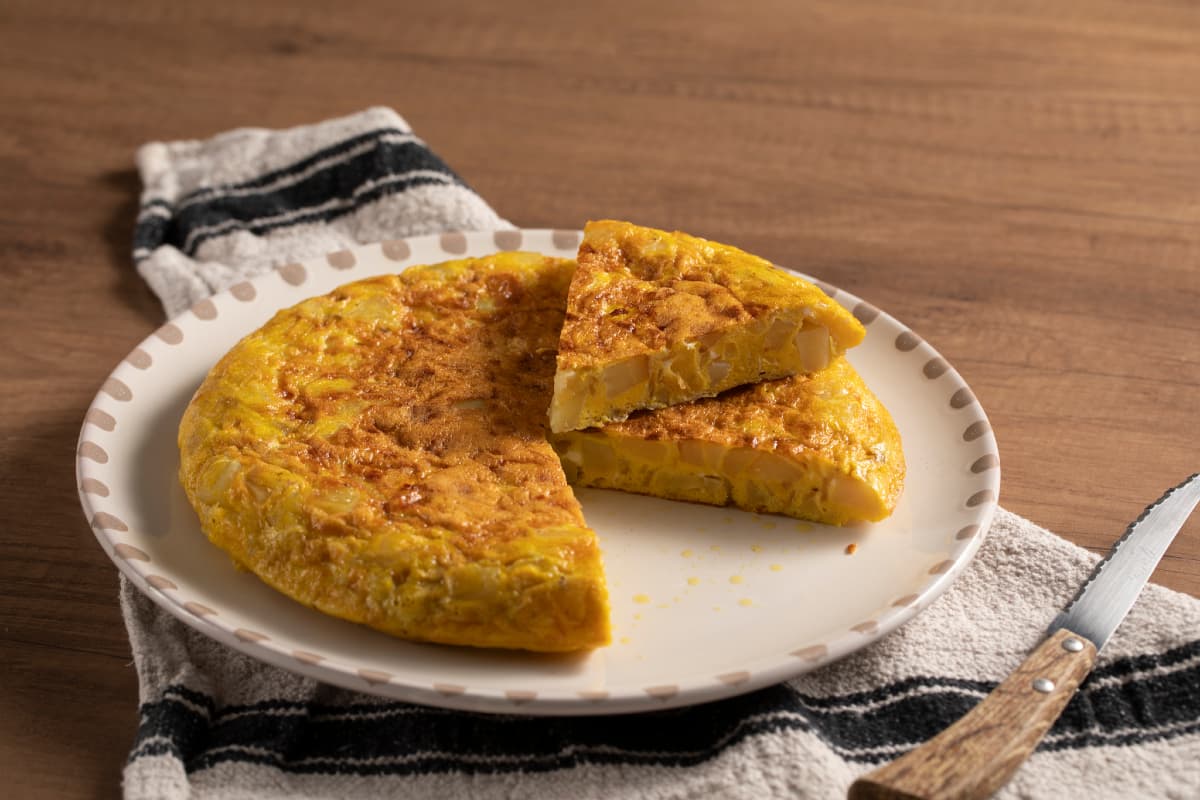
After a run of Italian classics, from carbonara to risotto allo zafferano, it is time to cross the Channel. Like our tortilla española, shepherd's pie turns a bag of potatoes into a proper meal, and it does a few things that most student recipes cannot.
It is made for batch cooking: make it on a Sunday and you have dinner for most of the week, or freeze it in portions for the weeks when there is no time to cook at all. It reheats well, it is cheap, and it is the kind of food that makes a shared student kitchen smell like home. Cooking something slow and generous on a quiet Sunday is also one of those small rituals that make a new place feel like yours.
Sources and Photo Credits
- Recipe: adapted from BBC Good Food's No-fuss shepherd's pie, by Barney Desmazery.
- Mrs Beeton's baked minced mutton: Isabella Beeton, Book of Household Management (1861), recipe 703, as transcribed by The Victorian Dictionary.
- History: Shepherd's pie and Worcestershire sauce, Wikipedia; cottage pie, Merriam-Webster.
- Cover: Shepherds pie, The Kew Greenhouse Cafe by Andy Li, CC0, via Wikimedia Commons.
- Mrs Beeton: Title page of Household Management, Wellcome Collection, public domain, via Wikimedia Commons.
- Herdwick sheep: Herdwick Sheep below Great Gable by Julian Herzog, CC BY 4.0, via Wikimedia Commons.
- Lea & Perrins: 1875 ad Lea & Perrins, public domain, via Wikimedia Commons.
- Illustrations: © GR Stories.