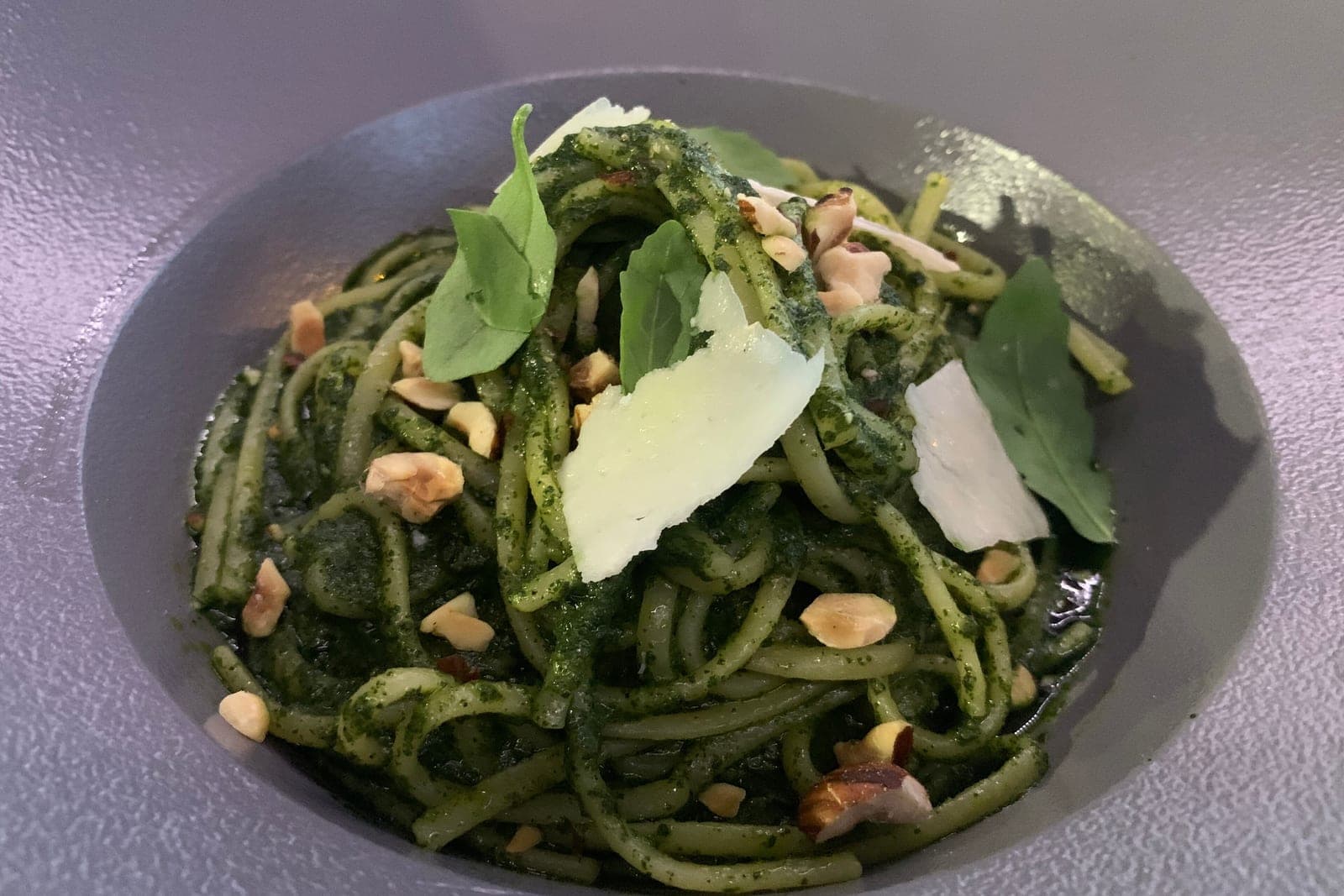
Most people outside Italy know pesto as a jar on a supermarket shelf: a dull green paste you stir into hot pasta when there is nothing else in the fridge. The real thing, made by hand in Genoa, is something else entirely. It is bright green, fragrant, slightly sharp from the garlic and the pecorino, and it never, ever goes near a stove.
In Liguria, the most traditional way to eat it is trenette al pesto: long, flat pasta cooked in the same pot as potatoes and green beans, then tossed with fresh pesto. It sounds odd the first time you hear it. Then you taste it, and the potatoes melt into the sauce and make it creamy, the beans add a fresh crunch, and you understand why the Genoese have been eating it this way for generations.
This version follows Il Cucchiaio d'Argento, the classic Italian cookbook first published in 1950: their trenette con il pesto for the pasta, and their pesto alla genovese for the method, shared with them by Roberto Panizza, a Genoese pesto ambassador. Il Cucchiaio d'Argento makes a point of not giving quantities for the pesto: in Genoa, they say, it is made "by eye", according to the experience of whoever is cooking. Since that is not much help the first time, we have taken the quantities from the recipe published by the Consorzio del Pesto Genovese, the consortium that protects the traditional recipe.
A Short History of Pesto
The name says everything about how it is made. Pesto comes from the Genoese verb pestâ, to pound or crush, and the sauce was born in a marble mortar with a wooden pestle.
Genoa had pounded sauces long before it had basil pesto. The Romans made moretum, a paste of garlic, cheese, herbs and oil, and medieval Genoese cooks made agliata, a garlic and walnut sauce. Basil only took centre stage in the 19th century: one of the first printed recipes for pesto as we know it appears in Giovanni Battista Ratto's La Cuciniera Genovese, published in 1863.
Today, Genoese basil is protected as a DOP product, and a Genoese association has even proposed that pesto made in a mortar be recognised by UNESCO as intangible cultural heritage. Not bad for a sauce made of seven ingredients.
The Seven Ingredients
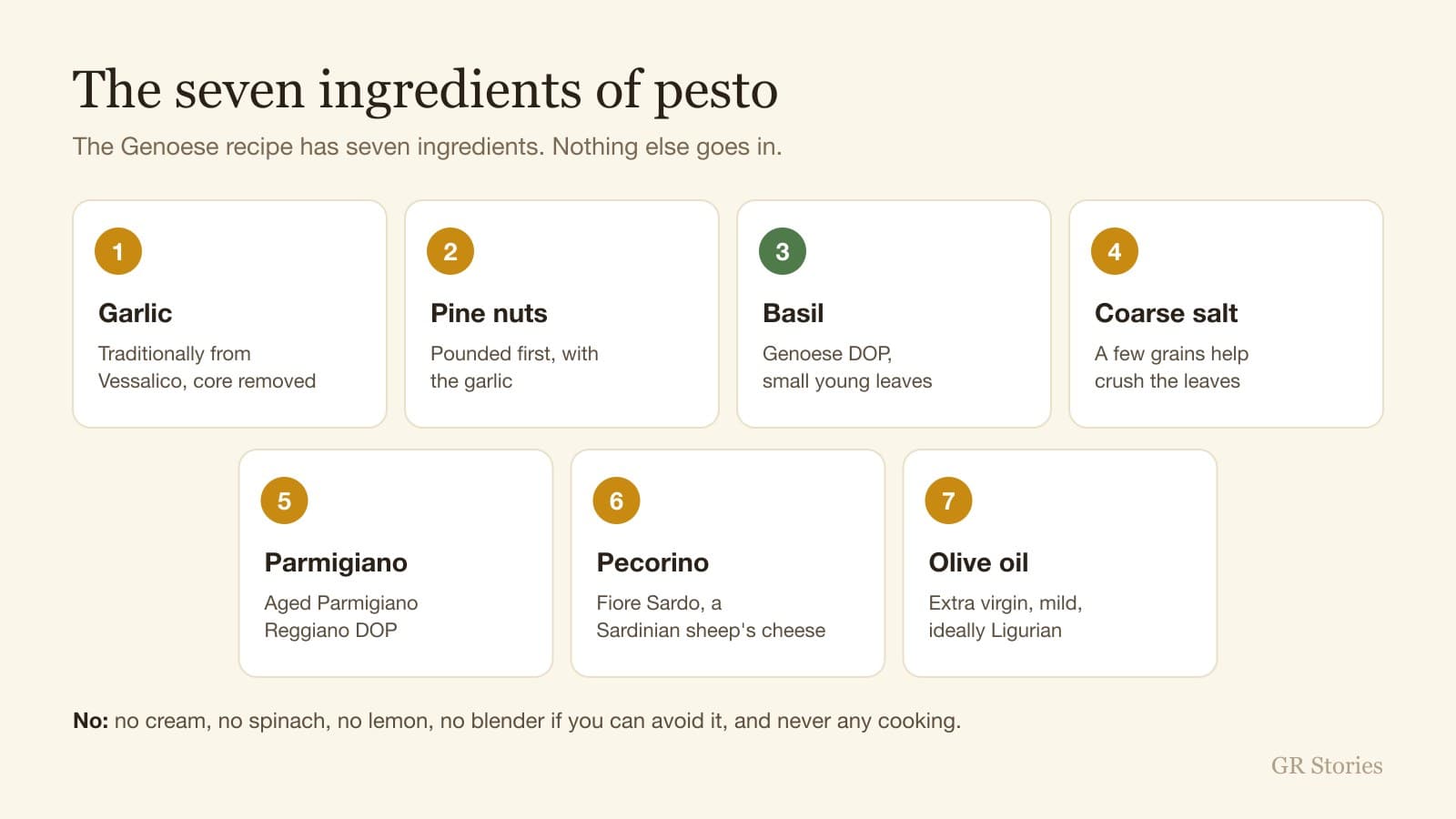
A real pesto alla genovese has seven ingredients, and Il Cucchiaio d'Argento lists them all: garlic, pine nuts, basil, salt, Parmigiano, pecorino and olive oil. Nothing else goes in.
Five Rules for a Real Pesto
Ingredients
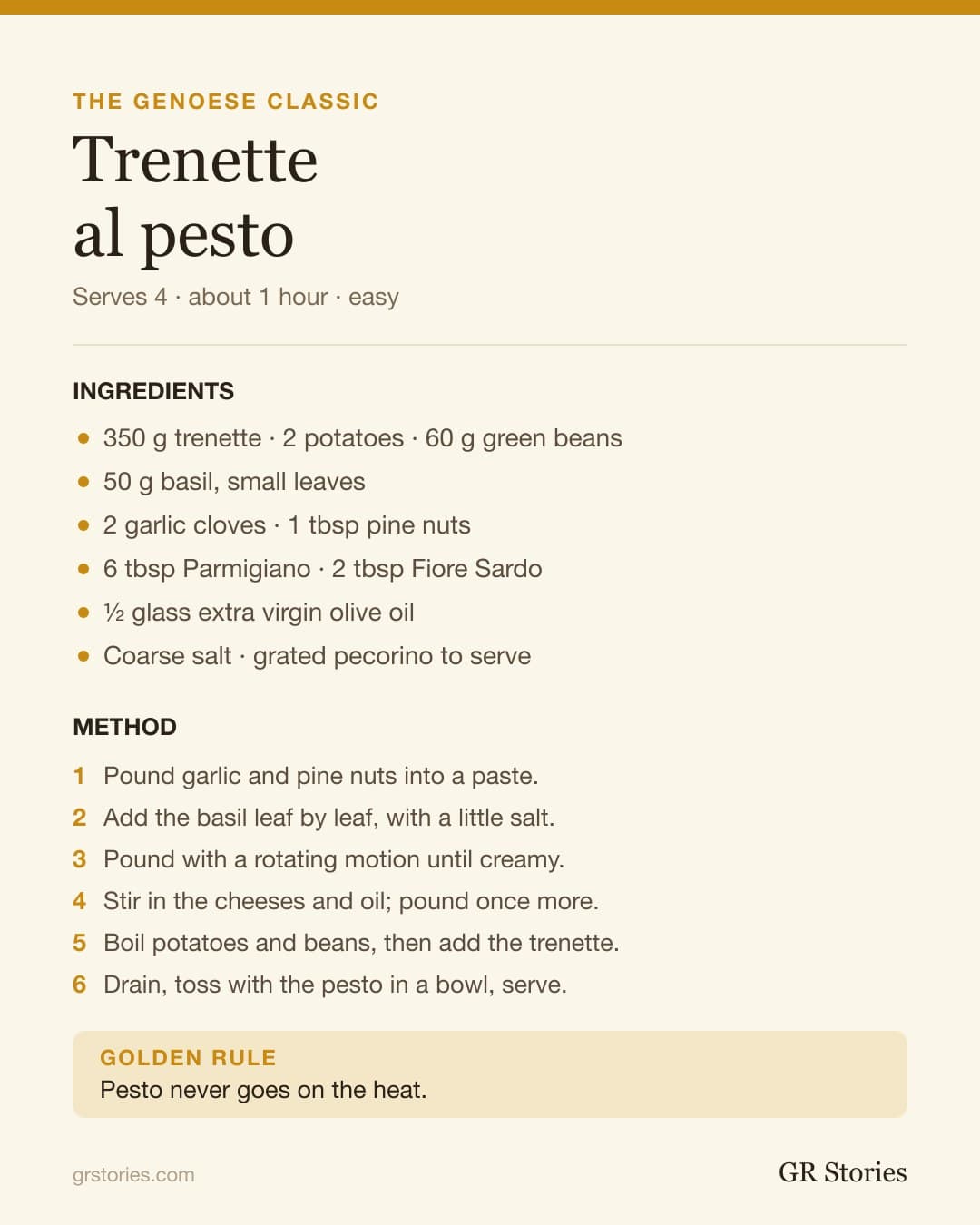
Serves 4. Preparation: 30 minutes. Cooking: about 20 minutes. Difficulty: easy.
For the pasta (from Il Cucchiaio d'Argento)
- 350 g dried trenette, or linguine if you cannot find them
- 2 potatoes
- 60 g very tender green beans
- Grated pecorino, to serve
- Salt, for the pasta water
For the pesto (quantities from the Consorzio del Pesto Genovese)
- 50 g basil, ideally Genoese basil with small leaves
- 2 cloves of garlic, with the green core removed (use 1 for a milder pesto)
- 1 tablespoon pine nuts
- 6 tablespoons grated Parmigiano Reggiano DOP, aged at least 24 months
- 2 tablespoons grated Pecorino Fiore Sardo DOP
- Half a glass of extra virgin olive oil, preferably a mild Ligurian one
- A few grains of coarse salt
The consortium's quantities make enough pesto for up to 600 g of pasta, so you may have some left over. That is a good thing: see the note on keeping it at the end of the method.
You will also need a mortar and pestle (or a food processor, see below), a large pot and a large serving bowl.
A Note on Ingredients
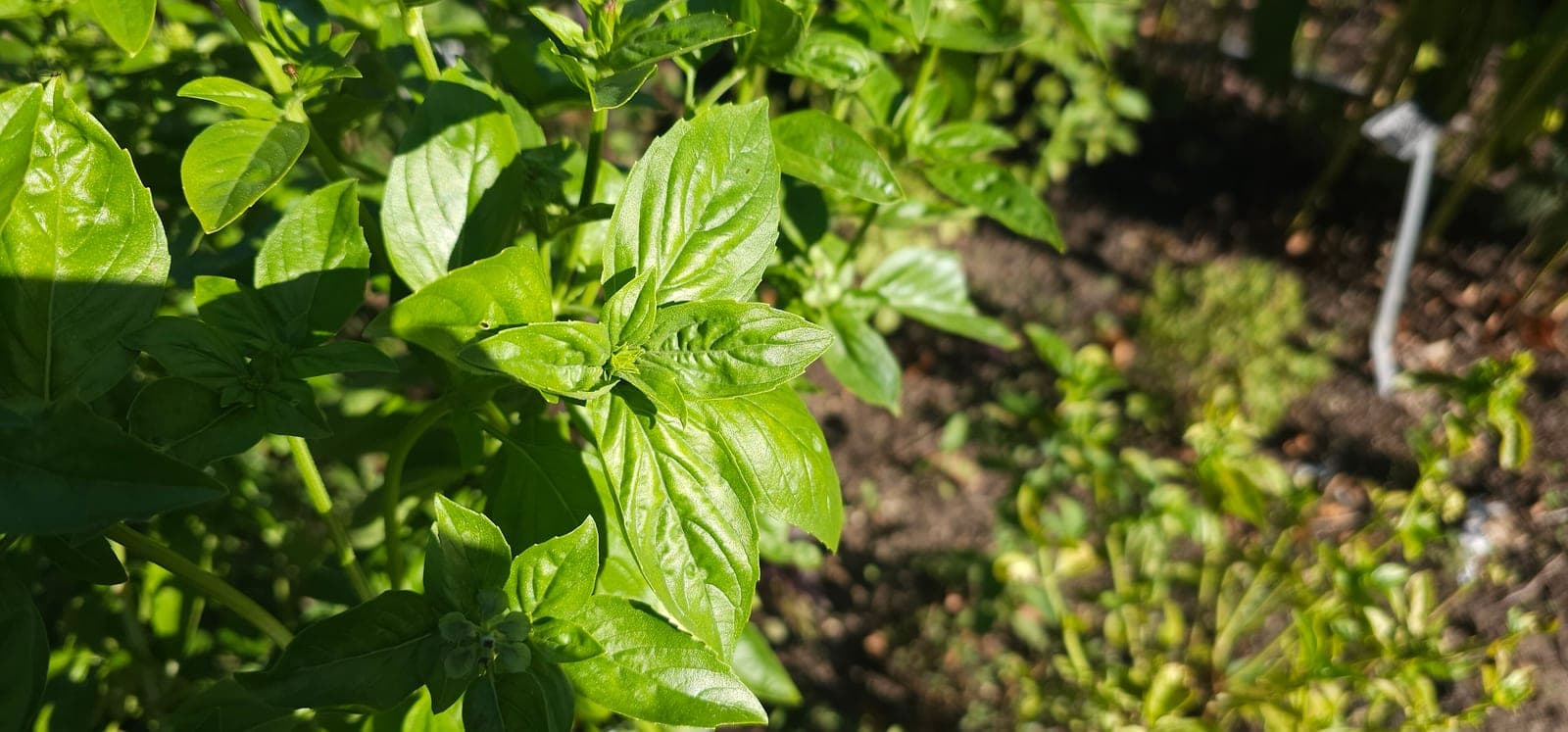
Basil. Use the youngest, smallest leaves you can find: they are sweeter and less minty. In Genoa they use Basilico Genovese DOP, grown on the Ligurian coast. Wash the leaves in cold water and dry them very gently on a cloth, because wet or bruised leaves turn the pesto dark and watery.
Garlic. Il Cucchiaio d'Argento notes that pesto used to contain much more garlic than it does today, and that many people now leave it out. Don't: garlic is the sharp note in a sauce that would otherwise be mostly sweet. Remove the green core, which is what makes garlic hard to digest. In Liguria, the garlic of choice is from Vessalico, a small village famous for its mild garlic.
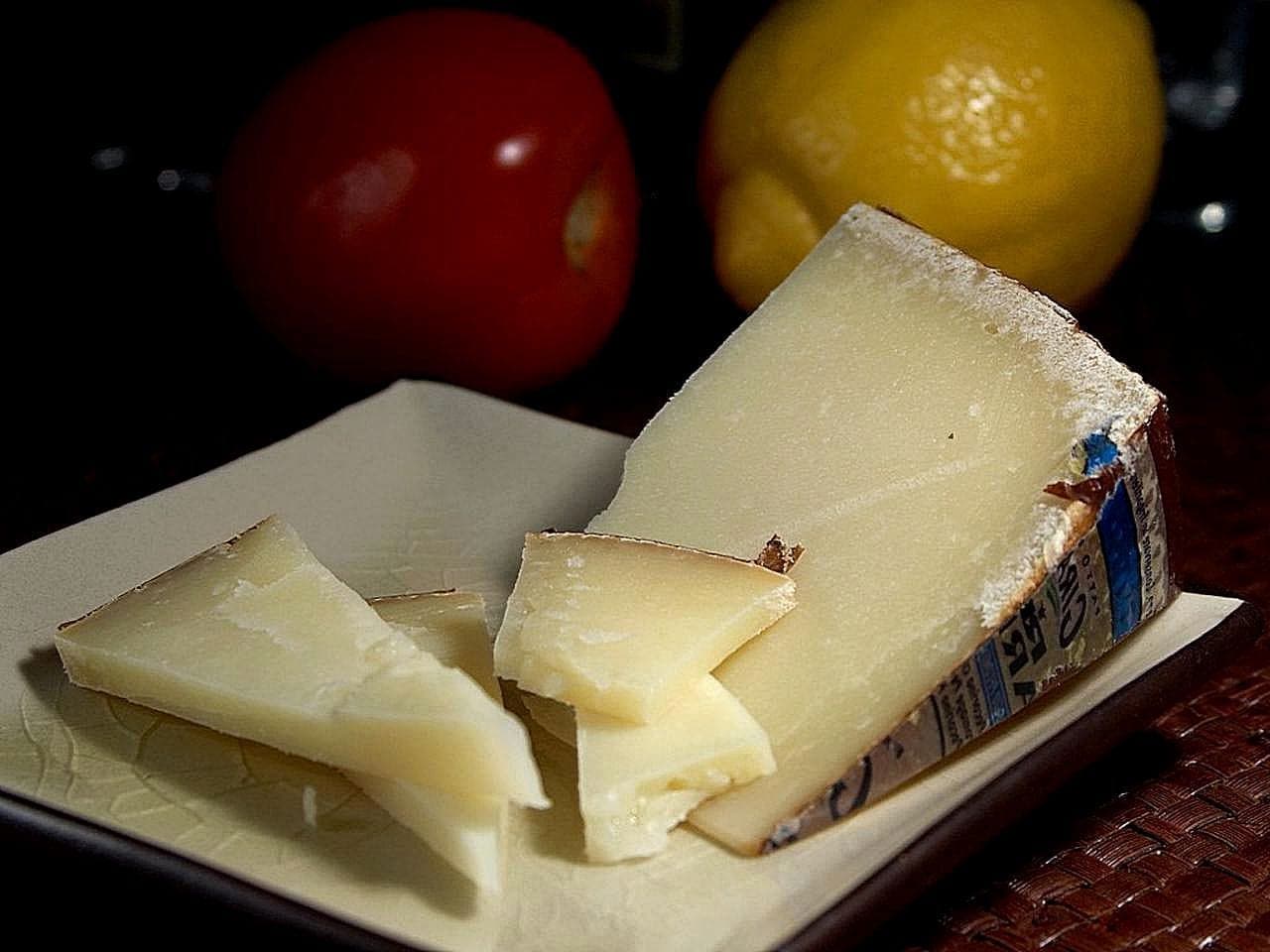
The two cheeses. Parmigiano Reggiano gives depth, and pecorino gives a salty, sharp edge. The traditional pecorino is Fiore Sardo, a Sardinian sheep's milk cheese that is milder than the Pecorino Romano we used in our carbonara. Together they are already salty, which is why the pesto needs only a few grains of salt.
Olive oil. Extra virgin, and as mild as possible. A strong, peppery oil will overpower the basil. Il Cucchiaio d'Argento uses Taggiasca olive oil from western Liguria.
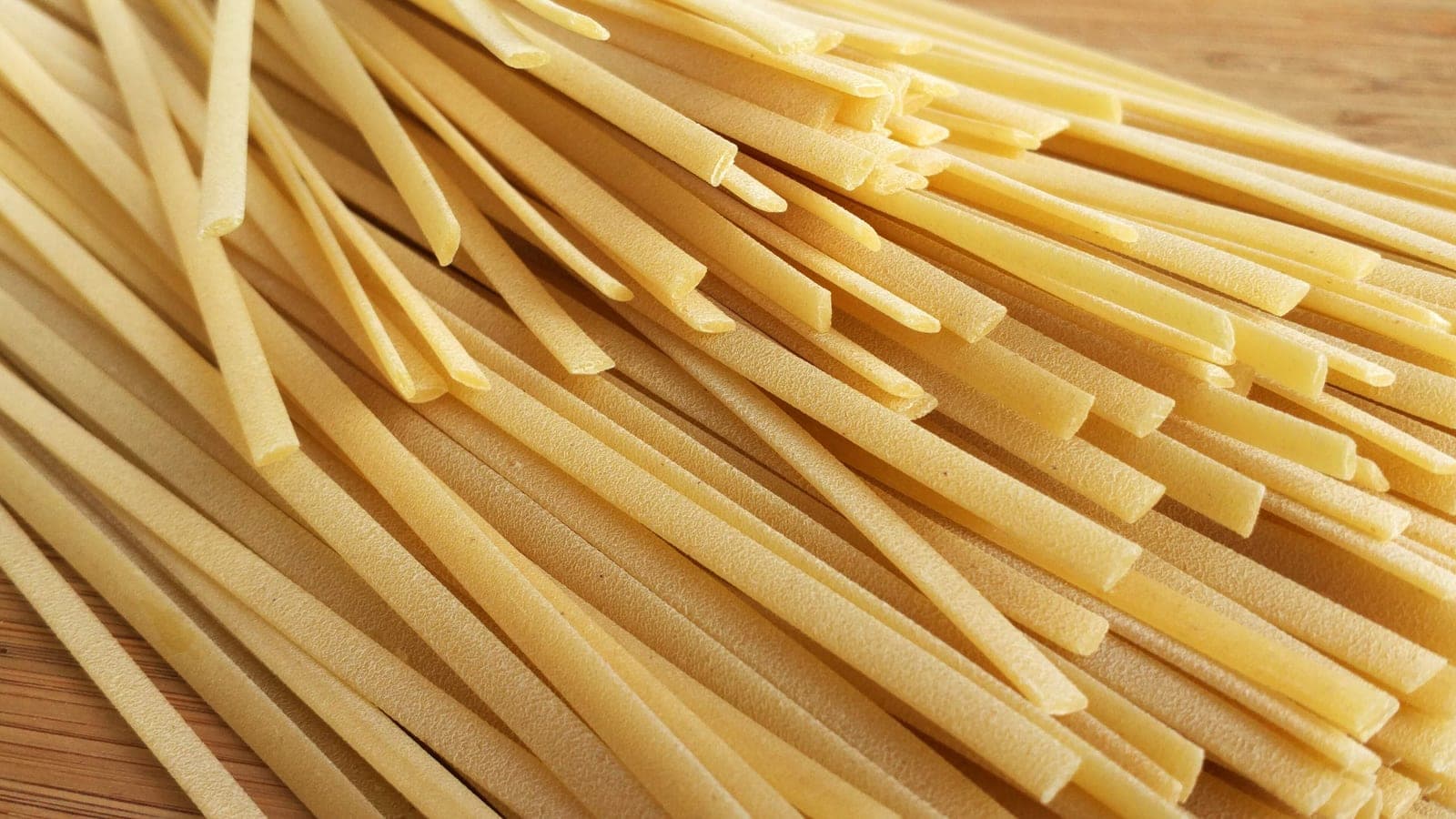
Trenette. Trenette are a long, flat Ligurian pasta, a little like a narrow linguine. If you cannot find them abroad, linguine are the closest substitute. In Liguria pesto also goes with trofie, small twisted pasta, which Il Cucchiaio d'Argento says beat everything else.
Method
Making the pesto
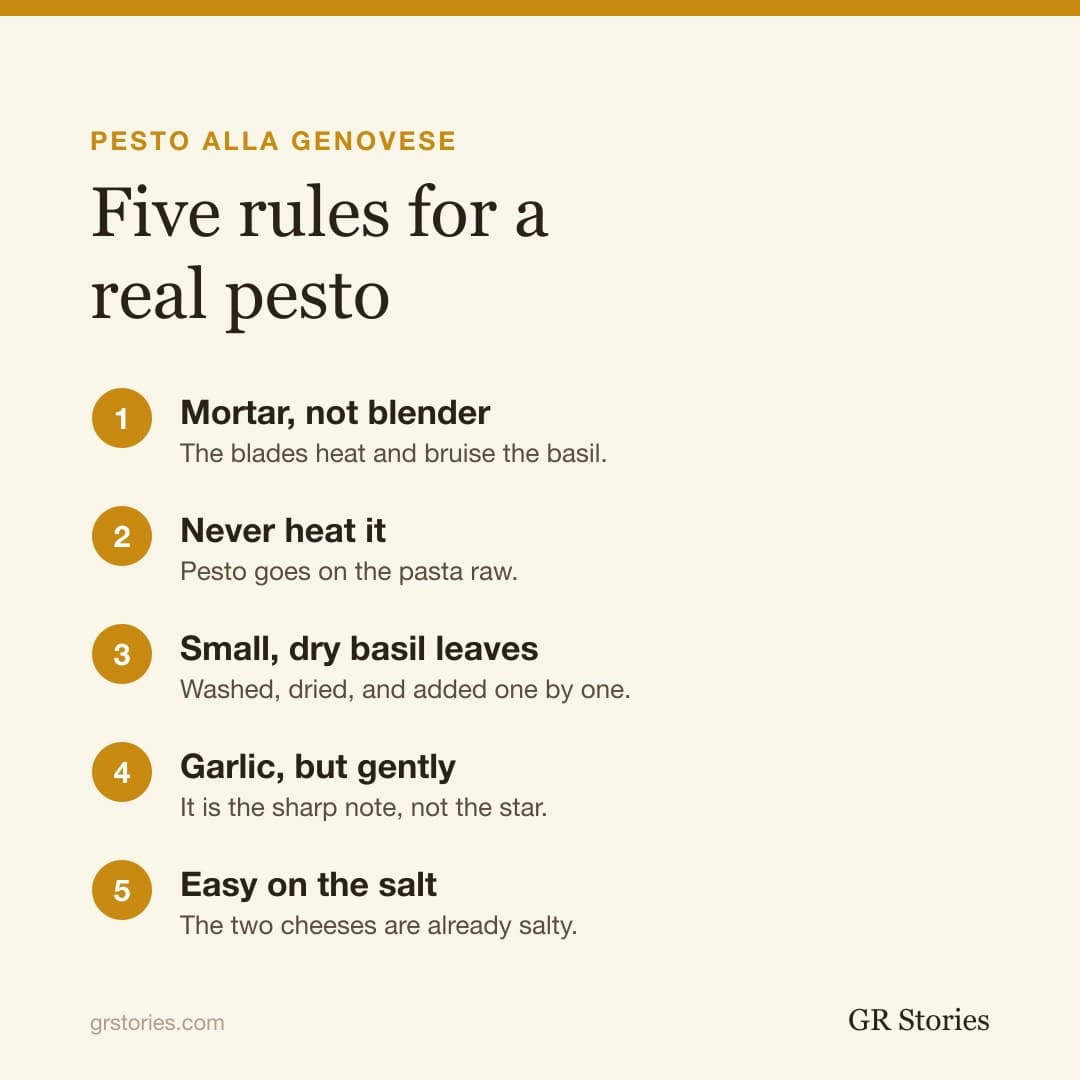
Make the pesto first, at room temperature, and work fairly quickly so the basil does not have time to darken.
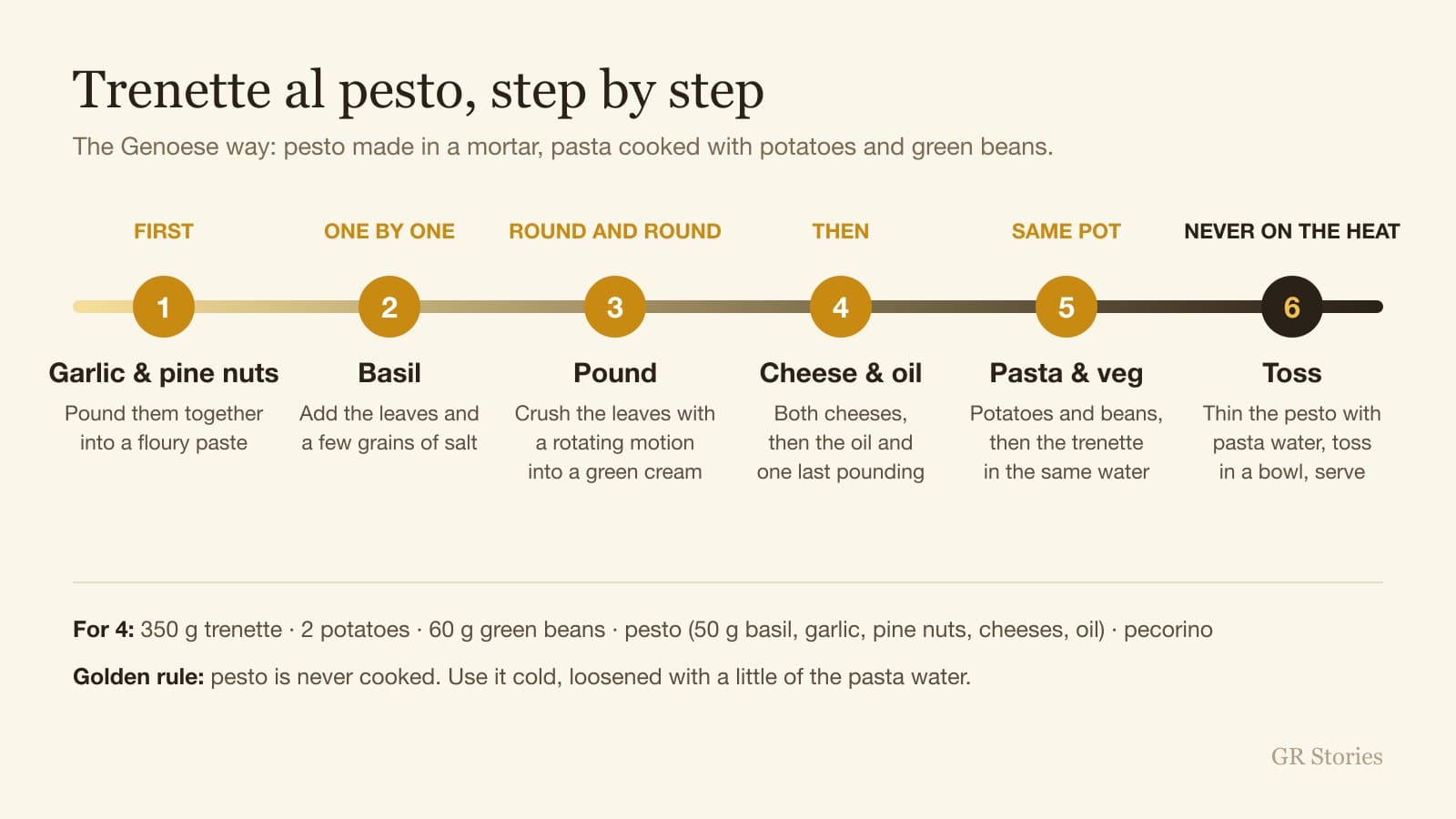
Step 1 — Garlic and pine nuts
Put the garlic and the pine nuts in the mortar and pound them together until you have a floury paste.
Step 2 — Add the basil
Pull the basil leaves off their stems one by one and add them to the mortar, with a few grains of coarse salt. Go easy on the salt: the cheeses you will add later are already very salty, and the coarse grains are there mostly to help crush the leaves.
Step 3 — Pound into a cream
Start pounding. Once the leaves are bruised, keep working them with a rotating motion of the pestle against the sides of the mortar, changing direction every now and then, until they turn into a bright green cream.
Step 4 — Cheese and oil
Add the Parmigiano and the pecorino, then pour in the olive oil a little at a time and stir with a spoon.
Step 5 — One last turn
Give everything a final round with the pestle, adding a little more oil if needed, until the sauce is smooth and evenly blended. Your pesto is ready.
No mortar? Il Cucchiaio d'Argento is clear that pesto should be made by hand, not in a blender. If a food processor is all you have, chill the bowl and blade first, use short pulses rather than running it continuously, and stir in the cheeses by hand at the end. The pesto will be less fragrant, but far better than any jar.
Cooking the trenette
Step 6 — Potatoes and green beans
Peel the potatoes and cut them into small cubes. Top and tail the green beans and cut them into two or three pieces. Bring a large pot of salted water to the boil and cook the potatoes and green beans together.
Step 7 — Add the trenette
When the vegetables are almost cooked, add the trenette to the same pot and cook them until al dente.
Step 8 — Toss, off the heat
Drain the pasta and vegetables, keeping a ladle of the cooking water, and put everything in a large serving bowl. Loosen the pesto with a little of the hot cooking water, pour it over the pasta, sprinkle with grated pecorino, toss well and serve straight away. The starch from the potatoes and the pasta water turns the pesto into a creamy coating.
Keeping leftover pesto. Il Cucchiaio d'Argento says pesto keeps in the fridge for up to five days, in an airtight glass jar. Pour a thin layer of olive oil on top to stop it from darkening.
Common Mistakes (and How to Avoid Them)
- Heating the pesto. This is the most important rule. Pesto is never cooked or warmed in a pan: the heat turns the basil dark and bitter. Use it raw, loosened with a little pasta water.
- Using wet basil. Water dilutes the pesto and makes it darken faster. Dry the leaves well.
- Running the blender at full speed. The blades heat the basil and bruise it. If you use one, pulse it briefly.
- Too much salt. Parmigiano and pecorino bring plenty of salt. A few grains are enough.
- Leaving out the garlic, or using too much. It should be there, but in the background.
- Using a strong olive oil. A peppery oil covers the basil. Choose a mild one.
- Adding cream, spinach or lemon. None of them belong in pesto alla genovese.
What to Serve with It
Trenette al pesto is a complete dish on its own, with pasta, vegetables and cheese in one bowl. In summer, a caprese with good tomatoes is all you need alongside it. If you are cooking for friends, finish with a tiramisù made the night before.
Why This Recipe Belongs in a Student Kitchen
After the spaghetti al pomodoro, the risotto allo zafferano and the carbonara, trenette al pesto is the dish that teaches you something none of them do: that a sauce does not need a stove at all. Everything that matters happens in a bowl, with your own hands.
It is also one of the cheapest dishes in Italian cooking. A pot of basil on the windowsill, a handful of pine nuts and two cheeses you will use for many other recipes, and you have dinner for four, with leftovers for tomorrow. And since it only needs one pot, it is friendly to shared student kitchens too. Just be ready for the smell of fresh basil to bring your flatmates into the kitchen.
Sources and Photo Credits
- Pasta recipe: adapted from Il Cucchiaio d'Argento's Trenette con il pesto.
- Pesto method: adapted from Il Cucchiaio d'Argento's Pesto alla genovese.
- Pesto quantities: the recipe of the Consorzio del Pesto Genovese, as published by Mangiare in Liguria.
- History: Pesto, Wikipedia.
- Cover: Linguine al Pesto, Dell'Anima (Beynost) by Benoît Prieur, CC0, via Wikimedia Commons.
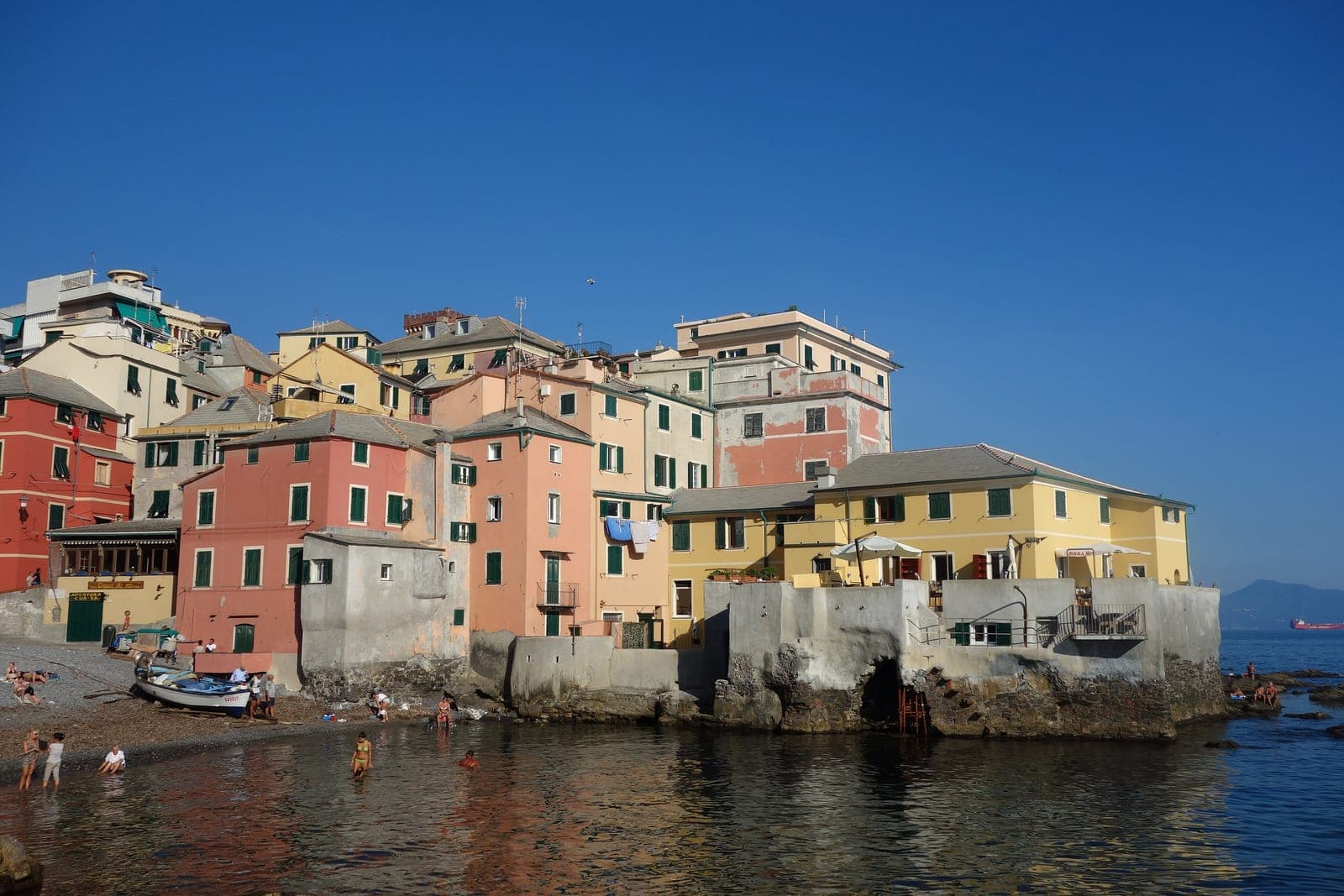
- Boccadasse, Genoa: Seascape, Boccadasse, Genova by Daderot, CC0, via Wikimedia Commons.
- Basil: Sweet basil leaves by TheTechnician27, CC0, via Wikimedia Commons.
- Pecorino sardo: Pecorino sardo cheese by Jon Sullivan, public domain, via Wikimedia Commons.
- Trenette: Trenette by Popo le Chien, CC0, via Wikimedia Commons.
- Illustrations: © GR Stories.