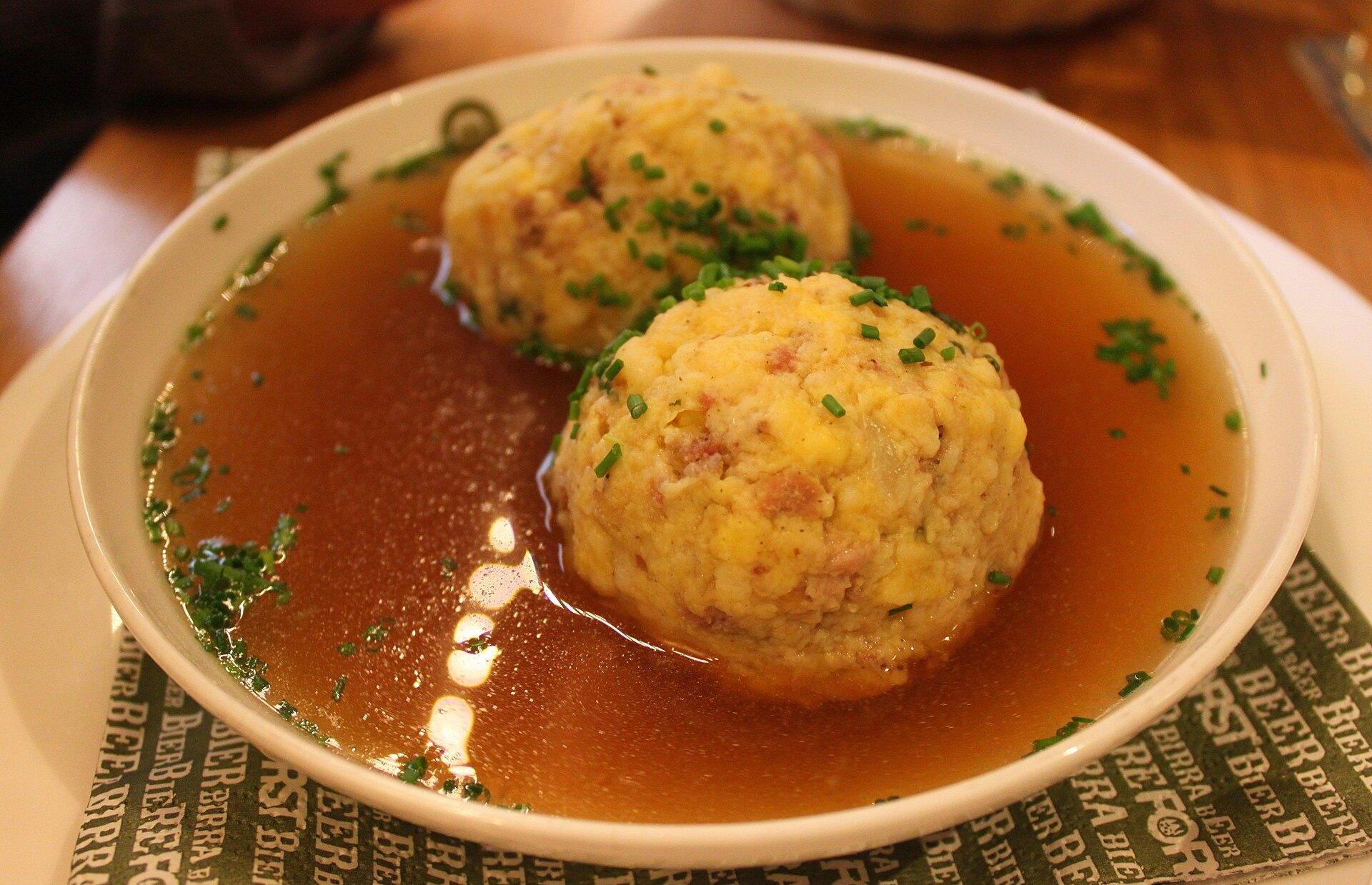
High in the mountains of Trentino, nothing was ever thrown away, least of all bread. When a loaf went hard, it was cut up, softened in milk, bound with eggs and cheese, rolled into balls the size of an egg and simmered in broth. The result is canederli, bread dumplings: soft and savoury inside, smooth outside, and one of the most comforting things you can eat after a cold day.
They are the Italian cousins of the Knödel of Austria, Bavaria and South Tyrol, and every valley, every family and every mountain hut has its own version. Some add speck, some spinach, some cheese, some liver. You can eat them in a bowl of hot broth, or asciutti, "dry", with melted butter and sage.
This version follows the canederli trentini published by Il Cucchiaio d'Argento, the classic Italian cookbook first published in 1950. It is a family recipe, the one that a woman called Anita followed in the middle of the last century, and it is wonderfully specific: very dry bread chopped by hand, a garlic salame and Vezzena, an aged cheese from the high plateaus of Trentino.
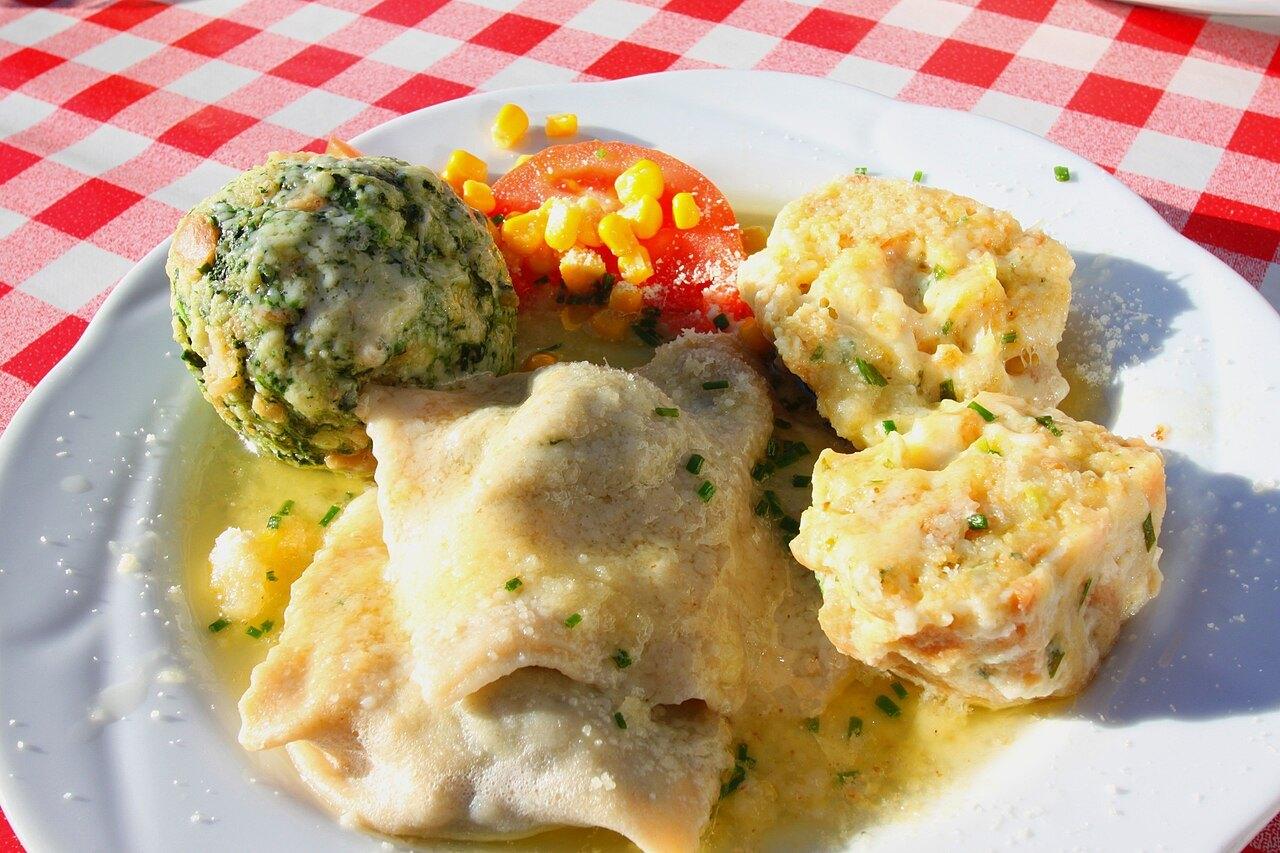
The Dumpling Eater of Hocheppan
Canederli are old. Very old. In the chapel of Hocheppan Castle (Castel d'Appiano), on a hill above the vineyards of Appiano, near Bolzano in South Tyrol, there is a cycle of Romanesque frescoes so well preserved that the chapel is nicknamed the "Sistine Chapel of the Alps". The castle's own site dates them to the 13th century. Next to the scenes from the life of Christ, there is a small, very human detail: a woman eating dumplings. She is known as the Knödelesserin, the dumpling eater, and she is often cited as one of the oldest pictures of canederli in existence.
The frescoes were painted over for centuries and only uncovered in 1926. Since then, the dumpling eater has become something of a local celebrity, and proof that people in these valleys have been making bread dumplings for at least seven hundred years.

The name tells the same story. Canederli is simply the Italian form of the German Knödel. As the Trentino tourist board explains, the dish is known across most of the Alps, and in the German-speaking areas it keeps its original name.
Ingredients
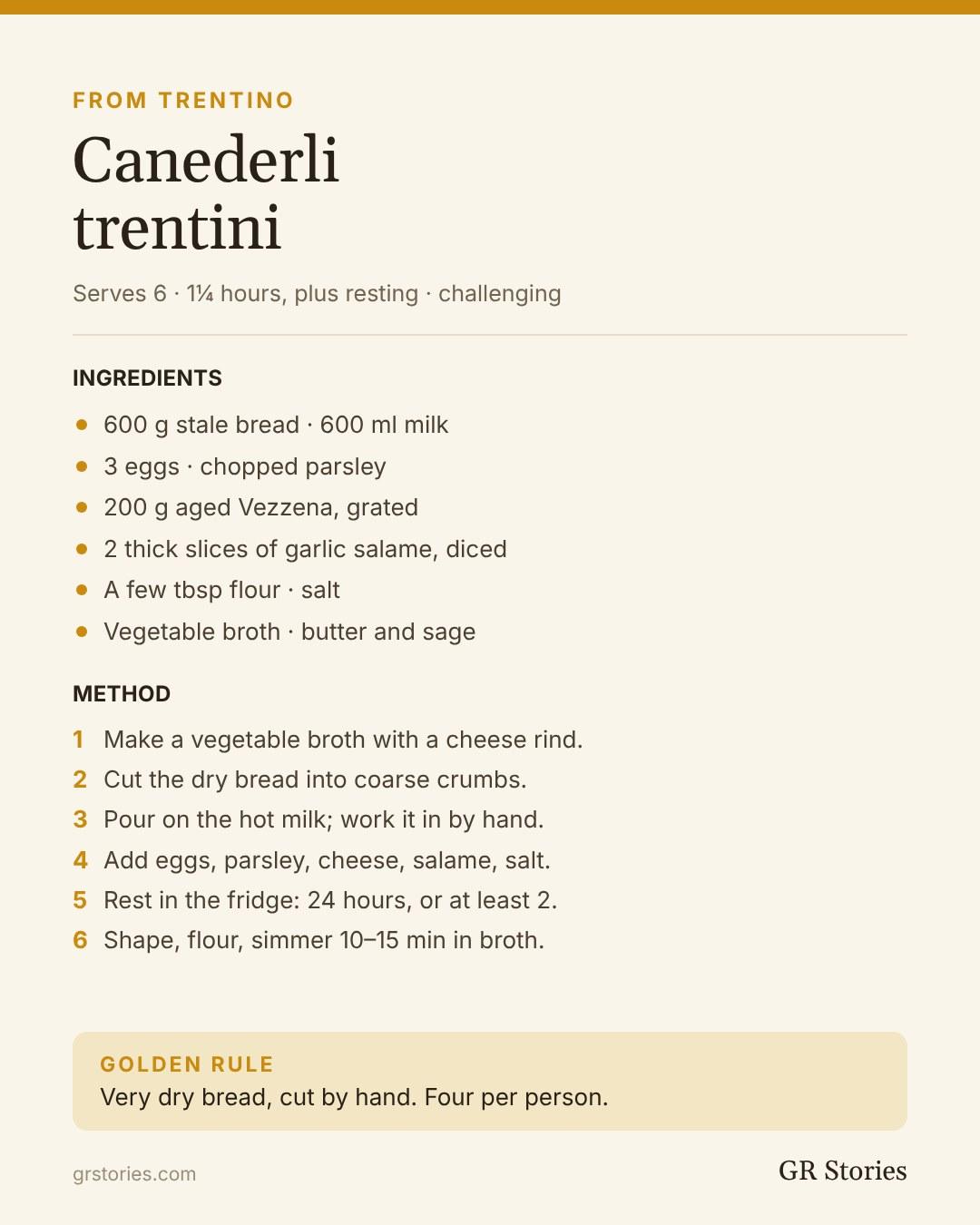
Serves 6 (four canederli each). Preparation: 1 hour, plus at least 2 hours' resting. Cooking: 15 minutes. Difficulty: challenging.
- 600 g stale bread, very dry
- 600 ml milk
- 3 eggs
- 200 g aged Vezzena cheese, grated
- 2 thick slices of garlic salame, diced
- Chopped parsley
- A few tablespoons of flour
- Salt
- Vegetable broth (see below)
- Butter and a few sage leaves, to serve
For the broth, Il Cucchiaio d'Argento simmers 1 potato, 1 onion, 2 garlic cloves, a few celery sticks, parsley, carrots, 1 courgette and a cheese rind with salt and pepper for about an hour.
A Note on Ingredients
The bread. This is the whole recipe. Il Cucchiaio d'Argento recommends bread that is really dry and old, cut by hand with a sharp knife into coarse crumbs: not as fine as breadcrumbs, and not in chunks. Ordinary white bread works. If your bread is still soft, cut it up and leave it out on a tray for a day or two.
Vezzena. A hard, aged cow's milk cheese from the Vezzena and Lavarone plateaus in Trentino, with a strong, full flavour. Outside Italy you will rarely find it. Any aged mountain cheese will do: Asiago stagionato, Parmigiano Reggiano or Gruyère all work well.
Garlic salame. Il Cucchiaio d'Argento points out that many families use speck or luganega, a long, thin fresh sausage, instead. Diced pancetta is a good, easy alternative. For a vegetarian version, leave out the meat, add a little more cheese and some chopped spinach or chives, and use a vegetable broth without the cheese rind.
The milk. The quantity is a guide. As Il Cucchiaio d'Argento puts it, you have to "listen" to the mixture: depending on your bread, you may need a little more milk. The first time it is a gamble; after that, you will know when the texture is right.
Method
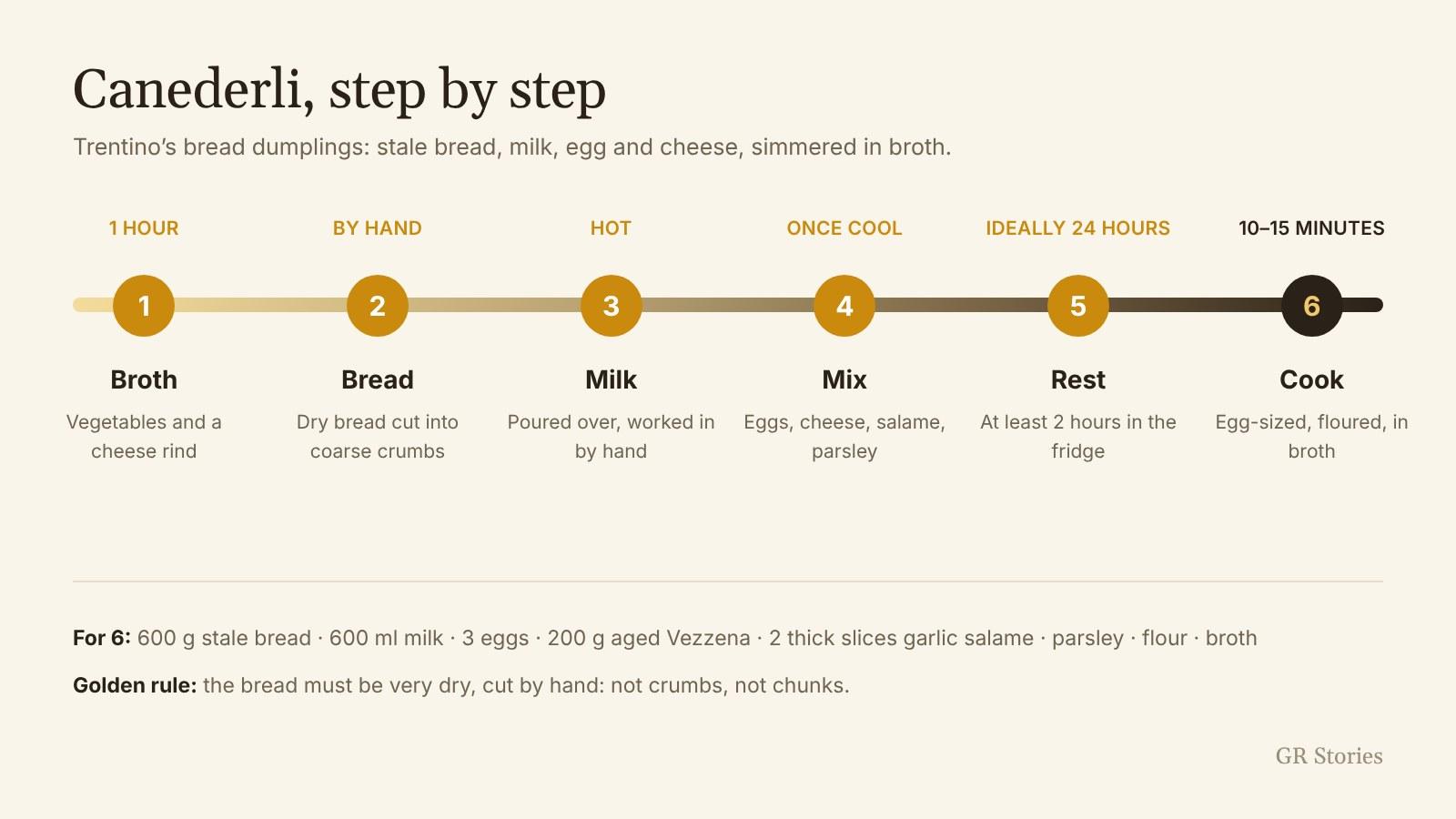
Step 1 — The broth
Put the potato, onion, garlic, celery, parsley, carrots, courgette and cheese rind in a large pot, cover with plenty of water, season with salt and pepper and simmer for about an hour. Strain it and keep it hot.
Step 2 — The bread
While the broth cooks, cut the stale bread into coarse crumbs with a sharp knife.
Step 3 — The milk
Heat the milk and pour it over the bread. Work it with your hands until all the bread is moist and the mixture holds together. Leave it to cool.
Step 4 — The mixture
Cut the salame into very small pieces. When the bread has cooled, add the eggs, the parsley, the grated cheese and the salame, season with salt and mix well with your hands.
Step 5 — Rest
Il Cucchiaio d'Argento's ideal is to let the mixture rest in the fridge for 24 hours. If you cannot, give it at least a couple of hours: it will firm up and the canederli will be better for it.
Step 6 — Shape
Put a few spoonfuls of flour on a plate, or on a clean tea towel, which is gentler and less likely to break them. With damp hands, shape the mixture into balls about the size of an egg and roll them lightly in the flour.
Step 7 — Cook
Bring the broth back to a gentle simmer and lower in the canederli a few at a time. Cook them for 10 to 15 minutes. They need to be cooked all the way through: take them out too soon and the centre stays raw and cold. Meanwhile, melt some butter with a few sage leaves in a small pan.
Step 8 — Serve
Serve four canederli per person, either in a bowl with their hot broth or drained, with the sage butter poured over them.
Make ahead. Since the mixture is better after a night in the fridge, canederli are perfect for planning ahead: mix them in the evening, cook them the next day.
Common Mistakes (and How to Avoid Them)
- Using fresh bread. It turns into a sticky paste. The bread must be dry and old.
- Blitzing the bread in a food processor. Too fine, and the canederli become dense and heavy. Cut it by hand.
- Skipping the rest. The mixture is harder to shape and the dumplings are more likely to fall apart.
- A mixture that is too wet or too dry. If it sticks to your hands, add a spoonful of flour; if it crumbles, a splash of milk.
- Boiling them hard. A rolling boil can break them up. Keep the broth at a gentle simmer and cook a few at a time.
- Taking them out too early. Cut one open: it should be hot and cooked right to the centre.
What to Serve with It
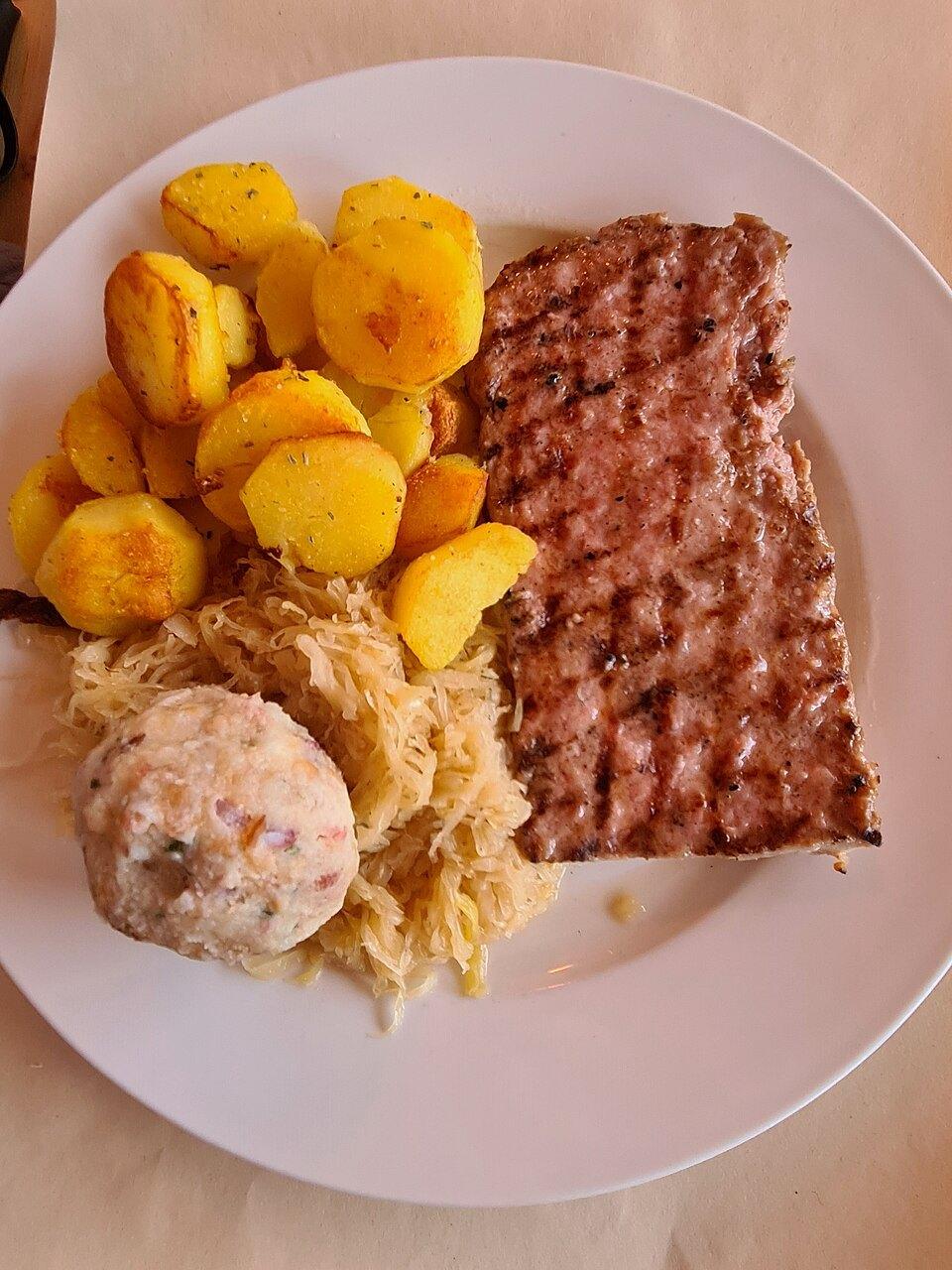
Canederli are filling, and Il Cucchiaio d'Argento warns that it is hard to serve anything substantial after them. Their suggestion is a vegetable side dish instead, perhaps another Trentino recipe: a salad of finely sliced white cabbage. The Trentino tourist board also suggests serving them with sauerkraut or a meat stew.
Why This Recipe Belongs in a Student Kitchen
After Milan's risotto allo zafferano, we are going further north, into the mountains. Canederli are built on the same idea as Naples' pasta e patate: the most delicious way to use food you might otherwise throw away. Every student kitchen has a few ends of stale bread in a bag somewhere. This is what they are for.
They are also the best kind of recipe to cook with friends. Shaping them is fun, the mixture can be made the day before, and a big pot of broth with canederli is the edible equivalent of a warm blanket. On a winter evening a long way from home, there are few better ways to fill a shared kitchen.
Sources and Photo Credits
- Recipe: adapted from Il Cucchiaio d'Argento's Canederli trentini.
- The Hocheppan chapel and its frescoes: Hocheppan Castle Chapel, Hocheppan Castle.
- Canederli and Knödel across the Alps: Canederli, Trentino.com.
- Cover: Speckknödel in Brühe by Benreis, CC BY 3.0, via Wikimedia Commons.
- A tris of canederli: Tris 3 Knödel by Benreis, CC BY 3.0, via Wikimedia Commons.
- The dumpling eater fresco: Knödelesserin by Geisler Martin, CC BY-SA 3.0, via Wikimedia Commons.
- Canederli at Malga Daiano: Malga Daiano Platte by Benreis, CC BY-SA 4.0, via Wikimedia Commons.
- Illustrations: © GR Stories.