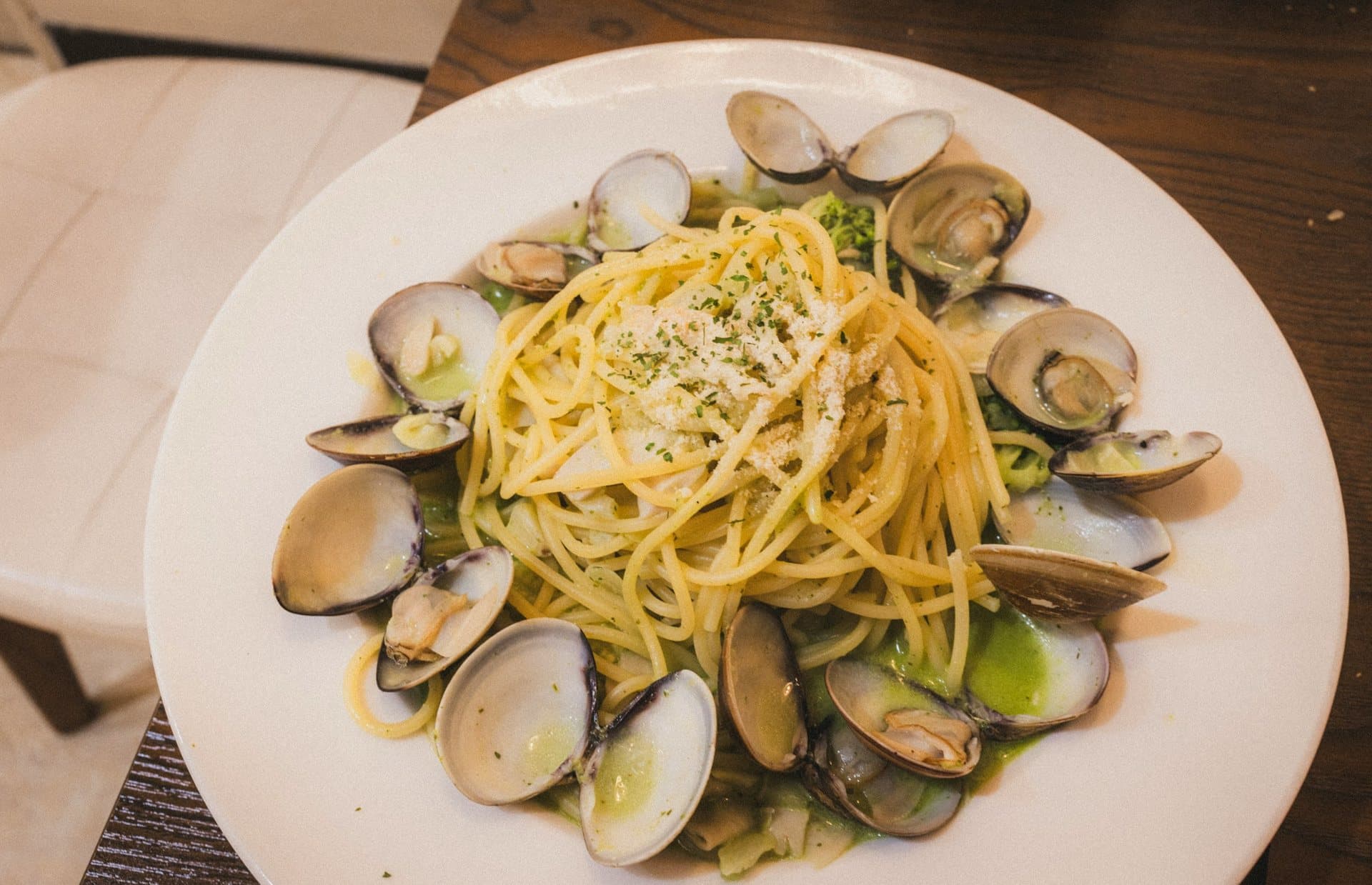
On the evening of 24 December, many Italian families sit down to a dinner without meat. The cena della Vigilia, Christmas Eve dinner, is traditionally di magro, "lean", and that usually means fish. As Gambero Rosso puts it, spaghetti alle vongole is one of the great protagonists of the Christmas Eve and New Year's Eve table: spaghetti tossed in olive oil, garlic and the briny juices of fresh clams, scattered with parsley. It is a classic of Naples and Campania, cooked all along Italy's coasts, and it is just as good on an ordinary evening in July.
What makes it special is how little it needs. There is no tomato and no cheese, and no stock either: the clams make their own sauce as they open, releasing a little cup of sea-flavoured liquid that the spaghetti then soak up. The whole dish is ready in roughly the time it takes to cook the pasta, and it is the kind of meal that turns an ordinary night into an occasion.
This version follows Giorgione's recipe on Gambero Rosso. Giorgione is Giorgio Barchiesi, the Umbrian cook of Gambero Rosso Channel's Giorgione orto e cucina; Gambero Rosso describes him as the cook ("never call him a chef!") of the restaurant Alla Via di Mezzo in Montefalco. His spaghetti alle vongole was Gambero Rosso's suggestion for the first course of Christmas Eve. It serves two, which makes it perfect for a small celebration in a student flat.
From Naples to the Christmas Eve Table
Pasta with clams has a long history in Naples. Writing about Ippolito Cavalcanti's Cucina teorico-pratica, a Neapolitan cookbook of 1837 and a cornerstone of the city's food writing, Gambero Rosso singles out spaghetti with tomato and spaghetti with clams among its most modern-sounding dishes.
Naples also has a version with no clams at all. Gambero Rosso tells the story of spaghetti alle vongole fujute, the clams that "ran away". The dish owes its fame to Eduardo De Filippo, the great Neapolitan actor and playwright. It is said that it came from his own experience: back home hungry after a show, with almost nothing in the house, he made a plate of spaghetti with garlic, oil and lots of parsley, and the next day told his sister he had eaten spaghetti with clams that had run away. The trick, Gambero Rosso explains, is the parsley: because it is traditional to be generous with it in seafood dishes, a plate full of parsley tastes of the sea, even when the sea is missing.
The link with Christmas Eve comes from the tradition of the lean dinner. In Giorgione's own house, according to Gambero Rosso, the evening of the 24th is all about fish: ravioli filled with fish, a fish soup cooked in a terracotta pot, potatoes and onions cooked in the embers of the fireplace and, to finish, fresh and dried fruit and torrone. Spaghetti alle vongole is his suggestion for the first course.
There is a catch, and it is the price. In recent Christmases Gambero Rosso has reported clam prices soaring at the festive season, with Italian production at a low and the blue crab, an invasive species, among the causes cited. Its suggestion is a smaller local clam, the lupino, which Giorgione also allows in his recipe.
Ingredients
Serves 2. Preparation: a few minutes, plus purging the clams if needed. Cooking: roughly the spaghetti's packet time. Difficulty: easy.
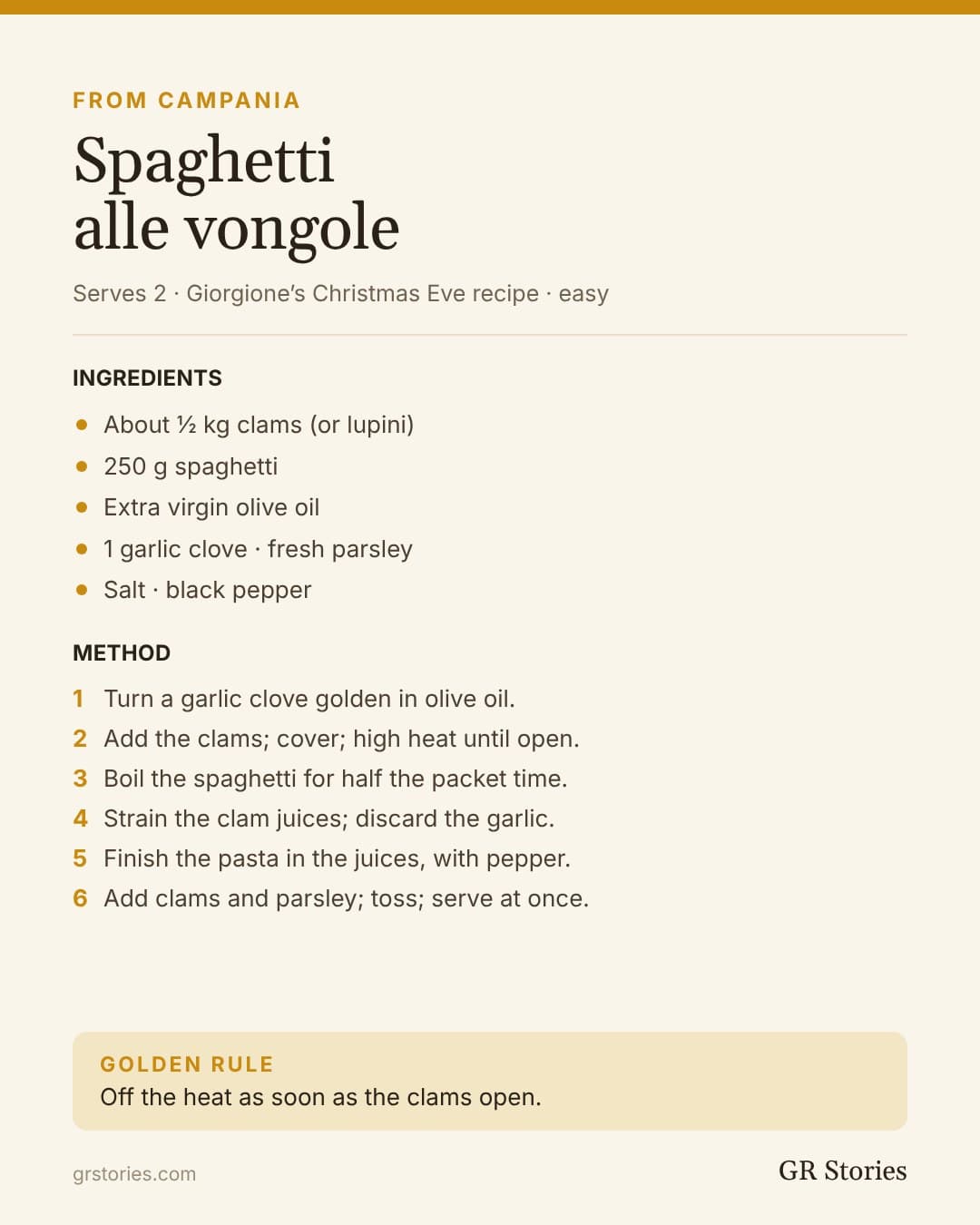
- About ½ kg clams (vongole), or lupini
- 250 g spaghetti
- Extra virgin olive oil
- 1 garlic clove
- Fresh parsley
- Salt
- Black pepper
You will also need a large frying pan or sauté pan with a lid, a large pot, a sieve or colander, a bowl and a pair of tongs.
A Note on Ingredients
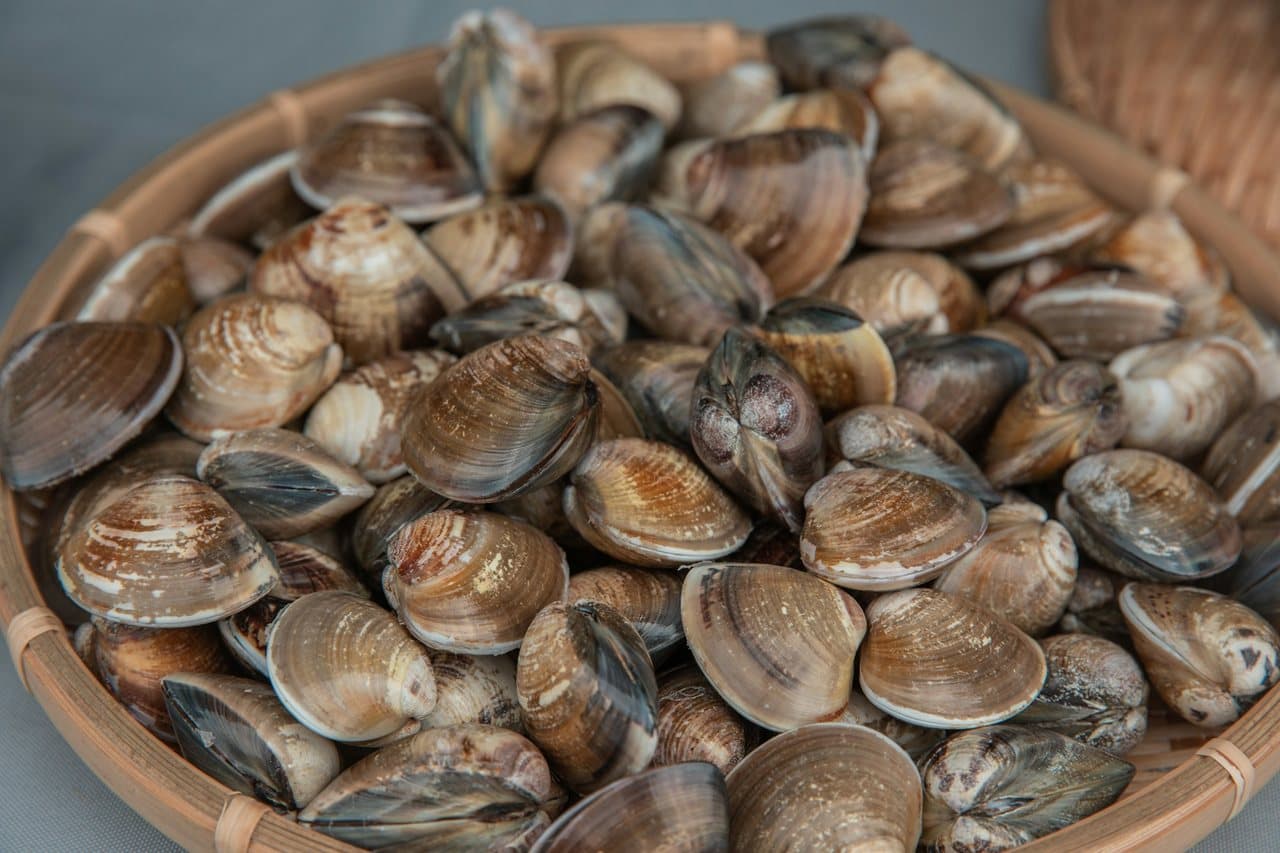
Vongole veraci or lupini? Vongole veraci are the larger clams you see in most Italian fish counters. According to Gambero Rosso, nearly all of those on sale today are farmed, while wild-caught ones are scarce and expensive. Lupini are smaller, local clams: as Gambero Rosso points out, they may not have the generous size of veraci, but they are often much richer in flavour and much cheaper. Giorgione's recipe works with either.
Buying and storing clams. Buy them from a fishmonger you trust, on the day you cook them. They should smell of the sea and their shells should be closed, or close when you tap them; throw away any that are broken or stay open. Keep them in the fridge in an open bowl covered with a damp cloth, not sealed in a bag and not under water.
Purging the sand. Many clams are sold already purged (spurgate), but wild ones can be sandy. Beppe Gallina, a fishmonger at Porta Palazzo market in Turin, told Gambero Rosso that about an hour in cold water salted to roughly the saltiness of the sea is enough, repeated if necessary; leaving them for ten hours, he says, is pointless.
Abroad. Small clams such as Manila or littleneck clams work well. Frozen clams in their shells are a reasonable stand-by; cook them following the packet instructions.
Spaghetti and parsley. Use a good dried spaghetti. Use flat-leaf parsley, chopped at the last moment.
Vegetarian? Then make the vongole fujute: spaghetti with garlic, oil and plenty of parsley, the clams that ran away.
Method
Step 1 — The garlic
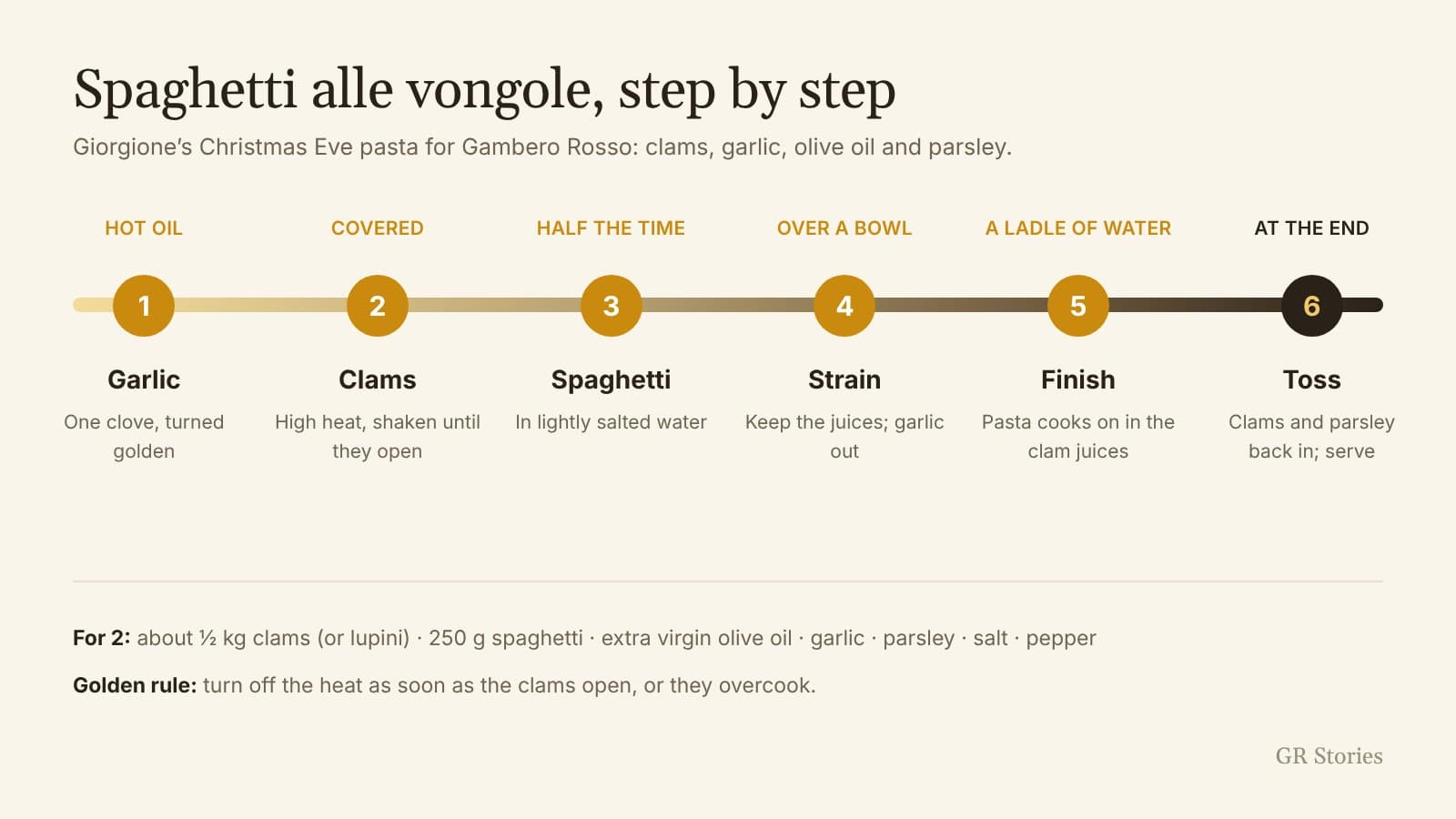
Rinse the clams under cold running water. Heat some extra virgin olive oil in a large frying pan and let the garlic clove turn golden in it.
Step 2 — The clams
Put the clams in the hot pan, cover with the lid and cook over a high heat, shaking the pan now and then, until they open. Meanwhile, chop the parsley. As soon as all the clams have opened, turn off the heat: Giorgione warns that otherwise they overcook.
Step 3 — The spaghetti
Cook the spaghetti in plenty of lightly salted boiling water for half the time given on the packet.
Step 4 — Strain
Tip the clams into a sieve set over a bowl, so that you catch all their liquid, and discard the garlic. Throw away any clams that have stayed shut. If the liquid looks sandy, strain it again through a sieve lined with kitchen paper. Pour it back into the pan: this is your sauce.
Step 5 — Finish the pasta in the pan
Drain the spaghetti, keeping some of the cooking water, and put them in the pan with the clam liquid. Add a ladle of cooking water and some black pepper, and finish cooking the pasta over the heat, adding a little more water if it gets dry.
Step 6 — Clams and parsley
When the spaghetti are cooked, add the clams and the parsley, toss briefly and serve at once.
Is it ready? The spaghetti should be al dente and glossy, coated in a light, slightly cloudy sauce, with no puddle of liquid in the pan but nothing dry either. Taste before adding any salt: the clam juices are already salty.
Common Mistakes (and How to Avoid Them)
- Overcooking the clams. Clams go from tender to rubbery in moments. Turn off the heat as soon as they have all opened, as Giorgione says, and only put them back at the very end.
- Burning the garlic. It should turn golden, not brown, or it will make the oil bitter.
- Skipping the sand check. One gritty mouthful can ruin the plate. Purge the clams if needed and strain their liquid well.
- Eating clams that stay closed. If a clam has not opened after cooking, throw it away. Do not force it open.
- Cooking the pasta all the way in the pot. The second half of the cooking happens in the pan, where the spaghetti absorb the clam juices.
- Too much salt. Use lightly salted water for the pasta and taste the finished sauce before you add any more.
What to Serve with It
On Christmas Eve, spaghetti alle vongole is the first of several fish courses. On a normal evening it is a meal in itself: follow it with a simple green salad, and keep some bread on the table to mop up the last of the juices. To drink, Gambero Rosso's suggestions for spaghetti alle vongole lean towards savoury white wines with a hint of citrus.
Why This Recipe Belongs in a Student Kitchen
Fresh clams are a treat rather than an everyday food, but this is still an affordable way to eat like an Italian on a special night, especially if you use lupini. It needs one pot, one pan and very little time, and it teaches you a technique every Italian cook relies on: finishing pasta in its sauce. If you love the food of Naples, follow it with pasta e patate, the city's one-pot comfort food, or go back to basics with spaghetti al pomodoro.
Above all, it is a dish for sharing. If you are spending the holidays in Italy and far from your family, Christmas Eve can be one of the hardest nights of the year, as anyone who has felt the unexpected loneliness of being surrounded by people abroad will know. Invite a friend, buy half a kilo of clams and cook this together. It is a very Italian way to spend the evening.
Sources and Photo Credits
- Recipe: adapted from Giorgione's Spaghetti alle vongole, Gambero Rosso.
- Giorgione: Gambero Rosso, Giorgione – Orto e Cucina.
- Ippolito Cavalcanti and the 1837 cookbook: Gambero Rosso, Ragù alla napoletana del 1837. La ricetta da rifare a casa.
- Vongole fujute and Eduardo De Filippo: Gambero Rosso, A Napoli esiste un piatto che si chiama spaghetti alle "vongole fuggite".
- Giorgione's Christmas Eve: Gambero Rosso, Ecco cosa si mangia a casa di Giorgione la sera della Vigilia di Natale.
- Christmas Eve, clam prices, veraci and lupini: Gambero Rosso, Esplodono i prezzi delle vongole a Natale? Ecco l'alternativa (e una ricetta) per le feste.
- Purging clams: Gambero Rosso, Come scegliere il pesce per le feste e i segreti di Beppe Gallina.
- Wine: Gambero Rosso, Vini economici (ma buoni) per la Vigilia di Natale: 10 etichette sotto i 20 euro da abbinare agli spaghetti con le vongole.
- Cover: Spaghetti with clams and herbs on a white plate by Lee Milo, Unsplash.
- Clams: A basket filled with fresh clams by Charles Chen, Unsplash.
- Illustrations: © GR Stories.